You vacuumed. You wiped the counters. You even did that thing where you fluff the throw pillows like it matters.
And yet the house still somehow looks… cluttered.
Not dirty. Not necessarily disorganized. Just busy, visually loud, or a little chaotic in a way you can’t quite pinpoint.
The good news? This usually isn’t about cleaning harder.
A home can be spotless and still look cluttered because what we notice isn’t just dirt or mess. We also notice crowded surfaces, scattered belongings, overflowing storage, visible cords, and lots of little things competing for attention.
Often, a few small changes can make a room feel noticeably calmer—without a major decluttering project or a trip to the store.
Before You Blame Your Stuff, Look at How It’s Grouped
It’s easy to assume that a cluttered-looking room simply has too much stuff in it.
Sometimes that’s true. But sometimes the bigger problem is that belongings are scattered rather than grouped, visible rather than contained, or sitting in places where they don’t really have a home.
The same amount of stuff can look completely different depending on how it’s arranged.
Take a quick walk through your home and notice where your eye lands first. A crowded countertop? An overflowing basket? A shelf packed with small objects?
Those visual trouble spots are often a better place to start than trying to organize an entire room.
Nook & Noted Tip: A clean home and an organized-looking home aren’t always the same thing. Sometimes creating a calmer space is less about cleaning and more about giving your eye fewer things to process.
1. Too Many Different Storage Containers in One Visible Area
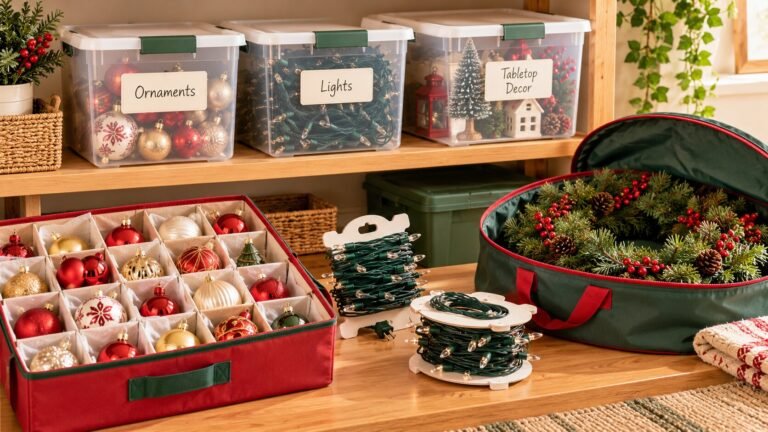
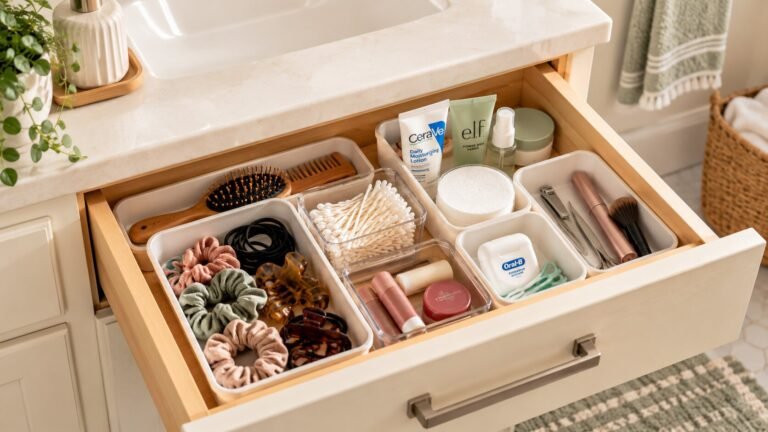
Bins and baskets can help contain clutter, but a collection of different sizes, shapes, colors, and materials can sometimes create its own kind of visual noise.
That doesn’t mean you need to replace perfectly useful organizers just because they don’t match.
The Fix
Start with your most visible storage areas.
Try grouping similar baskets or bins together and moving mismatched containers to cabinets, closets, or other closed storage when possible.
When you actually need to purchase another organizer, choosing something that coordinates with what you already own can gradually create a more consistent look.
There’s no need to replace everything at once.
Nook & Noted Tip: Before buying matching organizers, see whether simply rearranging the containers you already own makes the space feel more cohesive.

2. Too Many Small Decorative Objects
A candle, framed photo, favorite souvenir, or small plant can give a room personality.
But when every shelf and tabletop holds lots of small decorative pieces, individual objects can start to disappear into the collection.
Instead of noticing the things you love, your eye notices everything at once.
The Fix
Choose a few favorites to display and give them a little room around them.
You don’t necessarily have to get rid of the rest. Store some and rotate them occasionally, move a few to another room, or group related objects together rather than spreading them across every available surface.
A little open space can make the things you keep on display stand out more.
3. Visible Cords and Chargers
Phone chargers on the nightstand. Laptop cords dangling behind a desk. A tangle of cables underneath the television.
They’re small, but when several cords are visible at once, they can make an otherwise tidy area look unfinished.
The Fix
Start with the cords you see most often.
Simple cable clips or ties can keep cords together or route them along the back of furniture. A cable-management box can contain a power strip and excess cord length. Chargers that aren’t used regularly can live in a drawer or basket instead of staying plugged in.
You don’t need to hide every wire in the house. Containing the most noticeable ones may be enough.
Nook & Noted Tip: Before buying cord organizers, unplug anything you no longer use. Sometimes the easiest cable-management solution is simply having fewer cables to manage.

4. Papers Without a Landing Spot
Mail, receipts, school papers, appointment reminders, coupons and forms have an impressive ability to spread across a house.
One paper lands on the kitchen counter. Another goes on the dining table. A third gets placed by the front door.
Soon, several otherwise clean surfaces look cluttered.
The Fix
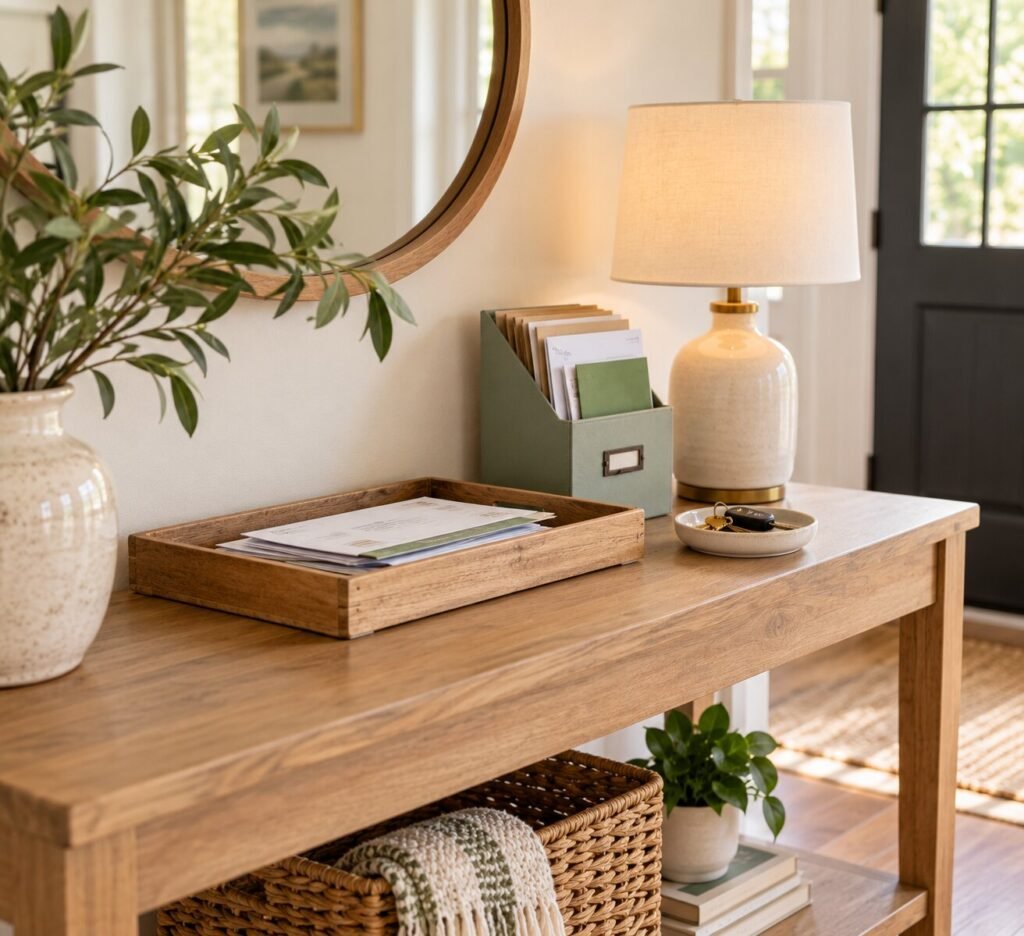
Give incoming paper one contained landing spot.
That could be a small tray, file holder, wall organizer, or basket—whatever fits your home and habits.
The goal isn’t to create a complicated filing system. It’s to stop paper from migrating across multiple surfaces.
Then make a habit of periodically going through that one spot and recycling, filing, or acting on what has accumulated.
Nook & Noted Tip: Don’t create five places to organize paper. Start with one place where incoming paper goes before it goes anywhere else.
5. Too Many Things Without a Designated Home
Some clutter isn’t really clutter at all.
It’s simply stuff that doesn’t have anywhere obvious to go.
Reusable shopping bags end up on a chair. A purse lands on the kitchen counter. Backpacks collect near the door. A throw blanket moves between the couch and floor.
When everyday belongings don’t have a predictable home, they tend to travel from surface to surface.
The Fix
Pay attention to the things you’re constantly moving out of the way.
Instead of asking, Where should this theoretically be stored?, ask:
Where would I naturally put this away?
That might mean a hook near the door for a bag, a basket near the sofa for blankets, a drawer for chargers, or a bin for pet supplies.
The best storage location isn’t always the cleverest one.
It’s the one you’re actually likely to use.
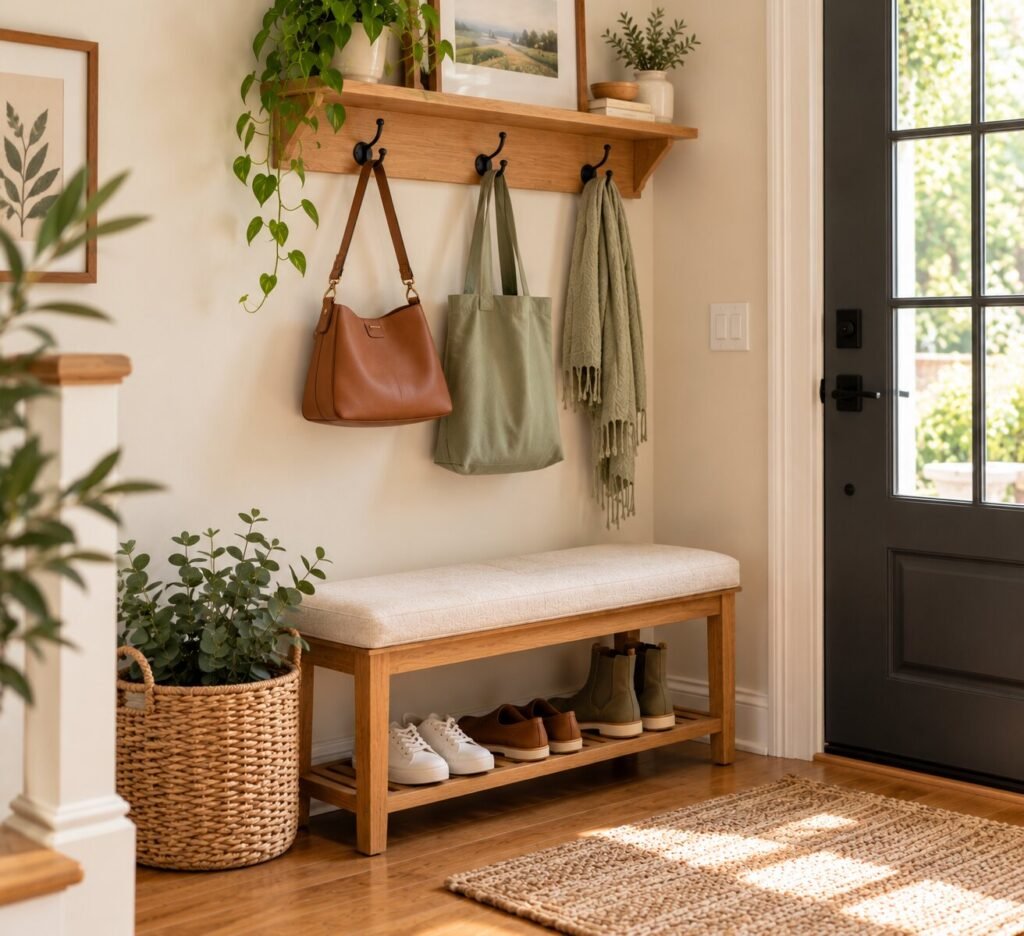
Need some additional ideas? Check out 7 Simple Products That Can Make Your Home Feel More Organized.
6. Open Shelving That’s Doing Too Much
Open shelves can be useful and attractive, but they’re also completely visible.
When every inch is occupied by dishes, books, baskets, decor, papers, and miscellaneous objects, even neatly arranged shelves can make a room feel busy.
The Fix
Remove a few things and see what happens.
Keep the objects you use frequently or genuinely enjoy seeing, then move less attractive or rarely used items into closed storage when possible.
You don’t need to follow a formula for how full a shelf should be. Just give individual items enough room that you can actually notice them.
Nook & Noted Tip: If removing three or four things makes a shelf immediately look better, it probably didn’t need another organizer—it needed a little breathing room.

7. Too Much of Your Storage Is Open and Visible
Open storage is convenient.
Hooks make things easy to grab. Clear bins make contents easy to see. Open baskets keep frequently used items accessible. Shelving lets you use vertical space.
But when all of your storage is visible, a room can start to feel busy even when everything is technically organized.
The Fix
Use a mix of open and closed storage when you can.
Keep attractive or frequently used belongings accessible, while storing visually busy items behind cabinet doors, inside drawers, or in opaque containers.
For example, a few everyday items might live on an open shelf while backup supplies stay inside a cabinet.
You don’t need to hide everything. The goal is simply to give your eye a few places where nothing is competing for attention.
8. Flat Surfaces Have Become Storage
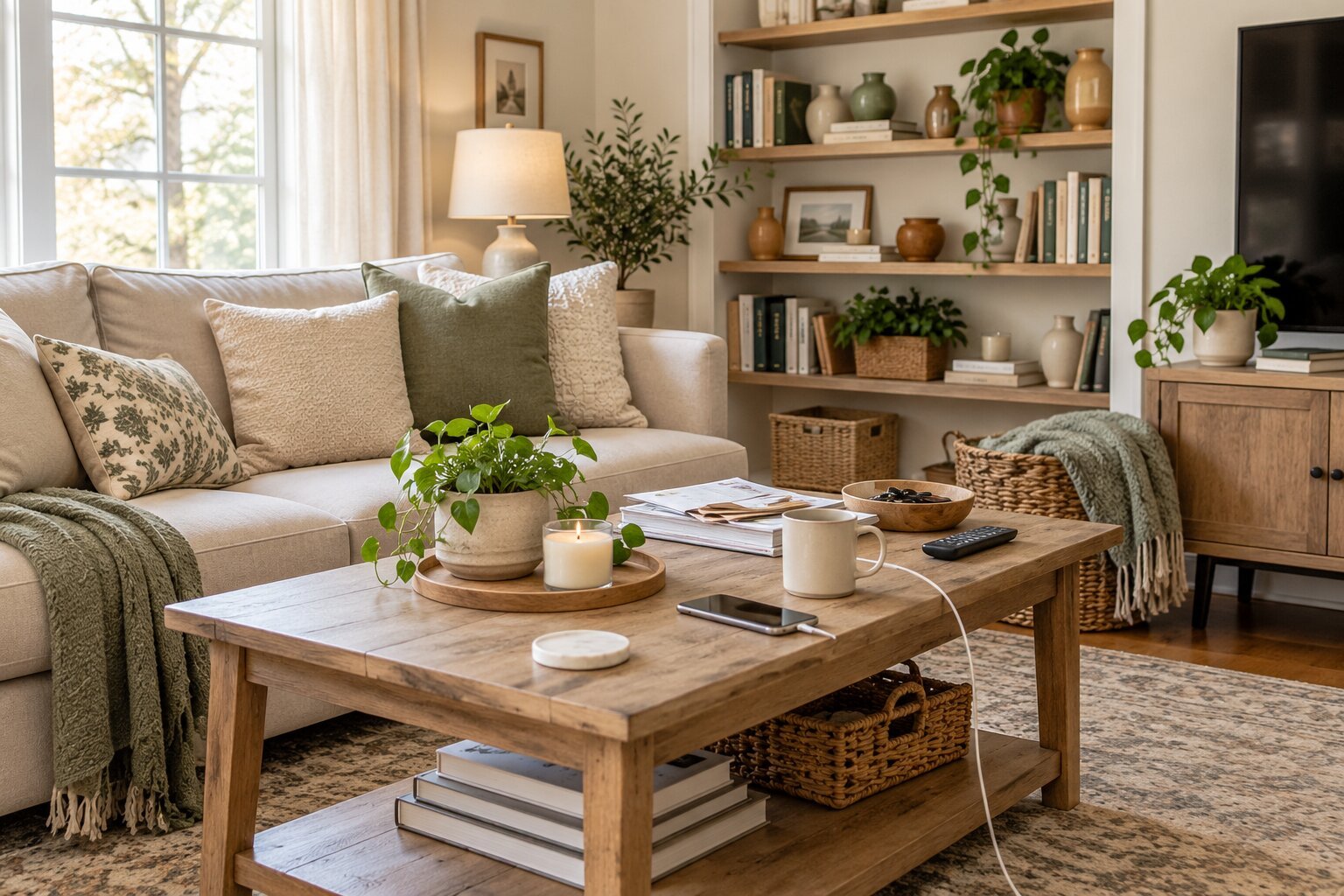
Counters, dressers, coffee tables, nightstands, and side tables have a habit of becoming default storage for things that don’t have another home.
Loose change.
Mail.
Hair ties.
Chargers.
Water bottles.
Receipts.
One or two things barely register. Add a dozen small items and suddenly the entire surface looks cluttered.
The Fix
Clear one surface completely and decide what actually needs to return.
Then find homes for the things that don’t.
A small tray can work well for a few everyday essentials, but avoid solving every clutter problem by adding another container to the surface.
Sometimes the best solution is simply moving something somewhere else.
Nook & Noted Tip: If something has been sitting somewhere “temporarily” for two weeks, it probably needs an actual home.

9. Too Much Visible Technology
Modern homes come with a surprising amount of technology.
Remotes, headphones, tablets, game controllers, speakers, chargers, power strips, smart-home devices—the individual items may be small, but together they can create a lot of visual clutter.
The Fix
Keep frequently used technology accessible and give everything else a designated place.
A small basket or drawer can hold remotes and controllers. Charging cables can stay together in one charging area. A media console with closed storage can hide accessories that don’t need to remain visible.
You don’t need less technology.
You may simply need less of it sitting out at the same time.
10. Storage That’s Overflowing
Sometimes we organize clutter beautifully… and then keep adding things.
The blanket basket starts overflowing.
The shoe rack gains another layer of shoes underneath it.
The mail organizer is stuffed so full that papers stick out of every opening.
At that point, the organizer itself starts contributing to the cluttered look.
The Fix
Treat the capacity of your storage as useful information.
If a basket, drawer, shelf, or organizer is consistently overflowing, don’t automatically buy another container to put beside it.
First look at what’s inside.
Are there things you no longer use? Duplicates? Items that belong somewhere else? Seasonal things that could be stored differently?
If everything really does need to stay, then a different storage solution might make sense.
But edit first. Organize second. Buy something new only when it solves the actual problem.
Nook & Noted Tip: An organizer isn’t creating more space if it’s simply giving you another place to accumulate things.

Try the “Look Away and Look Back” Test
Here’s a simple way to figure out where to start.
Choose one room and walk out of it for a minute.
When you come back, don’t immediately start examining drawers or thinking about everything that needs organizing.
Instead, notice where your eye goes first.
Is it the stack of mail on the counter?
The crowded bookshelf?
The collection of things on the coffee table?
The cords underneath the television?
The shoes beside the front door?
That’s your starting point.
You don’t have to organize the entire room. Fix the first thing that catches your eye and then see how the space feels.
Sometimes one small change makes the next problem much easier to see.

A Cluttered Look Isn’t Always About How Much You Own
It’s easy to assume that a cluttered-looking home needs a massive decluttering session.
Sometimes it does.
But often, the biggest difference comes from something much smaller: containing one scattered category, clearing one surface, editing one crowded shelf, or giving frequently used belongings a better place to land.
A basket that isn’t overflowing.
A counter without three piles of paper.
A shelf with a little open space.
A charger that finally has a home.
Small changes like these can make a room feel calmer without reorganizing everything you own.
The Bottom Line
A clean home and a calm-looking home aren’t always the same thing—and that’s actually encouraging.
You may not need to declutter the entire house to make it feel better. Sometimes containing one pile, clearing one surface, or giving a handful of everyday items a better home is enough to noticeably change the way a room feels.
Choose the two or three trouble spots you notice most and start there.
Once those are working better, you may discover that the rest of the room doesn’t feel nearly as cluttered as you thought.
Looking for More Organization Inspiration?
Ready to make the space you have work a little better? Explore more practical organization ideas, small-space solutions, and clever home finds from Nook & Noted.