The living room is where real life happens. It’s where the remote gets lost, the throw blankets pile up, the kids’ toys migrate, and the mail takes a brief detour on its way to somewhere else.
Somehow, the room everyone uses becomes the room where everything ends up.
The encouraging news? Living room clutter is usually pretty predictable.
The same handful of things tend to wander in every day. That means a few well-chosen storage spots can catch most of the clutter before it spreads across the coffee table, sofa, and floor.
And no, you don’t need to turn your living room into a showroom where nobody’s allowed to touch anything.
The goal is a comfortable space that’s easy to use, easy to tidy, and still feels like home.
Here are nine practical living room storage ideas, along with the everyday problems they can help solve.
Before You Add Storage, Notice What Actually Collects
Before buying another basket or organizer, spend a few days paying attention to what ends up in your living room.
Is it throw blankets? Remotes? Toys? Books and magazines? Charging cords? Things that really belong in another room?
Those repeat offenders are your clues.
If blankets are always piled on the sofa, a basket nearby might solve the problem. If remotes disappear between cushions, a tray or drawer could give them a reliable home.
But if the biggest problem is mail collecting on the coffee table, buying another blanket basket probably isn’t going to help much.
The best living room storage isn’t necessarily the biggest, prettiest, or most expensive. It’s the storage that matches what actually happens in the room.
Nook & Noted Tip: The easier something is to put away, the more likely it is to stay organized. Aim for storage that makes a quick everyday reset possible—not a complicated system that takes extra effort.
1. Choose Furniture That Does Double Duty
The problem: You need more storage, but there’s no room for another piece of furniture.
The fix: Look for ways your existing furniture can work a little harder.
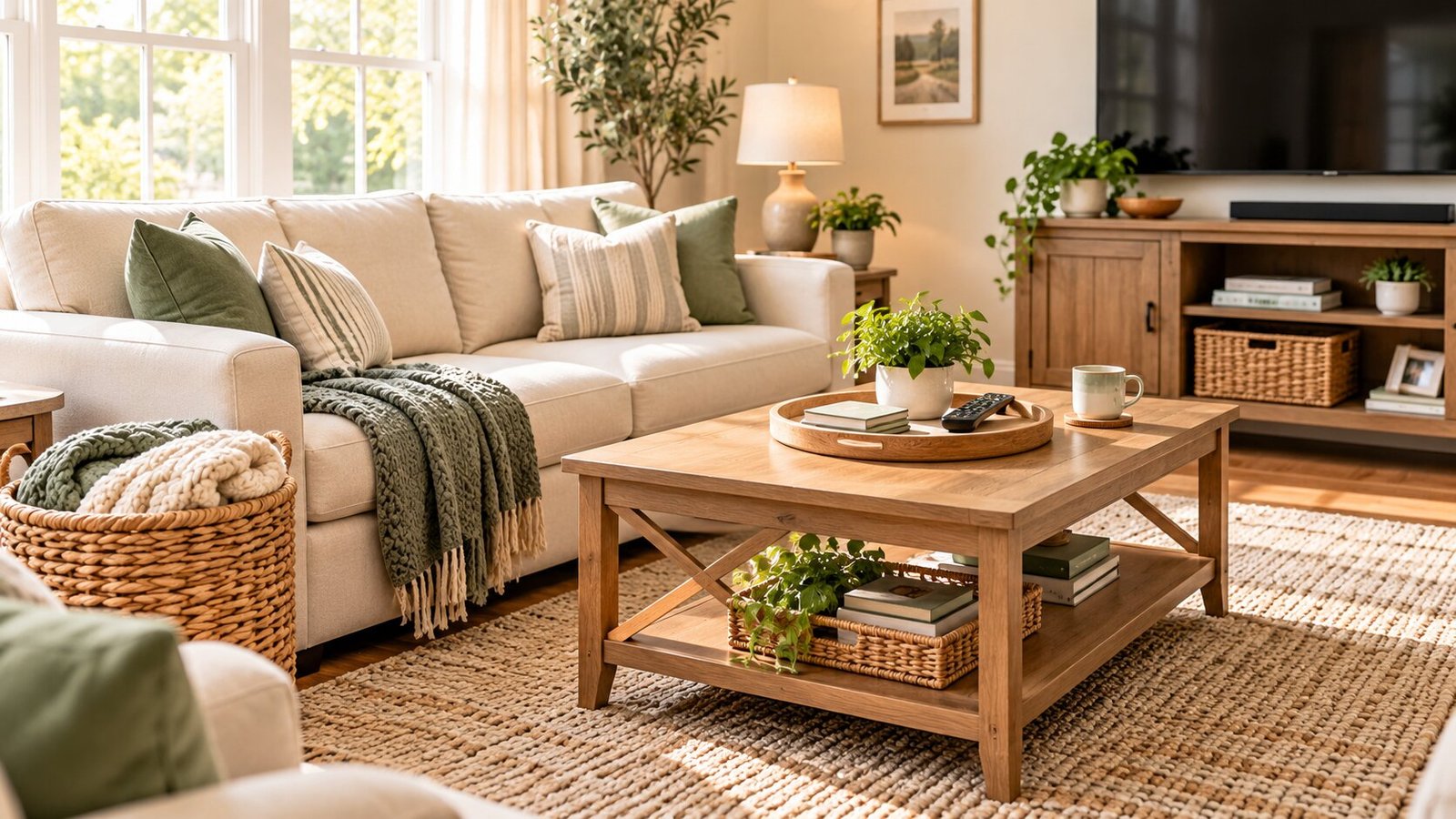
A coffee table with a lower shelf can hold baskets or books. An end table with a drawer can keep remotes, chargers, and other small items out of sight.
If you’re already planning to replace a piece of furniture, consider one with built-in storage.
A storage ottoman can hold blankets or games, while a lift-top coffee table may provide hidden space for everyday items.
The advantage is that you’re getting storage from furniture the room already needs, rather than squeezing in another cabinet or shelving unit.
And if your current furniture already has drawers or shelves, start there. You may have useful storage space that isn’t being used very well.
Nook & Noted Tip: Before buying multifunctional furniture, measure both the available floor space and the clearance needed to open drawers or lift-top compartments. If an ottoman will double as seating, check the manufacturer’s intended use and weight rating.

2. Give Throw Blankets Their Own Basket
The problem: Blankets end up draped over every chair, cushion, and sofa arm.
The fix: Place a basket near the sofa to hold the blankets your household actually uses.
This is one of those small changes that works because it doesn’t require much effort.
Nobody has to carry blankets across the house or fold them into perfect rectangles. They just need to put them in the basket.
Look for a basket with a wide opening and enough room to hold the blankets comfortably. Soft-sided fabric bins and woven baskets can both work, depending on your space.
If blankets are constantly spilling over the sides, you may need a larger basket—or fewer blankets stored in the living room.
And if you already have a suitable basket somewhere else in the house, try moving it before buying something new.

3. Keep Remotes and Small Items Together With a Tray
The problem: Remotes, coasters, reading glasses, and other small items scatter across the coffee table.
The fix: Give them one designated spot.
A shallow tray on the coffee table or side table can keep frequently used items together without making them difficult to reach.
It also creates a visual boundary. Instead of five little things scattered across a table, you have one contained group.
Choose a tray that’s large enough for the essentials but small enough to leave some open tabletop space.
You don’t need an elaborate organizer. A simple wooden tray, shallow basket, or small dish may be all that’s necessary.
The important part is making it obvious where those everyday items belong.
If the tray starts collecting receipts, old batteries, random toys, and things nobody recognizes, give it a quick cleanout.
A tray works best when it holds the things you actually use there.

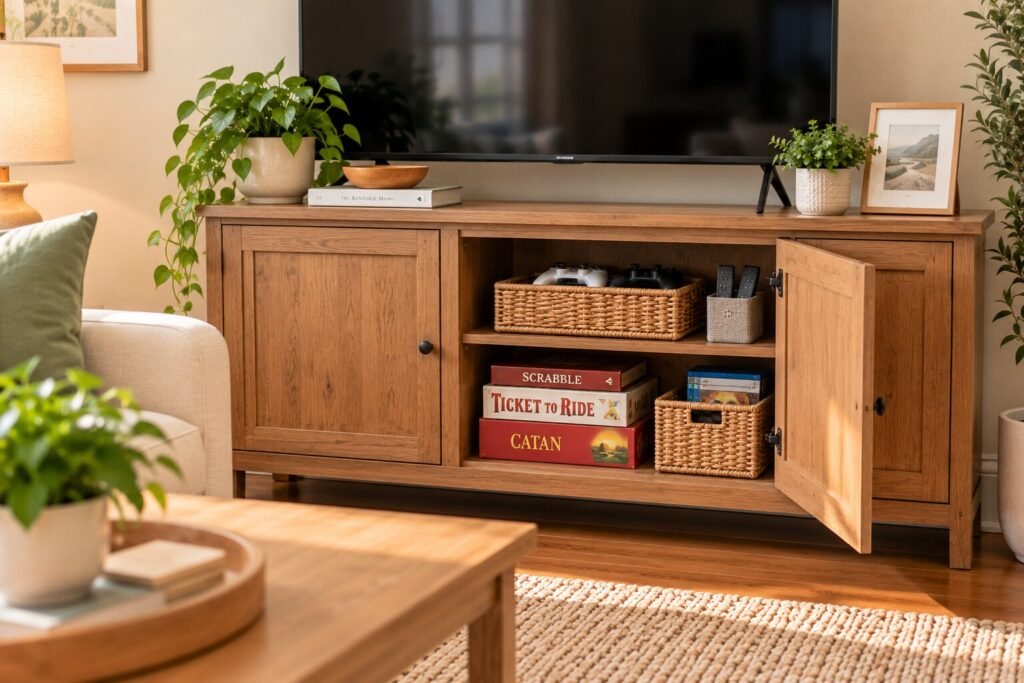
4. Use Closed Storage for Things You Don’t Need to See
The problem: Your belongings are technically organized, but the room still looks busy.
The fix: Use cabinets, drawers, and lidded containers for items that don’t need to stay visible.
Open shelving is useful, but not everything looks particularly attractive on display.
Game controllers, spare cords, board games, paperwork, and miscellaneous accessories can make a room feel cluttered even when they’re arranged neatly.
A media console with doors can keep these items accessible while reducing visual clutter.
If you already have a cabinet or console, start by organizing what’s inside. Group similar items together and remove anything that doesn’t belong there.
Small baskets or boxes inside the cabinet can help prevent everything from becoming one big pile.
You don’t have to hide every possession. A few books, plants, or favorite decorative objects can still live on open shelves.
The idea is to balance what you want to see with what you simply need to store.
5. Make Better Use of Wall Space With Shelves
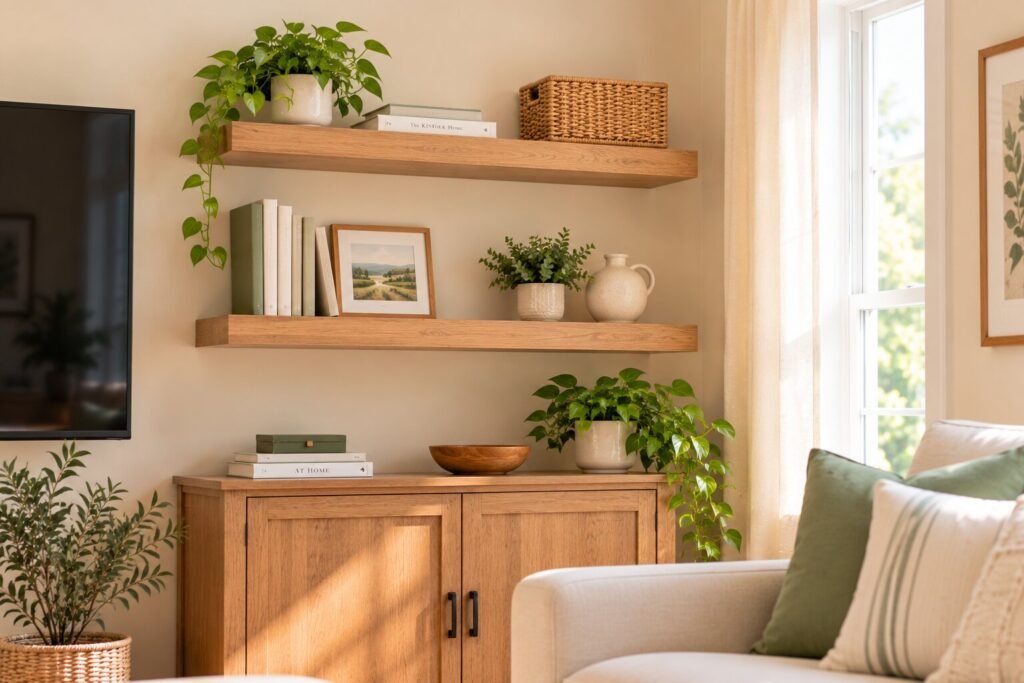
The problem: Floor space is limited, but books and other belongings still need somewhere to go.
The fix: Look up.
Wall-mounted shelves can provide useful storage without taking up additional floor space.
They work especially well for books, a few decorative objects, and lightweight baskets holding items you don’t need constantly.
But resist the temptation to fill every inch.
A shelf packed from end to end may technically provide more storage, but it can also make the room feel crowded.
Try grouping similar items together and leaving a little open space between them.
Keep frequently used items within comfortable reach. Higher shelves are better suited to lightweight belongings that don’t need to be accessed regularly.
And if you’re using shelves above furniture, think about what could fall or be knocked off.
Nook & Noted Tip: Check the shelf’s weight limit and use mounting hardware appropriate for your wall. Follow the manufacturer’s installation instructions, especially when storing books or other heavier items.
6. Create a Simple Toy Storage Spot
The problem: Toys migrate from the playroom or bedroom into every corner of the living room.
The fix: Give the toys that regularly end up in the living room a designated home.
You don’t necessarily need an entire toy-storage system.
A low basket, fabric bin, or small cubby unit may be enough to contain the toys your children use most often in that space.
Keep the categories simple.
Instead of creating separate containers for every type of toy, try a few broad groups, such as building toys, stuffed animals, and books.
The easier the system is to understand, the more likely children are to participate in cleanup.
Choose storage appropriate for your children’s ages, and secure freestanding furniture to prevent tipping.
If the bins are overflowing, consider keeping fewer toys in the living room and rotating some into use occasionally.
The goal isn’t to hide every sign that children live in your home. It’s to make cleanup manageable.

7. Contain Cords and Create a Charging Spot
The problem: Charging cables, power cords, and electronic accessories make an otherwise tidy room look cluttered.
The fix: Start by identifying which cords actually need to stay.
Unused chargers and old cables often accumulate behind furniture simply because nobody has taken the time to sort them.
Once you’ve removed what you don’t need, use simple cable clips, ties, or cord covers to keep necessary cables from spreading across surfaces or walkways.
A small charging spot on an end table or console can also help prevent devices from being left all over the room.
Try to keep the setup practical. A charger that’s difficult to reach or put away probably won’t stay organized for long.
If you’re considering a cable-management box, choose one suitable for the equipment you’re using. Don’t cover power adapters or trap heat around electrical devices.
Nook & Noted Tip: Before buying a cord organizer, unplug unused devices and remove cables you no longer need. Sometimes reducing the number of cords solves half the problem.
8. Try a Slim Console Behind the Sofa
The problem: You need another place for small belongings, but don’t want to crowd the room with extra furniture.
The fix: If your sofa sits away from the wall, the space behind it may offer an opportunity for storage.
A narrow console table can hold a lamp, a small basket, books, or other everyday essentials.
Some designs include a lower shelf that provides extra storage without taking up much additional visual space.
This works especially well in living rooms where the sofa separates the seating area from another part of the room.
But it’s not the right solution for every layout.
If your sofa already sits against a wall, adding a table behind it may simply push the seating farther into the room.
And if the console would make a walkway too narrow, it’s probably not worth the extra storage.
Measure the space first and make sure the table won’t interfere with comfortable movement through the room.
Nook & Noted Tip: A narrow piece of furniture isn’t automatically space-saving. It only helps when it fits the room’s layout without making everyday movement more difficult.

9. Make Storage Easy Enough for a Quick Evening Reset
The problem: Even after organizing, clutter gradually builds up again.
The fix: Make putting things away part of the everyday routine.
This is where all those storage solutions start working together.
Blankets go back in the basket.
Remotes return to the tray.
Toys go into their bins.
Books return to the shelf.
Charging cables stay in their designated spot.
A quick evening reset doesn’t have to be a formal cleaning session. It can simply mean spending a few minutes returning everyday items to their homes before settling in for the night.
And if multiple people use the room, everyone can help.
The real test of your storage system is how easily the room can be put back together.
If the same items are constantly left out, ask whether their storage spots are too far away, too difficult to access, or simply not where people naturally use them.
Sometimes moving a basket a few feet makes more difference than buying another organizer.
Before You Buy Living Room Storage, Ask These Four Questions
It’s tempting to see an attractive basket, cabinet, or organizer and imagine how much better the living room would look with it.
But a new storage product only helps if it solves a real problem.
Before buying, ask yourself:
- What specific clutter problem will this solve? A blanket basket won’t help if the real problem is paperwork.
- Will it fit comfortably? Measure the space and consider walkways, doors, and furniture clearance.
- Will everyone actually use it? Storage should be easy to reach and simple to maintain.
- Can I use something I already own? An unused basket, drawer, or shelf may work just as well.
You don’t need more organizers just for the sake of having them.
You need the right storage in the right places.
Good Living Room Storage Makes Cleanup Easy
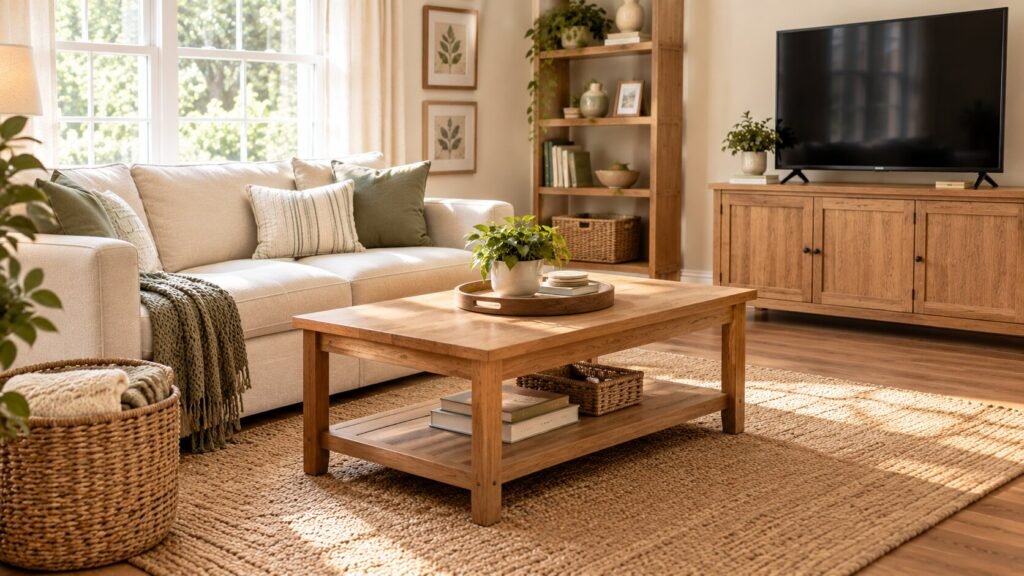
The best living room storage isn’t the kind that hides everything perfectly.
It’s the kind that makes putting things away so simple that it actually happens.
A basket near the sofa is useful because blankets can go right back into it. A tray works because everyone knows where the remotes belong. A toy bin helps because cleanup doesn’t require sorting twenty different categories.
And remember to leave a little breathing room.
A basket doesn’t need to be stuffed to the top. Shelves don’t need to be filled from end to end. A coffee table doesn’t need a decorative arrangement covering every inch.
A little open space makes the room feel calmer and helps keep storage from becoming another source of clutter.
The Bottom Line
You don’t need to overhaul your living room to keep everyday clutter under control.
Start by noticing what collects there, then choose one or two storage solutions that match those belongings.
Maybe it’s a basket for blankets, a tray for remotes, or a cabinet that finally gives the game controllers somewhere to live.
Small, practical changes can make a surprisingly big difference.
After all, the goal isn’t a living room that always looks untouched.
It’s a living room where people can relax, spend time together, and still put things away without turning cleanup into a project.
Looking for More Small-Space Inspiration?
Ready to make the space you have work a little harder? Explore more practical organization ideas, small-space solutions, and clever home finds from Nook & Noted.