Not every home comes with enough closets.
If you live in an older house, apartment, studio, or anything enthusiastically described as having plenty of “cozy charm,” you may already know the struggle.
Coats migrate to chairs. Shoes multiply by the front door. Extra bedding gets squeezed onto the highest shelf. And somehow one bedroom closet is expected to hold clothes, linens, luggage, bags, and three things nobody remembers putting there.
The good news? A lack of closets doesn’t mean you’re out of storage space.
Look around and you may find useful room hiding under furniture, behind doors, on empty walls, and even inside furniture that’s already taking up valuable floor space.
Here are nine practical ways to find more storage without adding another closet—or sacrificing half the room to storage furniture.
First, Figure Out What Needs a Home
Before buying another basket, bin, cabinet, or organizer, identify what’s actually creating the storage problem.
Is it:
- Coats?
- Shoes?
- Bedding?
- Clothes?
- Bags?
- Towels?
- Seasonal items?
Different problems need different solutions.
A garment rack isn’t going to solve an overflowing bedding problem, and a storage ottoman probably isn’t the answer to 25 pairs of shoes—unless you’ve discovered an unusually impressive ottoman.
Start with the belongings that don’t have a logical home. Then look for unused space near where you actually use those things.
That makes it much easier to choose storage you’ll continue using instead of buying another organizer and then wandering around the house trying to decide what to put in it.
Nook & Noted Rule for Small Spaces: If a piece of furniture takes up valuable floor space, it gets bonus points if it can do more than one job.
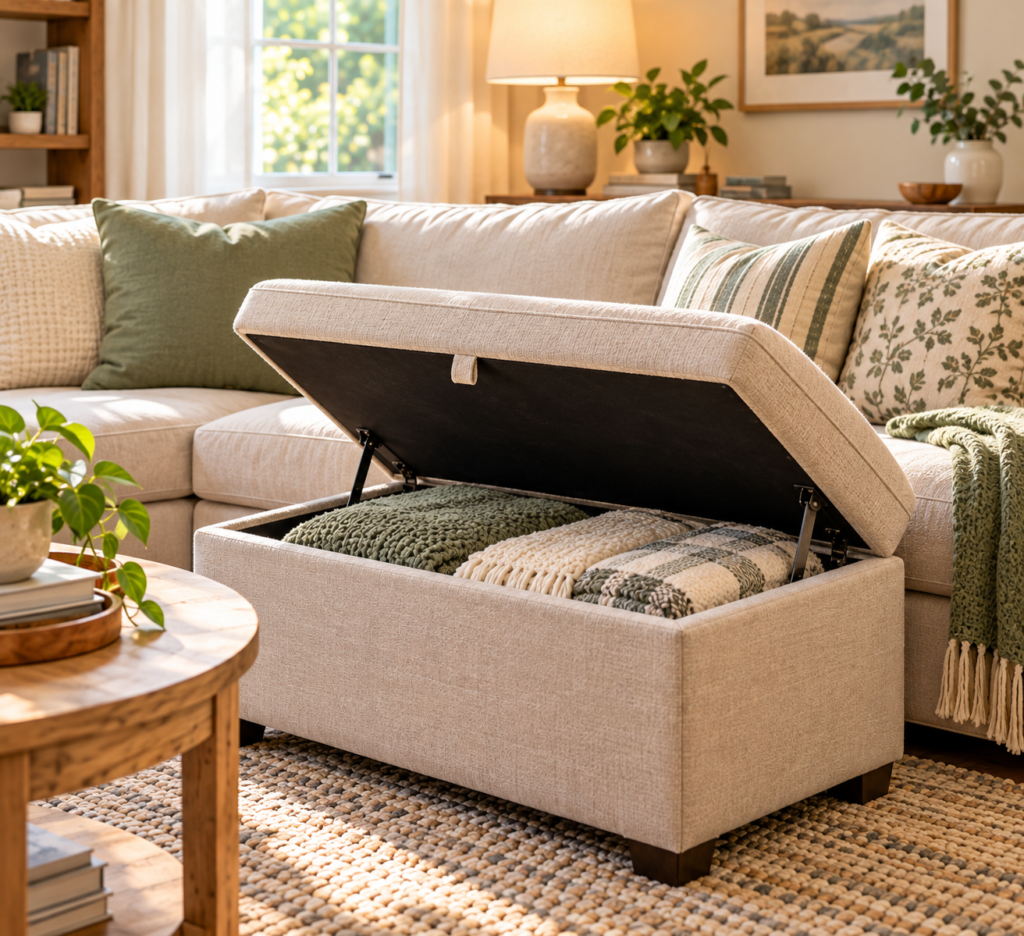
1. Let Your Ottoman Hide Something
In a small living room, every piece of furniture should earn its keep.
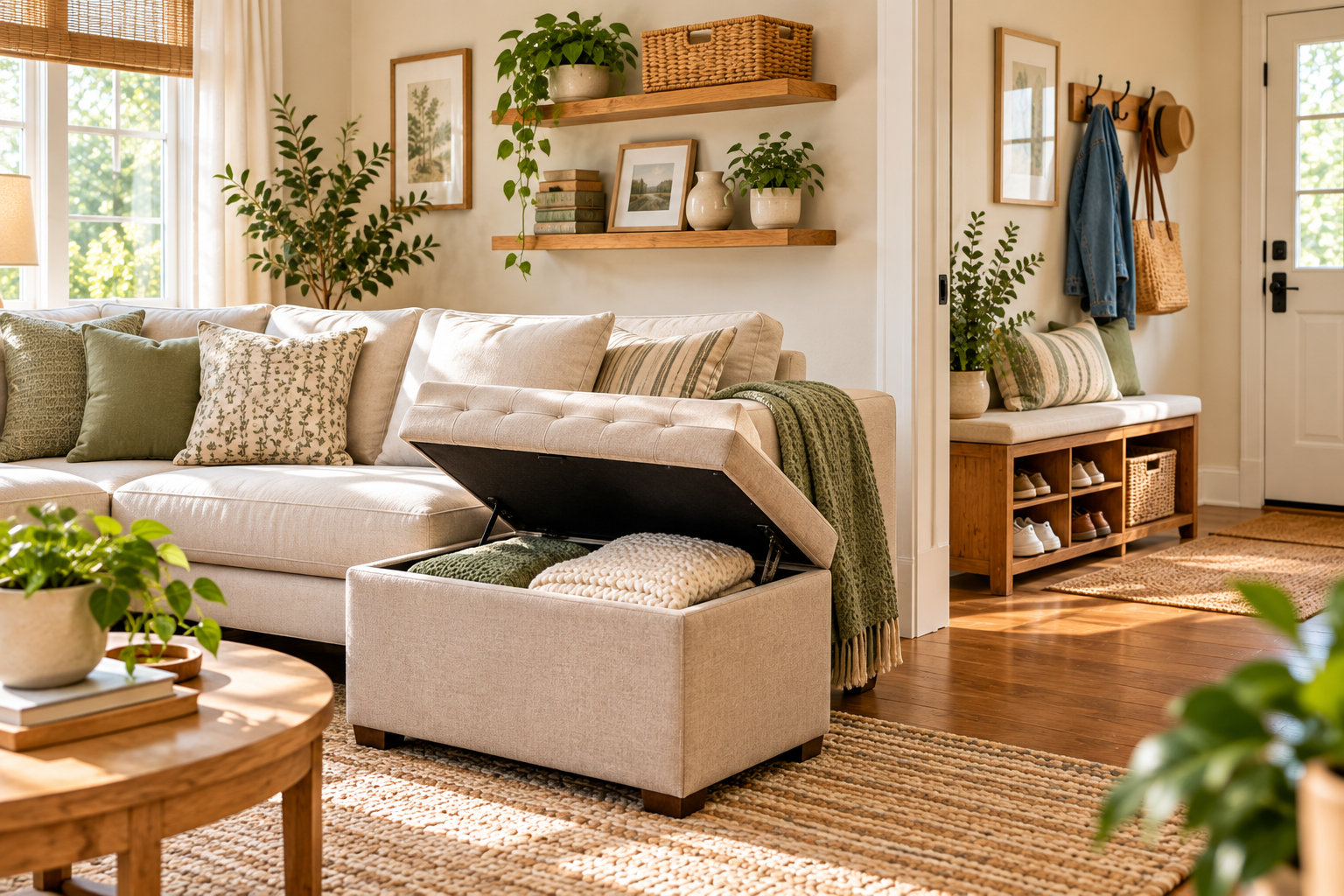
A storage ottoman can give blankets, extra pillows, games, toys, or other living-room essentials a hidden place to live while still functioning as a footrest.
Some models can also provide occasional extra seating when they’re designed and rated for it.
In other words, it’s furniture with a side hustle.
Instead of adding a separate cabinet just for storage, you’re allowing a piece of furniture you may already want in the room to do double duty.
Think About What’s Going Inside
Don’t judge an ottoman by its outside dimensions alone.
Thick upholstery and internal supports can make a large-looking ottoman surprisingly modest on the inside, so check the dimensions of the actual storage compartment.
And decide what you plan to store before choosing one.
Blankets need a different interior shape than board games, children’s toys, or smaller household items.
If the ottoman may also be used as a seat, check the manufacturer’s intended use and weight rating. Not every lightweight storage cube is designed for someone to sit on it.
Nook & Noted Tip: The best multipurpose furniture is useful for both of its purposes—not technically capable of one and genuinely useful for the other.
2. Put That Empty Space Under the Bed to Work
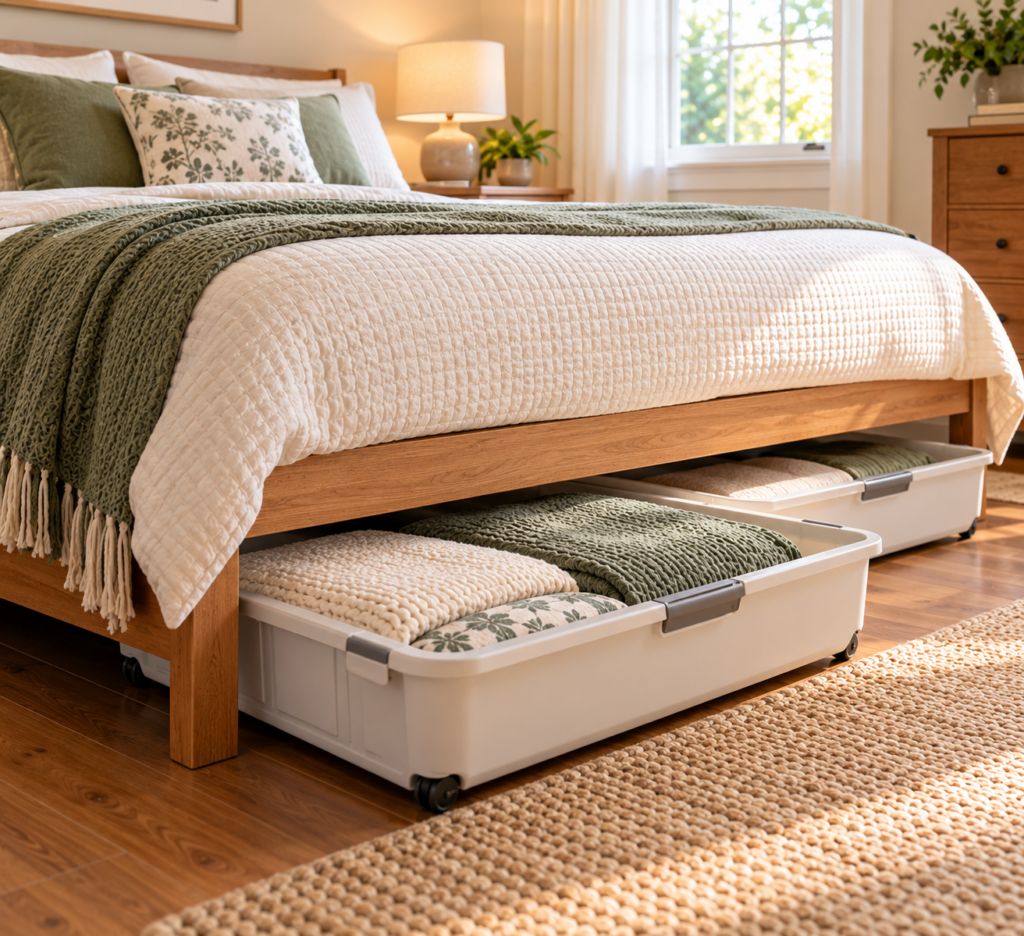
Your bedroom closet may be overflowing while several square feet of space underneath your bed are doing absolutely nothing.
Unless your cat has claimed the entire area, that may be some of the most useful untapped storage space in the bedroom.
And you don’t necessarily need to buy a new storage bed to use it.
Start by measuring the clearance underneath your existing bed frame.
If there’s enough room, low-profile bins, drawers, or zippered storage containers can provide a useful home for things you don’t need every day.
Under-bed storage works particularly well for:
- Extra bedding
- Off-season clothing
- Shoes
- Spare towels
- Accessories
- Occasionally used items
If you access the storage regularly, containers with handles or wheels can make them easier to pull out.
For items you rarely need, enclosed or zippered containers may help keep dust away.
Measure the Actual Clearance
Measure from the floor to the lowest part of the bed frame, not simply to the bottom of the mattress.
A container that is technically shorter than your bed but two inches taller than the available opening isn’t going underneath it without a fight.
Nook & Noted Tip: Don’t buy a new storage bed to solve a problem that two simple under-bed bins could fix. Start with the easiest solution first.
3. When Floor Space Runs Out, Look Up
Small homes usually run out of floor space long before they run out of walls.
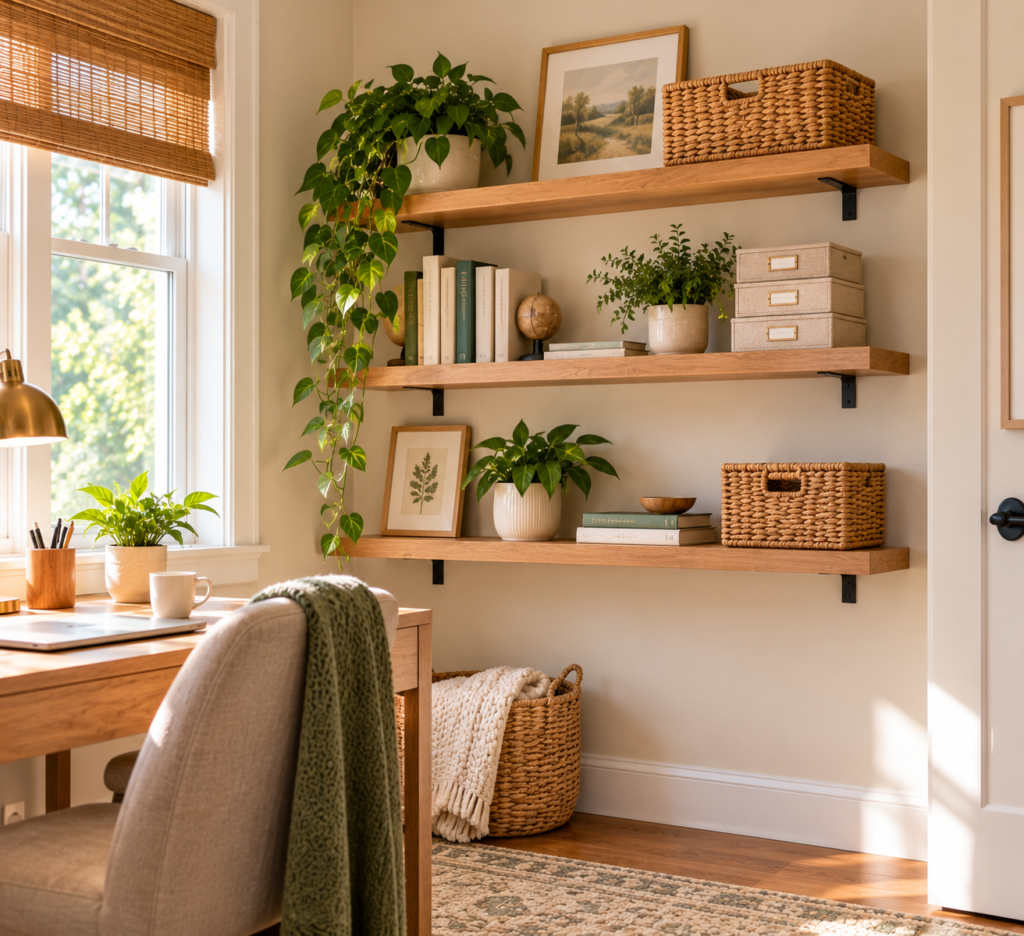
Floating shelves, wall-mounted cubbies, and other appropriately installed vertical storage can provide useful storage without taking up the footprint of another cabinet or bookcase.
Vertical storage can work especially well in:
- Bathrooms: Towels, toiletries and small baskets
- Kitchens: Everyday dishes, jars and cookbooks
- Bedrooms: Books, accessories and decorative storage boxes
- Hallways: Baskets and frequently used items
- Home offices: Books and office supplies
The goal isn’t to cover every available wall with shelving until your home starts resembling a very organized warehouse.
Instead, look for one area where unused vertical space could solve a real storage problem.
A couple of well-placed shelves may be all you need.
Keep Everyday Things Within Reach
Reserve comfortable-to-reach shelves for the things you use regularly.
Higher shelves are generally better suited to lighter items that aren’t needed every day.
And always check the shelf’s weight rating and installation requirements. Decorative floating shelves can sometimes support much less weight than their sturdy appearance suggests.
The appropriate mounting method will depend on the shelf, wall construction, and what you intend to store.
Nook & Noted Tip: Empty wall space doesn’t automatically need storage. Add shelves because they solve a problem—not because there’s technically room for them.
4. Create a Mini Closet With a Garment Rack
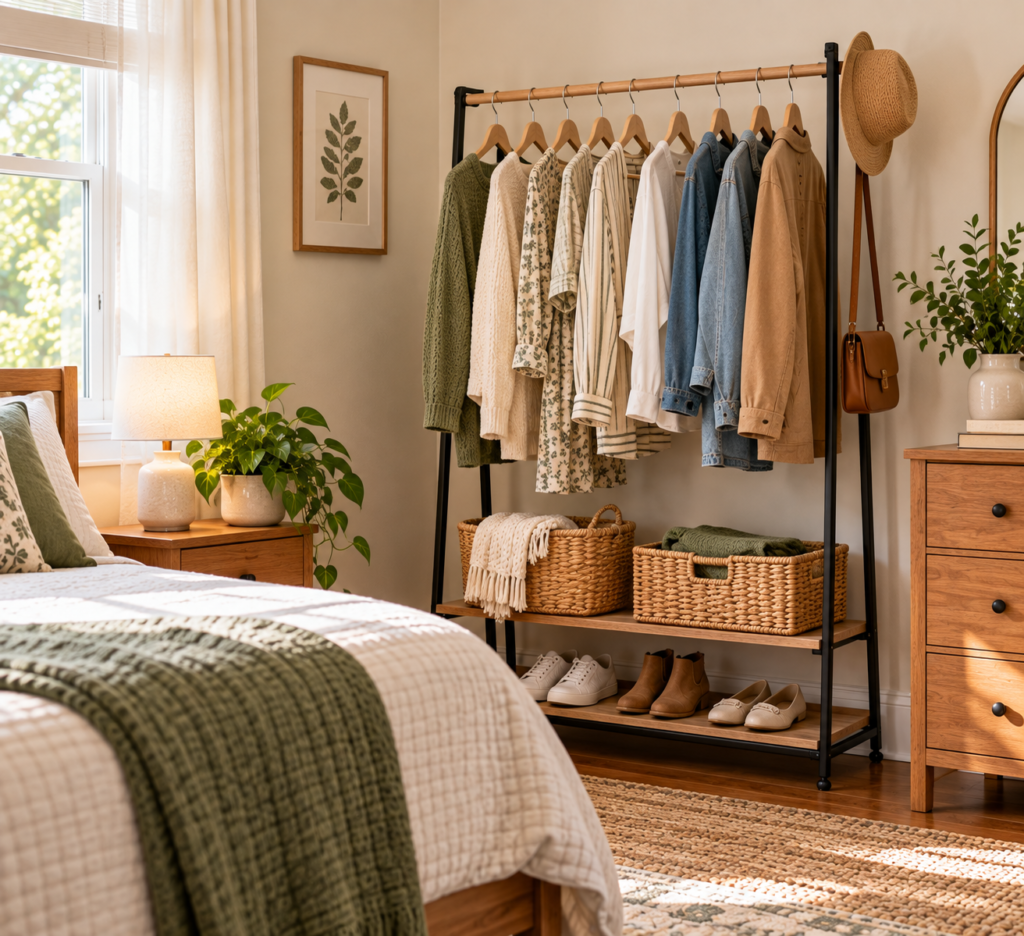
If your bedroom has very little closet space—or no closet at all—a freestanding garment rack can create an instant place for hanging clothes.
It can fit into a bedroom corner or dressing area, and because it’s freestanding, it can usually move if you rearrange the room later.
But there’s one important difference between a garment rack and a closet:
A closet has doors that politely hide your organizational decisions.
A garment rack does not.
Everything is visible.
For that reason, an open rack usually works best as an edited everyday wardrobe, rather than somewhere to squeeze every piece of clothing you own.
Keep frequently worn shirts, jackets, dresses, or work clothes on the rack and move less-used or seasonal clothing somewhere else.
Give the Clothes Some Breathing Room
An overcrowded rack can make a small bedroom feel more cluttered instead of less.
Leave a little space between garments when possible.
If you need additional storage, consider a rack with a lower shelf for shoes or baskets so one piece can handle both hanging and folded items.
Stability matters, too. Check the manufacturer’s weight capacity, particularly if you’ll be hanging coats, jackets, or other heavier clothing.
Nook & Noted Tip: If you can’t slide one hanger sideways without moving eight others, the rack may be trying to do too much.
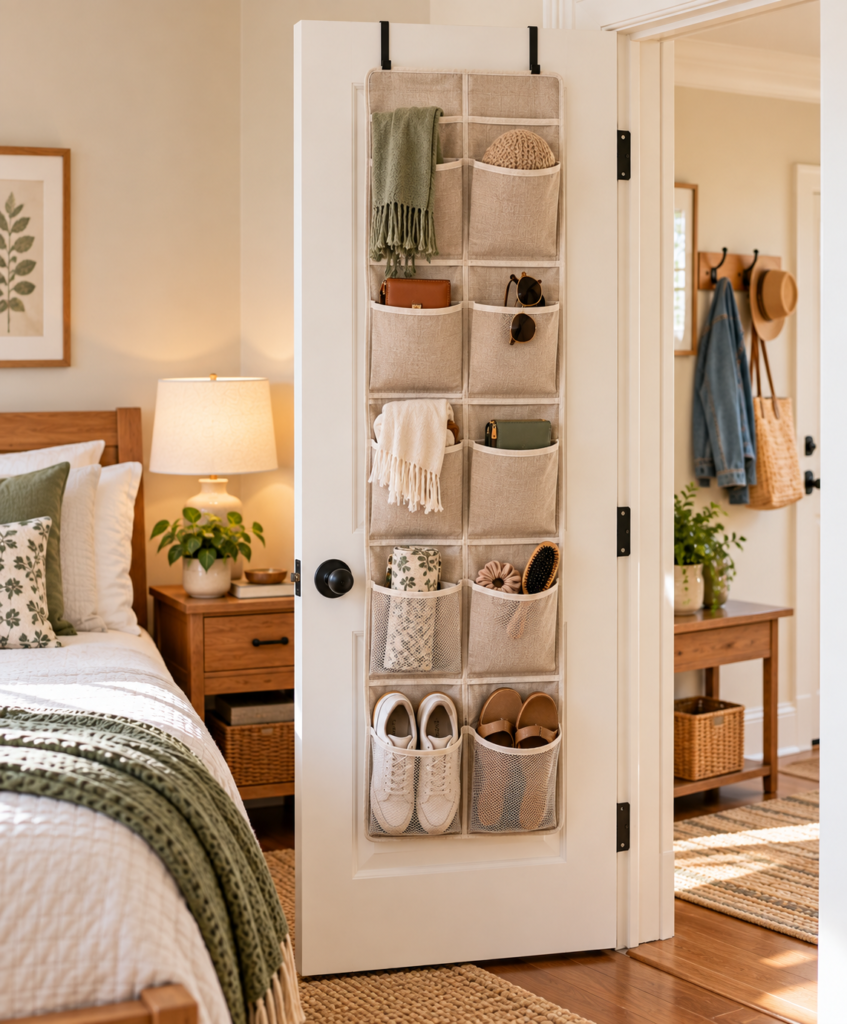
5. Don’t Forget the Back of the Door
The back of a door is easy to overlook because technically it’s already doing something.
But in a small home, it may be able to handle one more job.
An over-the-door organizer can add pockets, hooks, or small compartments without taking up any floor space.
Depending on the room and organizer, it can be useful for things like:
- Shoes
- Scarves
- Hats
- Belts
- Small handbags
- Gloves
- Accessories
- Toiletries or other lightweight supplies
It’s particularly useful for smaller items that tend to disappear when they’re piled together on a shelf.
Make Sure the Door Can Still Be a Door
Measure both the door and the organizer before buying.
Over-the-door hooks need enough clearance between the top of the door and its frame, and a bulky organizer can interfere with nearby walls, trim, furniture, or door hardware.
Also consider what you’re planning to store.
A lightweight pocket organizer isn’t automatically suitable for several heavy bags simply because they’ll fit inside it.
Nook & Noted Tip: Don’t fill every pocket just because it’s there. A little open space makes an organizer easier to use—and gives the inevitable new item somewhere to go.
6. Make the Entryway Earn Its Space
When there’s no coat closet near the front door, shoes, bags, and everyday essentials have a habit of creating their own storage system.
Usually on the floor.
A compact storage bench can give an entryway more structure without requiring separate seating and storage furniture.
It provides somewhere to sit while putting on shoes while also creating storage underneath or inside.
Two common styles work particularly well.
Open cubbies make shoes and baskets easy to grab.
Lift-top storage hides more from view and can help a busy entryway feel calmer.
Neither is automatically better.
If everyone takes their shoes off at the door several times a day, easy-access cubbies may be more practical.
If you mainly need somewhere to hide less frequently used items, concealed storage might make more sense.
Don’t Block the Door to Organize the Door
Measure carefully before adding furniture to an entryway.
Consider the bench’s width and depth, the walking path, and the full swing of the door.
A storage bench isn’t particularly helpful if everyone has to turn sideways to get into the house.
And if people will sit on it, check that the bench is designed for seating and review its weight rating.
Nook & Noted Tip: In high-traffic areas, easy usually beats elaborate. Storage that’s simple to use is much more likely to stay organized.
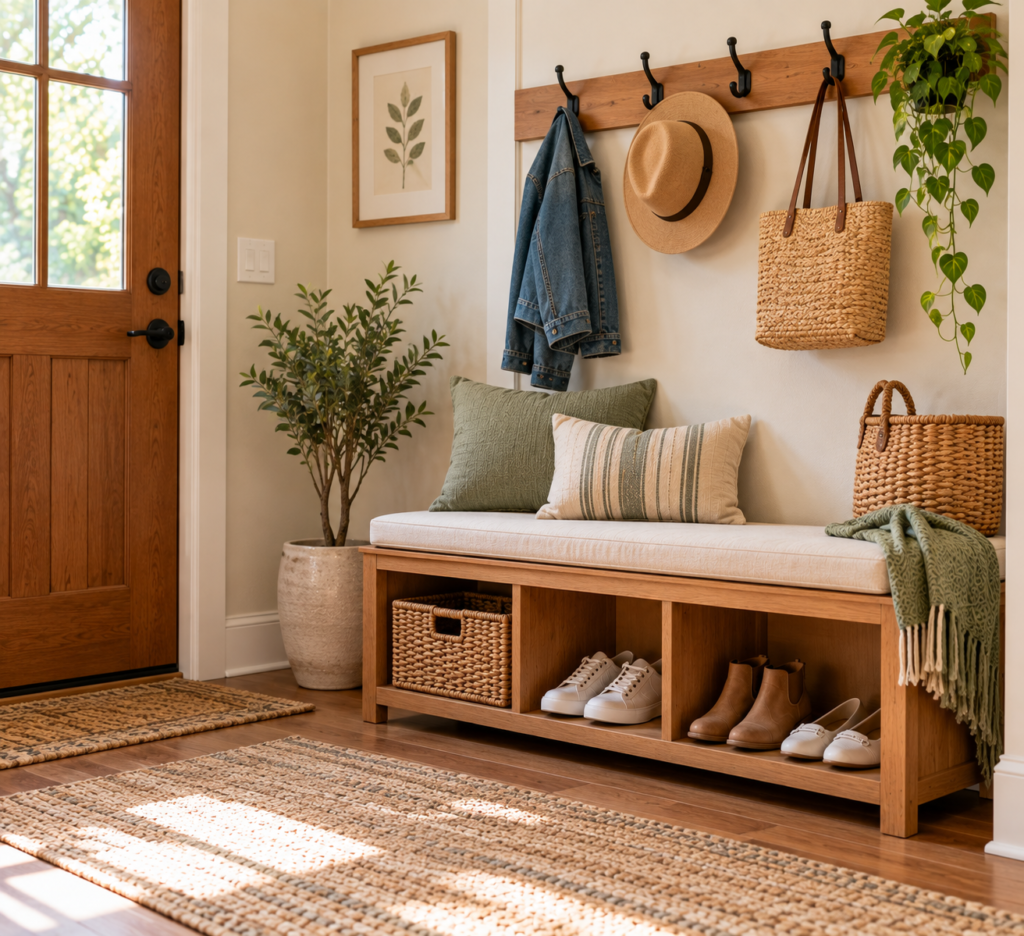
7. Create a Mini Coat Closet With Hooks
No coat closet?
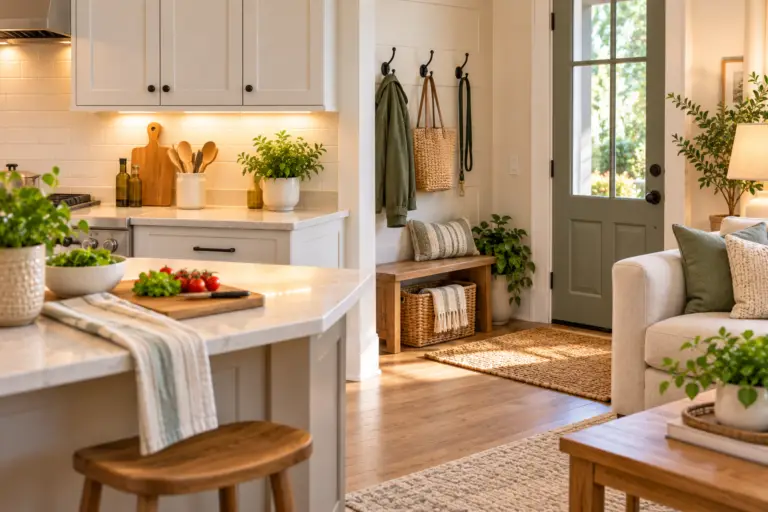
A row of sturdy wall hooks can do a surprisingly good impression of one.
Hooks or a simple hook rail can provide a convenient home for the everyday things that otherwise tend to land on chairs, tables, and floors.
Think:
- Jackets
- Hats
- Handbags
- Backpacks
- Dog leashes
- Reusable shopping bags
A hook rail can look especially intentional because several hooks are grouped into one clean unit instead of being scattered across the wall.
The same idea can also work in bedrooms for robes and bags or in bathrooms for towels.
Choose Hooks for What’s Hanging on Them
A lightweight towel and a backpack full of books place very different demands on a hook.
Think about weight as well as appearance.
Choose an appropriate hook and installation method for what you’ll actually hang, and follow the manufacturer’s mounting instructions.
Removable adhesive hooks may work for certain lightweight items, while heavier belongings generally need a more secure solution.
Nook & Noted Tip: Put hooks where things naturally get dropped. Good storage works with your habits instead of trying to retrain everyone who lives in the house.
8. Stop Making Your Closet Store Every Season at Once
Your winter coat does not need VIP access to the front of the closet in July.
When storage space is limited, the easiest-to-reach shelves, drawers, and hanging areas should generally hold the things you’re using now.
Think of that easy-to-reach space as your home’s prime storage.
When the season changes, rotate bulky or rarely used items into secondary storage areas such as:
- Under the bed
- High closet shelves
- Storage ottomans
- Lidded containers
- Suitcases you’re not currently using
- Vacuum storage bags, when appropriate
Then bring those items back into prime storage when you need them again.
This can make a small closet feel much more functional without adding a single shelf.
Label Now. Thank Yourself Later.
Label seasonal storage even if the container is transparent.
Six months from now, WINTER BEDDING is considerably more helpful than opening four bins while saying, “I know it’s in one of these.”
If you’re considering vacuum-seal storage bags, check the care recommendations for the items you plan to store. Long-term compression isn’t appropriate for every textile or material.
Nook & Noted Tip: Prime storage is valuable real estate. Give it to the things that are actually earning their place there right now.
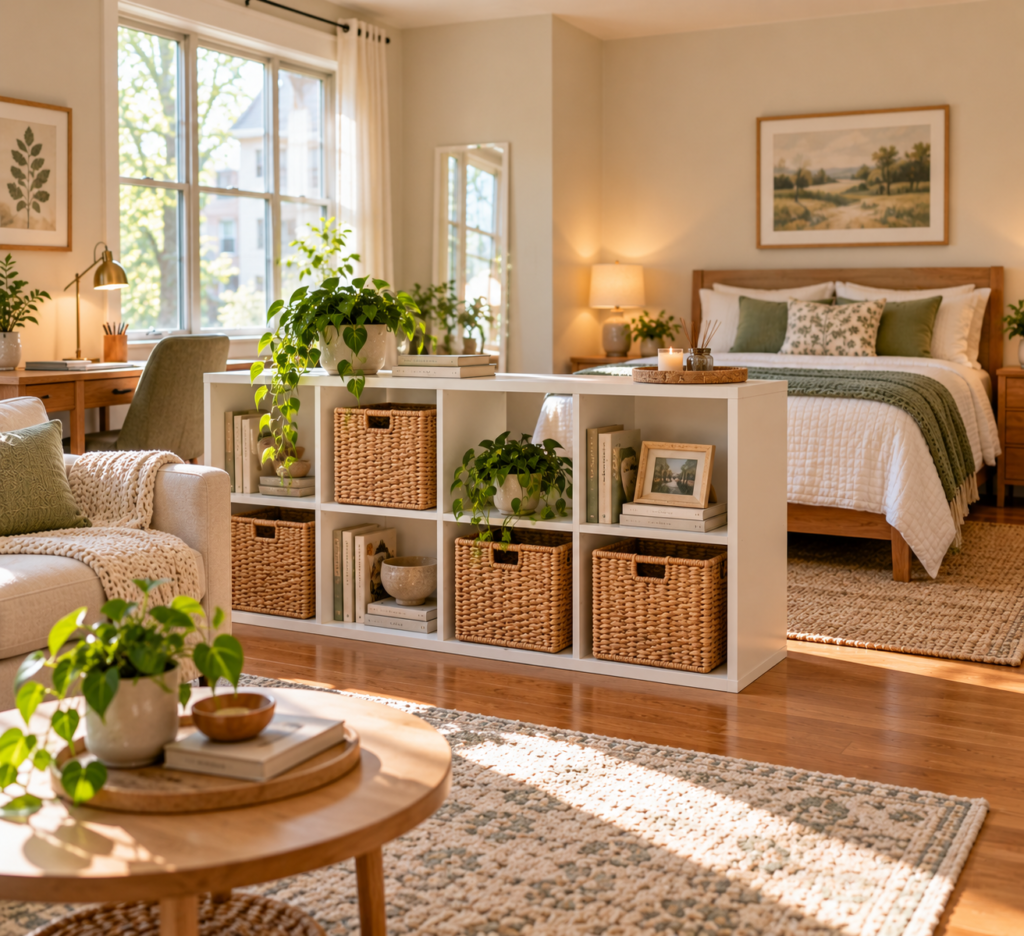
9. Let Storage Divide the Room
In a studio or multipurpose room, sometimes you need more storage—and sometimes you’d also really like the bed to stop feeling as though it’s sitting in the living room.
One appropriately sized storage unit may be able to help with both.
A low cubby unit, open shelving piece, or similar freestanding storage unit can subtly create separate zones while also holding useful items.
For example, a low cubby unit near the end of a bed might help define the sleeping area while storing:
- Baskets
- Books
- Folded clothing
- Shoes
- Office supplies
The same idea can help create a small entry zone near the front door or visually separate a workspace from the rest of a living area.
Instead of adding a divider that does nothing except divide, you’re giving that footprint another purpose.
Keep Small Rooms Feeling Open
Pay close attention to depth and height.
A storage unit that’s too deep can quickly consume a narrow walkway, while something very tall may make an already small room feel more enclosed.
In compact spaces, a lower unit can often provide enough visual separation while allowing light and sightlines to continue across the room.
Also consider stability and follow the manufacturer’s placement, weight, and anchoring instructions, particularly with taller furniture or in homes with children or pets.
Nook & Noted Tip: In a small room, storage should solve the clutter problem without creating a walking-around-the-furniture problem.
Make Furniture Earn Its Floor Space
In a small home, floor space is expensive—even when you’re not paying for it by the square foot.
So when a piece of furniture takes up room, it’s worth asking whether it could do more than one job.
Instead of an ottoman, consider an ottoman with hidden storage.
Instead of an entry bench, consider a bench with shoe storage.
Instead of a room divider, consider shelving that also defines the space.
And if you’re replacing your bed anyway, a frame with built-in drawers or lift-up storage may be worth considering.
That doesn’t mean every piece of furniture needs to fold, transform, open, swivel, and somehow become a dining table.
You don’t need your coffee table to have a résumé.
It simply means that in a small home, bonus storage is worth noting.
Before adding something new, ask:
Could this piece solve more than one problem?
Sometimes the best way to create more storage isn’t adding more furniture.
It’s getting more usefulness from the furniture that’s already taking up space.
The Bottom Line
A lack of closets doesn’t mean you’re out of storage options.
Sometimes the most useful storage space is already there—you just haven’t started using it yet.
Look under the bed.
Check the backs of doors.
Notice empty wall space.
Think about whether the furniture you already need could quietly handle some storage, too.
Most importantly, start with the category that’s creating the biggest problem.
If coats are piling up near the front door, give them a convenient place to hang.
If your bedroom closet is overflowing, move off-season items out of prime storage and put the space under the bed to work.
If your living room needs storage but can’t handle another cabinet, look for furniture that can do double duty.
You don’t have to solve every storage problem this weekend.
Give one group of “homeless” belongings a sensible place to live. See whether the system works. Then tackle the next.
Because in a small home, good storage isn’t necessarily about creating more space.
It’s about making better use of the space you already have.
Looking for More Small-Space Inspiration?
Ready to make the space you have work a little harder? Explore more practical organization ideas, small-space solutions, and clever home finds from Nook & Noted.