Some products are nice to have. Others make you wonder how you ever lived without them.
We’re talking about the simple problem-solvers—the little things that keep a charging cable within reach, stop a cabinet from slamming, add useful storage where you didn’t know you had it, or light the hallway without flipping on every light in the house.
None of them needs to be flashy or complicated. The best ones simply make an everyday task a little easier.
What Makes a Nook & Noted “Clever Find”?
We’re not interested in gadgets just because they’re unusual.
A Nook & Noted Clever Find should solve a real everyday problem, be simple to use, and earn the space it takes up in your home.
Even better if it’s affordable, easy to use, and doesn’t add unnecessary clutter.
In other words, we’re looking for those little problem-solvers that quietly make your home work better.
With that in mind, here are nine worth considering.
1. Give Slamming Cabinets a Softer Landing
There’s something surprisingly irritating about hearing a cabinet door bang shut several times a day.
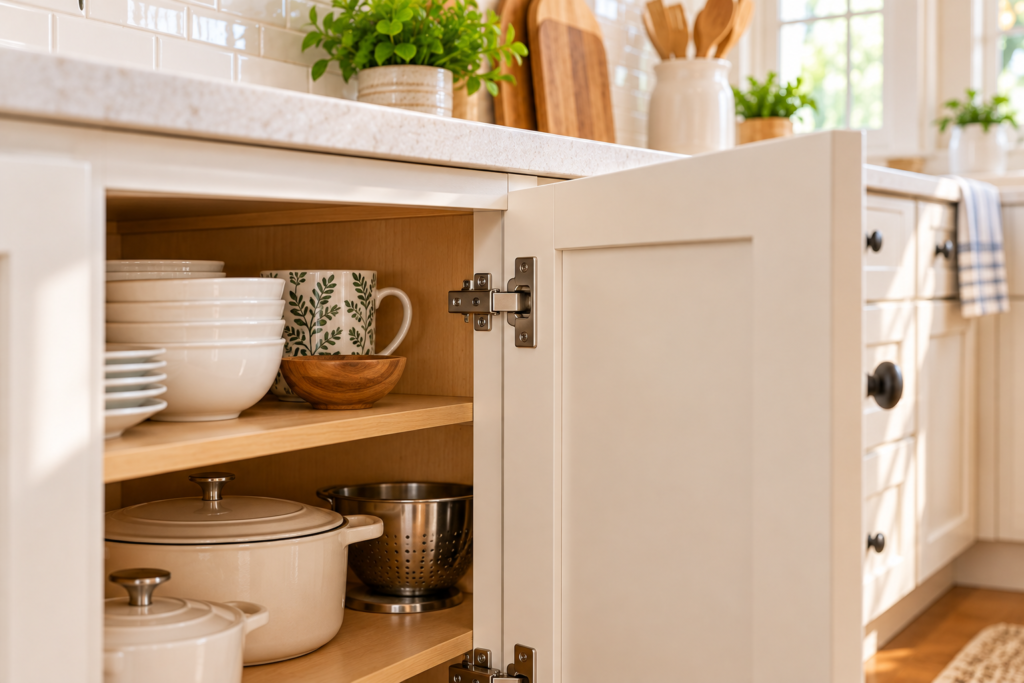
Soft-close hinges slow the cabinet door during the final part of its swing, allowing it to close gently instead.
It’s a relatively small change, but in a frequently used kitchen or bathroom, it can make the room feel noticeably calmer.
And depending on your existing cabinetry, you may be able to make the upgrade without replacing the cabinet doors themselves.
Before You Buy
Cabinet hinges aren’t universal.
Before choosing replacements, determine whether your cabinets are face-frame or frameless and check the size and style of the hinges you already have.
If you’re not sure, remove one existing hinge and compare its measurements with the replacement you’re considering.
Installation requirements also vary, so choose an option that’s compatible with both your cabinetry and your comfort level with the project.
Nook & Noted Tip: Take a few clear photos of an existing hinge—both open and closed—and save the measurements before you shop.
2. Give Lidless Bowls and Containers a Second Chance
Somewhere in almost every kitchen is a container that has survived for years while its original lid mysteriously disappeared long ago.
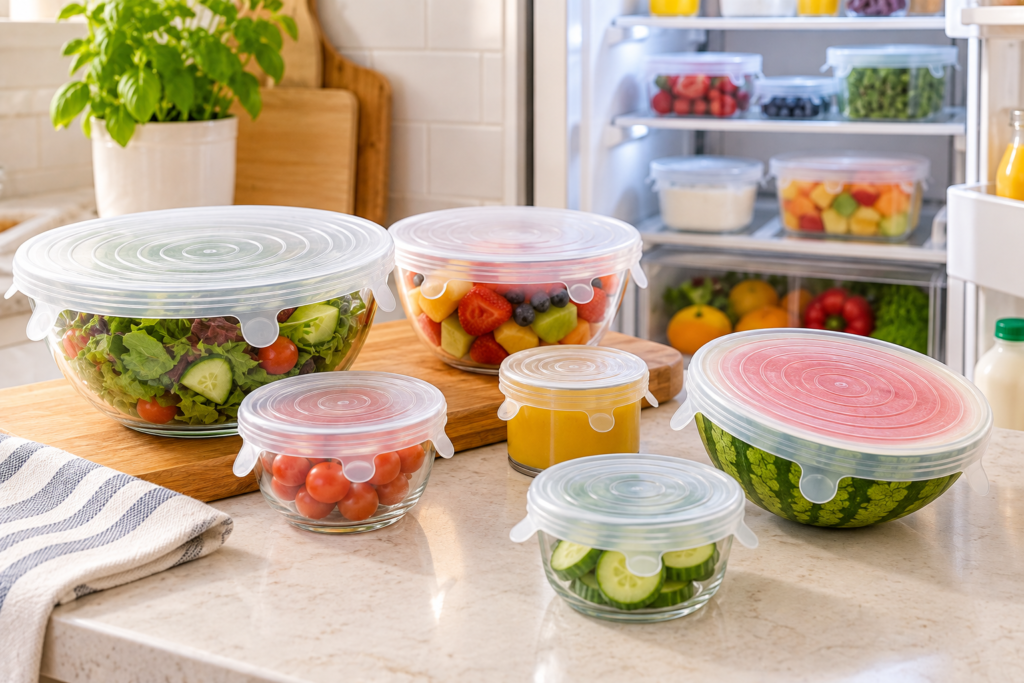
Reusable silicone stretch lids can give those bowls and containers another chance.
The flexible covers come in several sizes and stretch over many bowls, containers, cans, and some cut produce to create a snug reusable cover.
They’re especially handy when you have leftovers in a bowl that doesn’t have its own lid or need to temporarily cover an open container.
Instead of reaching for disposable wrap every time, simply wash the silicone covers and use them again.
Choose Sizes You’ll Actually Use
A useful range of sizes matters more than simply choosing the set with the most pieces.
Check the manufacturer’s instructions for food contact, dishwasher use, freezer use, and temperature limitations.
Also keep in mind that stretch lids work better on some container shapes and rim styles than others.
Nook & Noted Tip: Think of stretch lids as another useful tool in your food-storage drawer—not necessarily a replacement for every container you already own.
3. Calm the Cord Clutter Around Your Desk or Nightstand
Power strips are useful.
The collection of chargers, plugs, adapters, and tangled cords that tends to grow around them? Not quite as appealing.
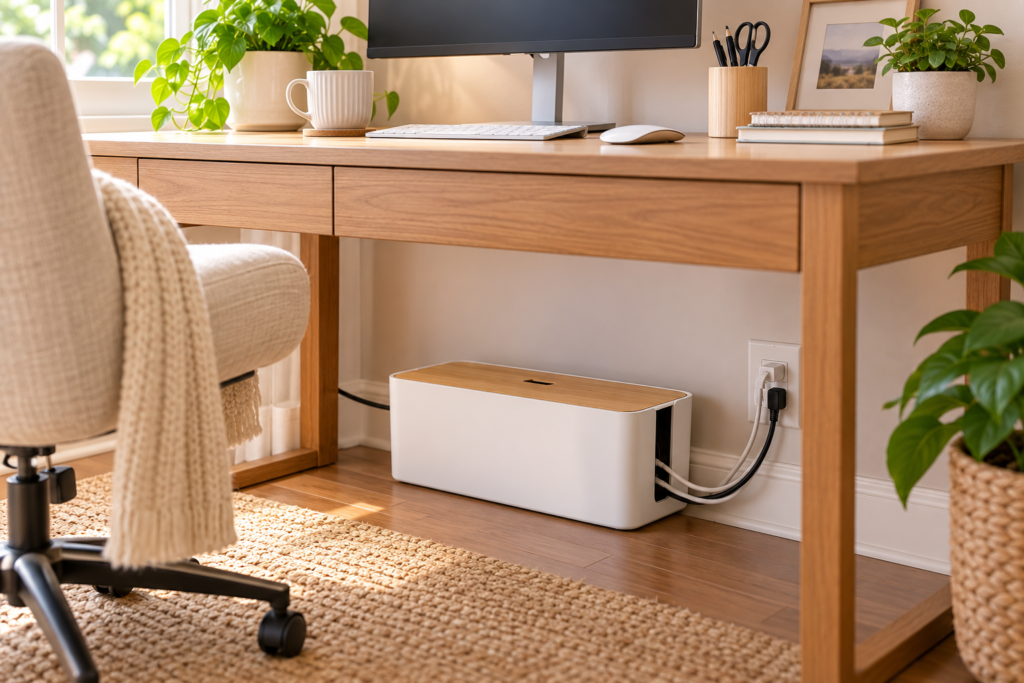
A cable management box can help contain the visual clutter.
Place a compatible power strip and excess cord length inside the box, then route the cables you actually need through the openings.
The cords don’t disappear, of course, but the area can look considerably calmer and more intentional.
This can work particularly well:
- Under a desk
- Near a television
- Beside a nightstand
- Around a family charging area
- In a home office
Measure With Everything Plugged In
Don’t measure the power strip by itself.
Measure it with the plugs and adapters attached so you know how much interior space you’ll actually need.
Choose a box with enough room for the strip, plugs, adapters, and appropriate cable routing without sharply bending or compressing cords.
Look for openings that allow cables to enter and exit naturally, and always follow the electrical equipment manufacturer’s ventilation and usage instructions.
4. Turn the Back of a Door Into Bonus Storage
The back of a door is one of those spaces that’s easy to overlook because it doesn’t look like storage.
But in a small home, apartment, pantry, bathroom, or utility area, it can provide a surprising amount of useful vertical space.
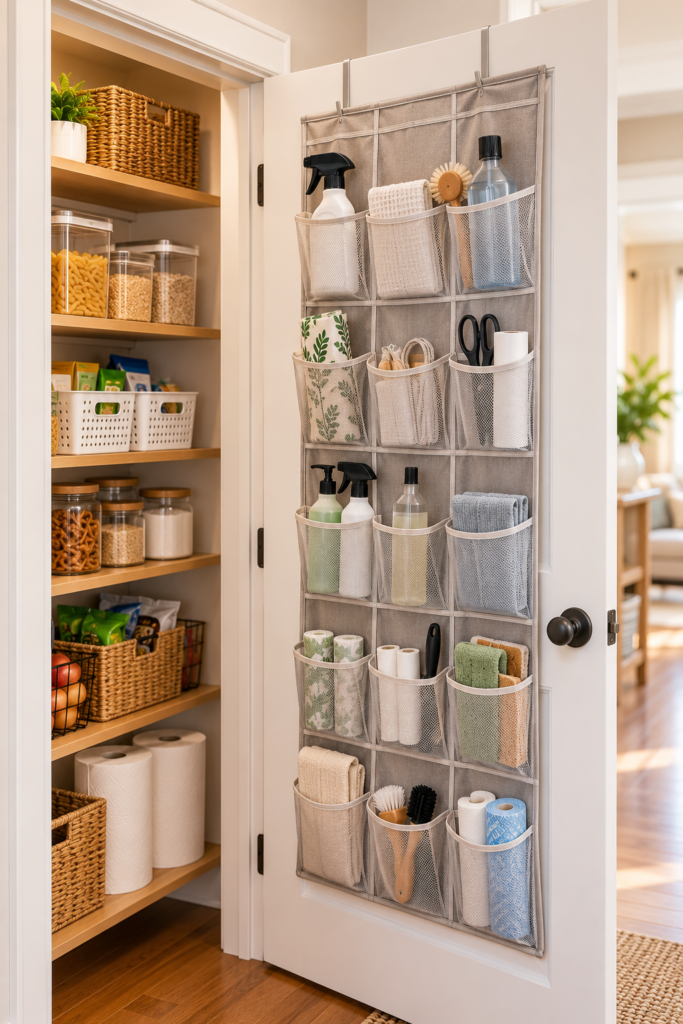
An over-the-door pocket organizer can give lots of little things their own easy-to-see home.
Try one for:
- Cleaning supplies
- Toiletries
- Kids’ accessories
- Pantry snacks
- Gift-wrapping supplies
Clear pockets can be especially useful when you want to see everything at a glance, while fabric pockets may create a calmer look in areas where the organizer stays visible.
Check the Door First
Consider what you’re actually going to store before choosing an organizer.
Then check the organizer’s weight capacity and the clearance around the top of your door.
Some over-the-door hooks are thick enough to interfere with doors that fit tightly inside their frames.
The goal is simple: turn an unused vertical surface into practical storage without making the door harder to use.
Nook & Noted Tip: Don’t fill every pocket simply because it’s there. Leave a little breathing room so the organizer remains easy to use or spread items out so pockets don’t become overstuffed.
5. Give Small Drawer Clutter a Place to Belong
Sometimes the problem isn’t that you don’t have enough storage.
It’s that everything inside the storage you already have keeps sliding together.
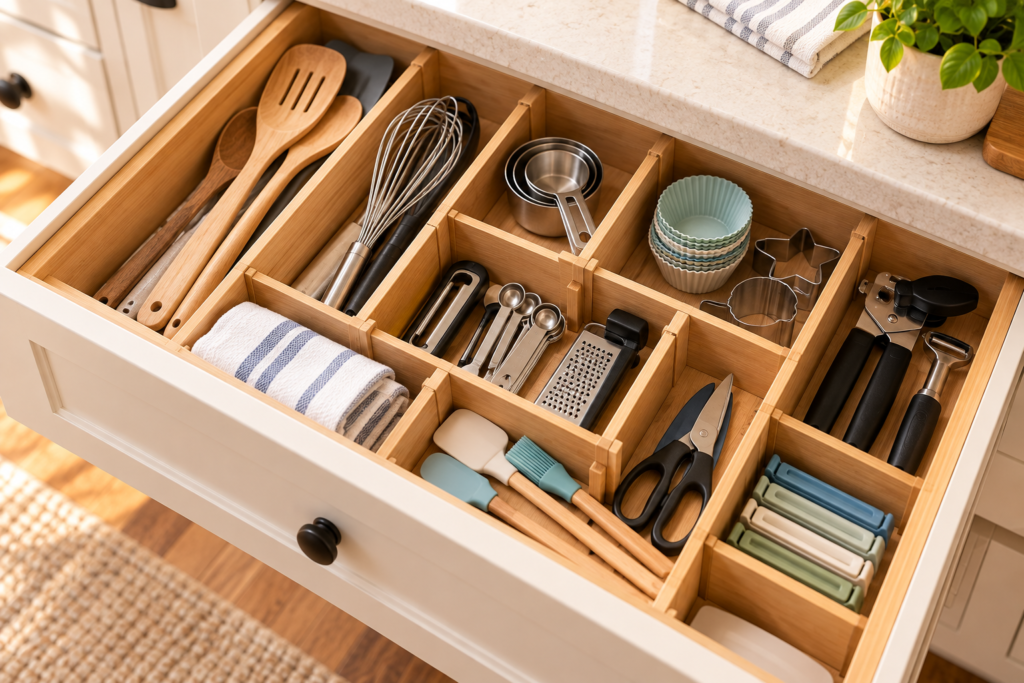
Adjustable drawer dividers can turn one large open drawer into several smaller zones, giving everyday items a more obvious place to belong.
They’re useful far beyond the kitchen.
Try them for:
- Cooking utensils
- Office supplies
- Bathroom essentials
- Small household tools
- Kids’ supplies
- That mysterious junk drawer everyone seems to have
The biggest benefit isn’t making the drawer look perfect.
It’s being able to open it and quickly find what you need.
Divide According to What You Own
Before buying dividers, empty the drawer and group similar items together.
Then decide how many sections would actually be useful.
Measure the drawer’s interior width, depth, and height, and check the divider’s adjustment range.
Avoid creating so many tiny compartments that you’re simply trading one kind of clutter for another.
Nook & Noted Tip: Start with fewer sections than you think you need. You can always add another divider later.
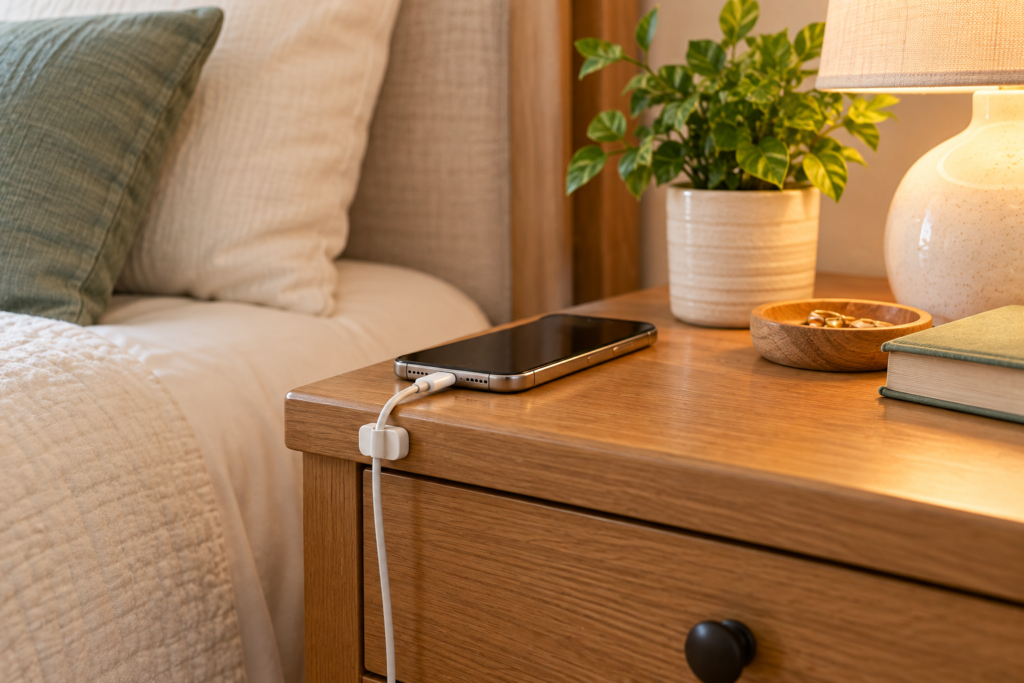
6. Keep Charging Cables Right Where You Need Them
You unplug your phone and—there it goes.
The charging cable slides behind the nightstand again.
A small adhesive cable clip can solve that tiny annoyance by keeping the end of the cord right where you actually use it.
Attach one to an appropriate surface near a desk, nightstand, entertainment center, or charging station and thread the cable through the opening.
Cable clips can also help separate several cords at a desk so they don’t become one giant tangle.
Match the Clip to the Cable
Check the clip opening against the diameter of the cable you plan to use.
A clip designed for a thin phone cable may not accommodate a thicker power cord.
Also check the manufacturer’s surface recommendations before using adhesive products on painted, delicate, or textured surfaces.
It’s a tiny product solving a tiny problem—which is exactly why we like it.
7. Add a Little Light Exactly When You Need It
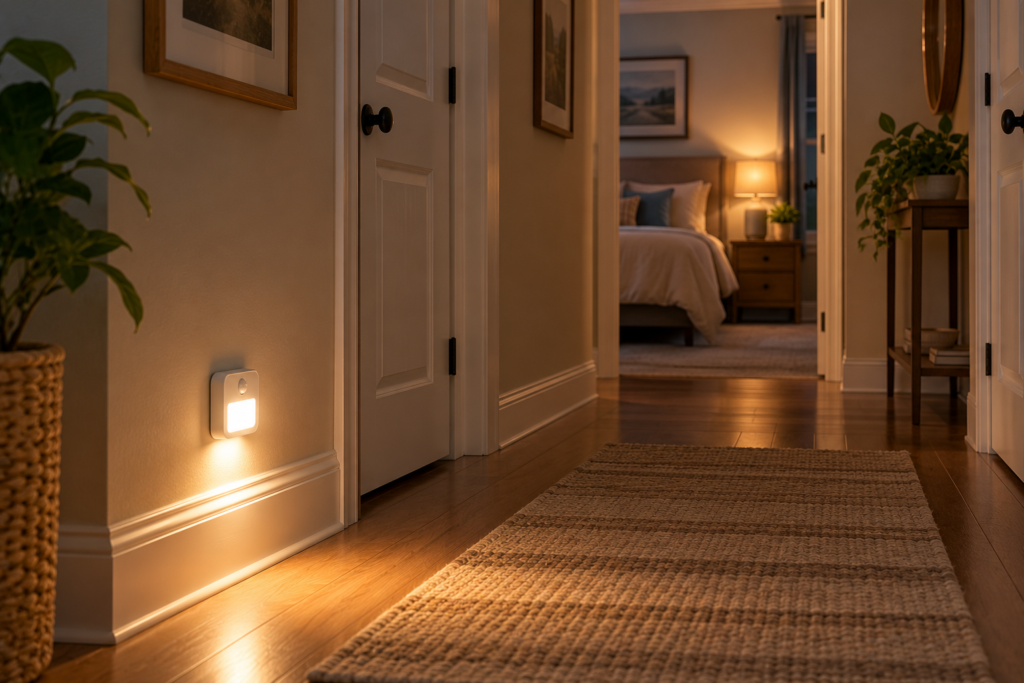
Sometimes you need enough light to find your way through the house at night—but not enough to make the hallway feel like a football stadium.
Motion-sensor night lights can provide that middle ground.
Place them in hallways, closets, bathrooms, or other darker areas where a little automatic illumination would be helpful.
Instead of searching for a switch, the light activates when its sensor detects movement under the conditions for which it’s designed.
Depending on the space, you can choose from plug-in, battery-powered, or rechargeable versions.
Think About the Location First
A plug-in model makes sense when an outlet is already available.
Rechargeable or battery-operated lights provide more flexibility in areas without one.
Consider the sensor range, automatic shutoff timing, brightness settings, and whether the light includes a darkness sensor so it doesn’t activate unnecessarily during the day.
Nook & Noted Tip: Adjustable brightness is especially useful for nighttime areas. You probably need just enough light to see where you’re going—not enough to wake up the whole house.
8. Make Rearranging and Cleaning Behind Furniture Easier
There’s something under the sofa you need to retrieve.
Or maybe there’s six months of dust under there that you’ve been perfectly happy pretending doesn’t exist.
Either way, moving heavy furniture isn’t usually the fun part.
Furniture sliders are simple pads placed underneath compatible furniture legs to make pieces easier to reposition across appropriate floor surfaces.
They can be useful when you’re:
- Rearranging a room
- Cleaning underneath furniture
- Moving a piece temporarily
- Adjusting furniture placement
When you’re finished, the sliders can go back into a drawer until the next time you need them.
Choose sliders designed for both your furniture and your flooring. Products intended for carpet may differ from those designed for hard floors, so check the manufacturer’s floor-surface recommendations and weight limits before using them.
This is another example of a product you may not use every day—but when you need it, you’re glad you have it.
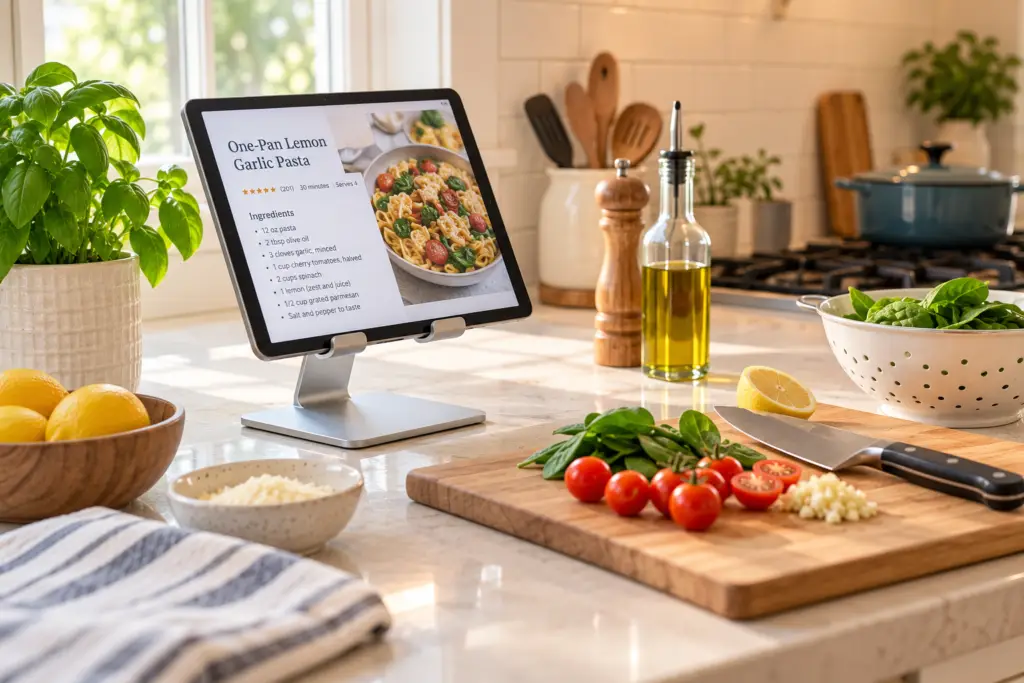
9. Give Your Phone or Tablet a Hands-Free Home
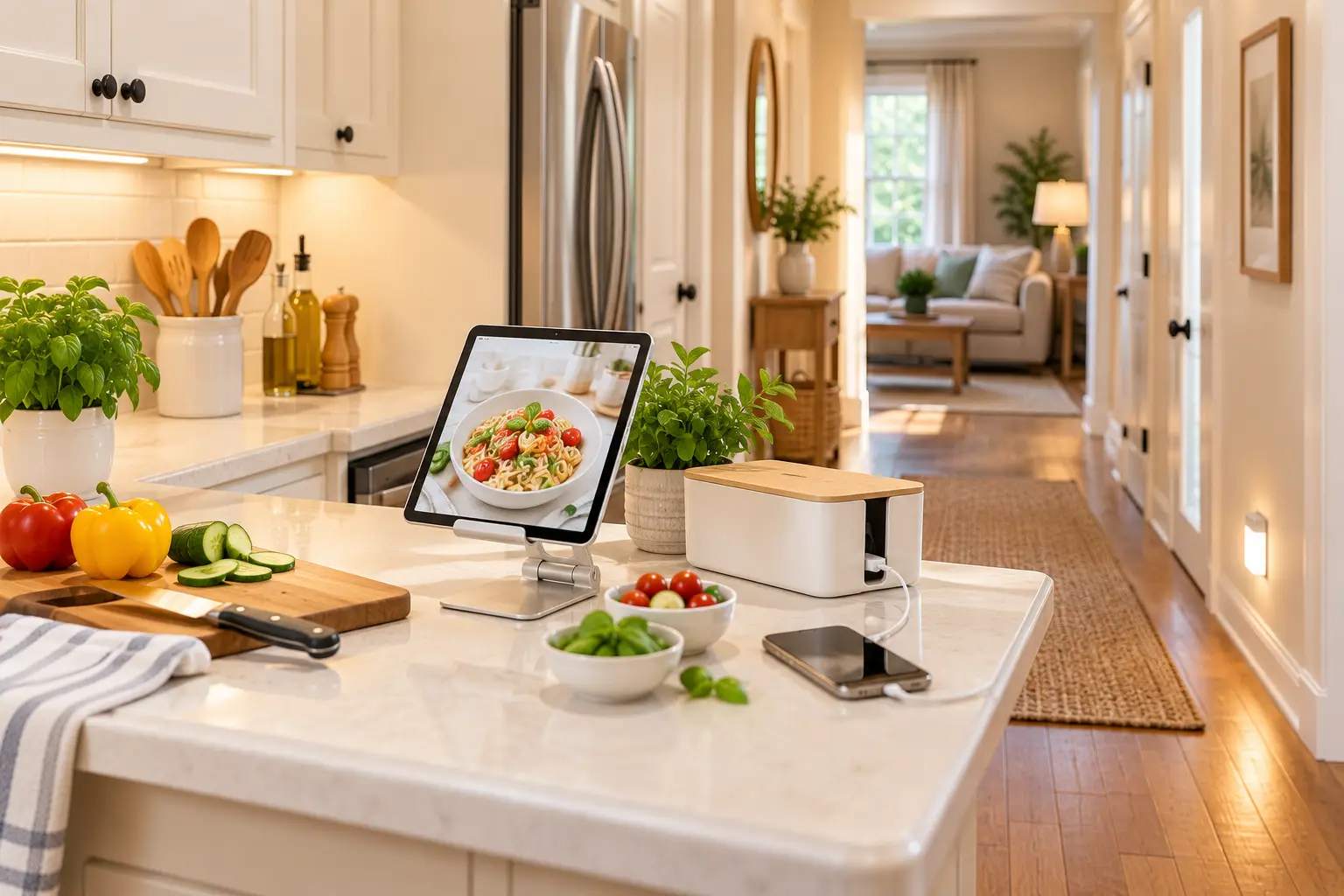
If you’ve ever tried to follow a recipe while propping your phone against the coffee maker, you already understand the appeal of a simple device stand.
An adjustable phone or tablet stand gives your device a stable place to sit while keeping the screen easy to see.
Use one to:
- Follow recipes
- Take video calls
- Watch tutorials
- Read from a tablet
- Keep your phone visible while charging
It’s the kind of simple product that can move from the kitchen counter to your desk and then disappear into a drawer when you’re finished.
Stability Matters Most
Fancy features aren’t particularly helpful if the stand tips over every time you touch the screen.
Look for a sturdy base, non-slip contact points, and enough adjustment to position your device at a comfortable viewing angle.
If you plan to use a tablet, make sure the stand is designed for the larger size and weight.
Also check whether your device will fit while it’s still inside its everyday case.
Nook & Noted Tip: The best stand is often the simplest one that securely holds the devices you already own.
How to Know When a Clever Find Is Actually Worth It
There’s a certain irony in buying dozens of organization products in an attempt to create a less cluttered home.
Before bringing home another household problem-solver, ask yourself three questions.
Does This Solve a Problem I Actually Have?
If your cabinet doors don’t bother you, you don’t need soft-close hinges just because they’re on someone’s must-have list.
Look for solutions to the little frustrations that actually occur in your home.
Will I Actually Use It?
A clever product isn’t particularly clever if it ends up forgotten in the back of a drawer.
Think about where you’ll keep it and how easily it will fit into your normal routine.
Do I Already Own Something That Solves the Same Problem?
Sometimes you already have a perfectly good solution.
And sometimes the best purchase is the one you realize you don’t need.
That’s particularly important with inexpensive home products. Small purchases don’t always feel significant individually, but they can quickly turn into more things to store and organize.
If the answers to these questions still point toward buying something, you’ve probably identified a product that could genuinely make your home work a little better.
The Bottom Line
The best home products aren’t necessarily the biggest, smartest, or most expensive.
Often, they’re the simple things that quietly make everyday life a little easier.
A charging cable that stays where you put it.
A cabinet that closes gently.
A hallway that lights up when you walk through it.
A drawer where you can actually find what you need.
A stand that holds your phone while you’re trying to cook dinner.
None of these things will completely transform your home—and they don’t need to.
A genuinely clever find solves one small frustration and keeps solving it, day after day.
Sometimes making home work better really is that simple.
Looking for More Home Organization Inspiration?
Ready to make your home work a little better? Explore more practical organization ideas, small-space solutions, and clever home finds from Nook & Noted.