Small bathrooms have an impressive ability to run out of storage almost immediately.
A few towels, some toiletries, hair products, cleaning supplies, and suddenly the countertop looks as though everyone brought luggage.
The good news? You don’t need to knock down a wall, replace the vanity, or start researching bathroom renovations to make the room work better.
Often, the best solution is simply finding storage space that’s already there—above the toilet, behind the door, under the sink, inside a cabinet, or in that suspiciously narrow gap beside the vanity.
Here are eight practical small-bathroom storage ideas that can help you make better use of the space you already have.
Before You Add Storage, Make Sure You Need It
Before adding another basket, shelf, or organizer, take a quick inventory of what’s already occupying your bathroom.
Empty bottles? Toss them.
Expired products? Time to go.
Hotel toiletries from a vacation three years ago? Unless you’re genuinely going to use them, they probably don’t need prime bathroom real estate.
And if you discover four half-used bottles of the same product, you may have found part of the storage problem.
Once you’ve cleared what you don’t need, group what’s left by how and where you use it.
Keep everyday toiletries easy to reach. Cleaning supplies can live together. Extra towels and backup products can usually move to less convenient storage spots.
You may discover that you don’t actually need more storage—you simply need the storage you already have to work better.
Nook & Noted Tip: The goal isn’t to squeeze more stuff into a small bathroom. It’s to make the things you actually use easier to store, find, and put away.
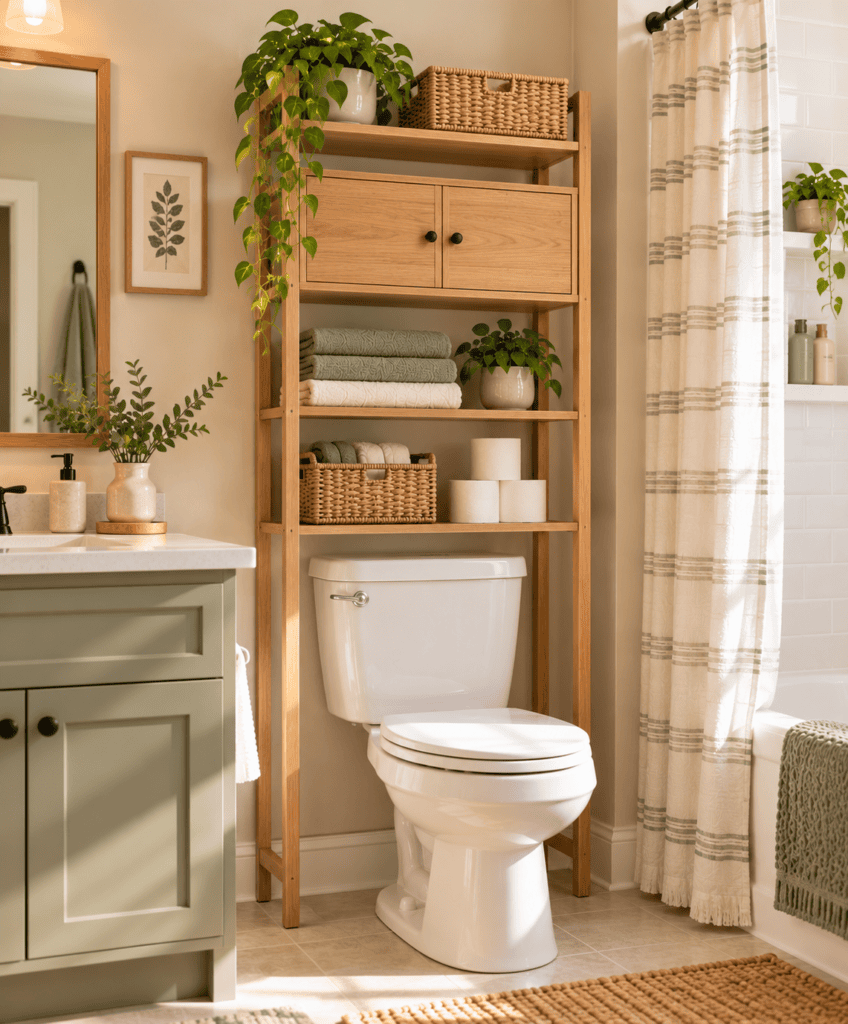
1. Put the Wall Above the Toilet to Work
The wall above the toilet is one of those spaces that’s easy to overlook.
It’s there. It’s empty. And in a small bathroom, it may be some of the most useful vertical space in the room.
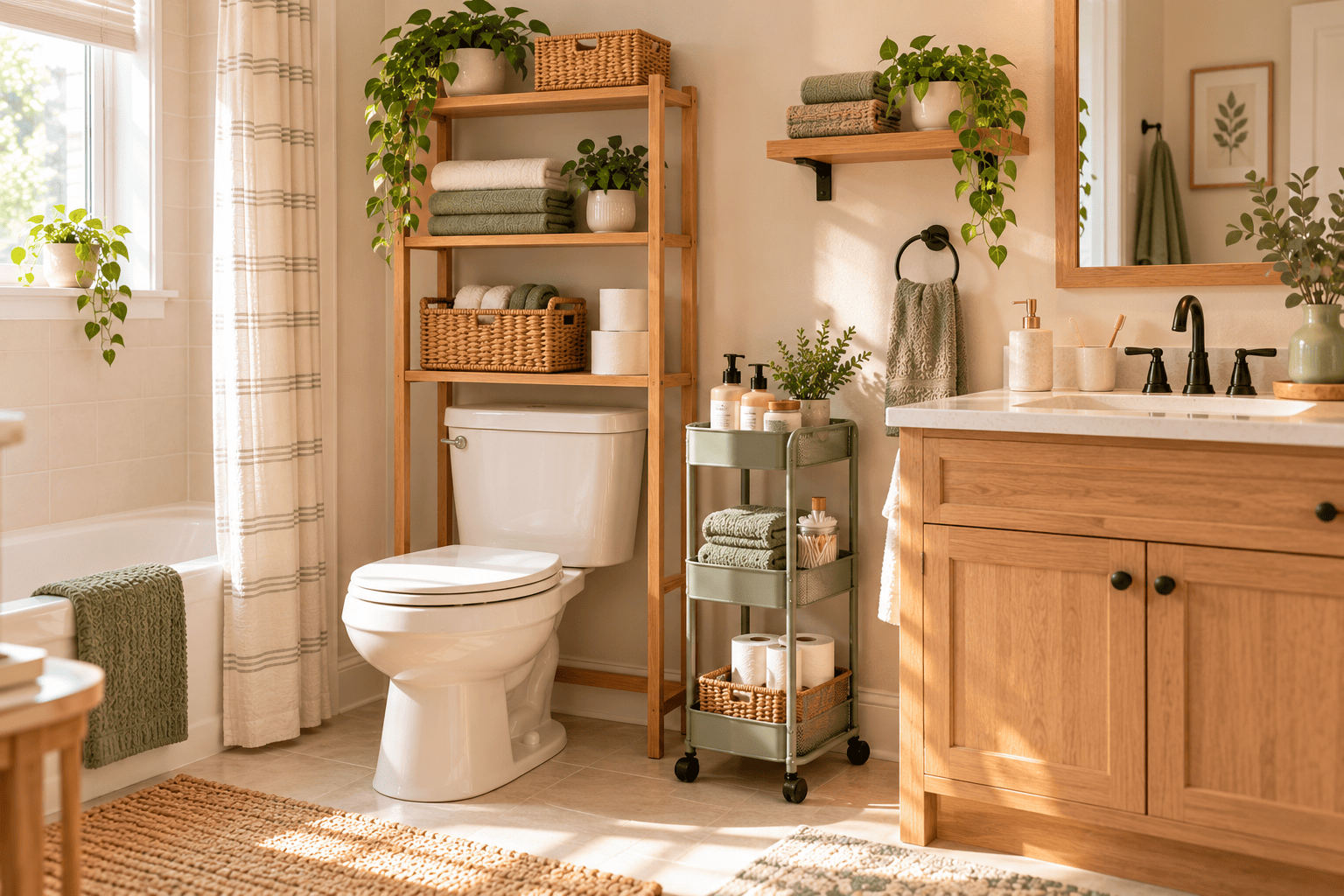
Depending on your bathroom, a compact shelving unit, a couple of appropriately installed shelves, or a small wall-mounted cabinet can provide storage for things like:
- Extra toilet paper
- Folded towels
- Toiletries
- Small baskets
- Backup bathroom supplies
Open shelving keeps frequently used items easy to reach, while closed storage can help reduce visual clutter.
But don’t assume that because the wall is empty, you need to fill every inch of it.
In a small bathroom, a little open space can help the room feel calmer.
Measure Around What’s Already There
Before adding storage, measure the available width and the height above the toilet tank.
Also look for towel bars, outlets, windows, switches, or other fixtures that could interfere.
And think about what you’ll actually store before deciding how much shelving you need.
Two shelves that solve the problem are better than five shelves looking for something to do.
Nook & Noted Tip: Vertical storage is useful. Vertical clutter is still clutter.
2. Give Shower Bottles a Better Home
Shampoo bottles have a remarkable ability to multiply along the edge of a bathtub.
Add conditioner, body wash, razors, face wash, and everyone else’s shower products, and suddenly you’re playing a small game of bottle Tetris every time you take a shower.
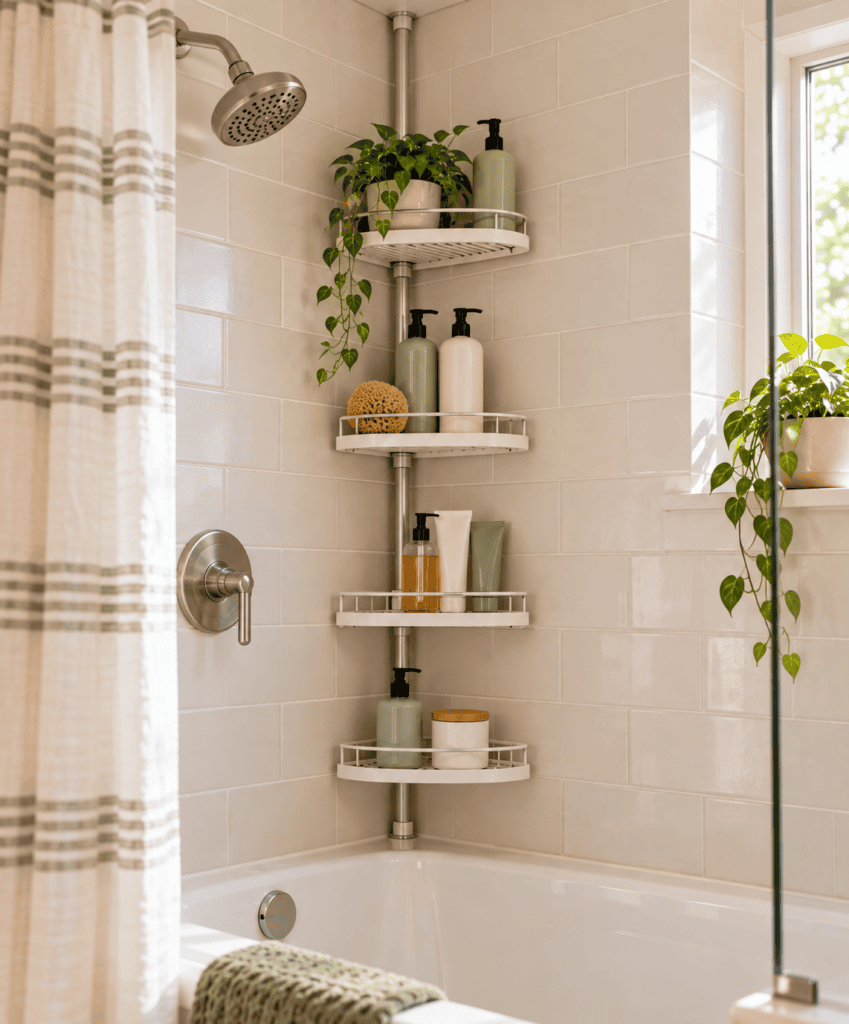
If your shower doesn’t have enough built-in storage, look for a solution that fits the shower you actually have.
Depending on the layout, that might be:
- A tension-pole corner organizer
- A hanging shower caddy
- An adhesive wall-mounted caddy designed for wet environments
The best choice depends on your shower layout, wall surface, number of products, and installation options.
Let the Water Out
Whatever style you choose, good drainage matters.
Open-wire, slatted, or otherwise well-draining shelves allow water to escape instead of collecting underneath bottles.
Also look for materials appropriate for wet environments and check the manufacturer’s installation requirements and weight limits.
If you’re using a tension organizer, make sure the top and bottom sit securely against appropriate surfaces.
If you’re considering an adhesive organizer, confirm that the mounting method is suitable for your shower wall.
And before choosing the largest organizer available, take a quick inventory of what’s actually in your shower.
You may need less storage than you think.
Nook & Noted Tip: If you haven’t used the shampoo at the back of the shower since last winter, the answer may not be another shelf.
3. Don’t Forget the Back of the Door
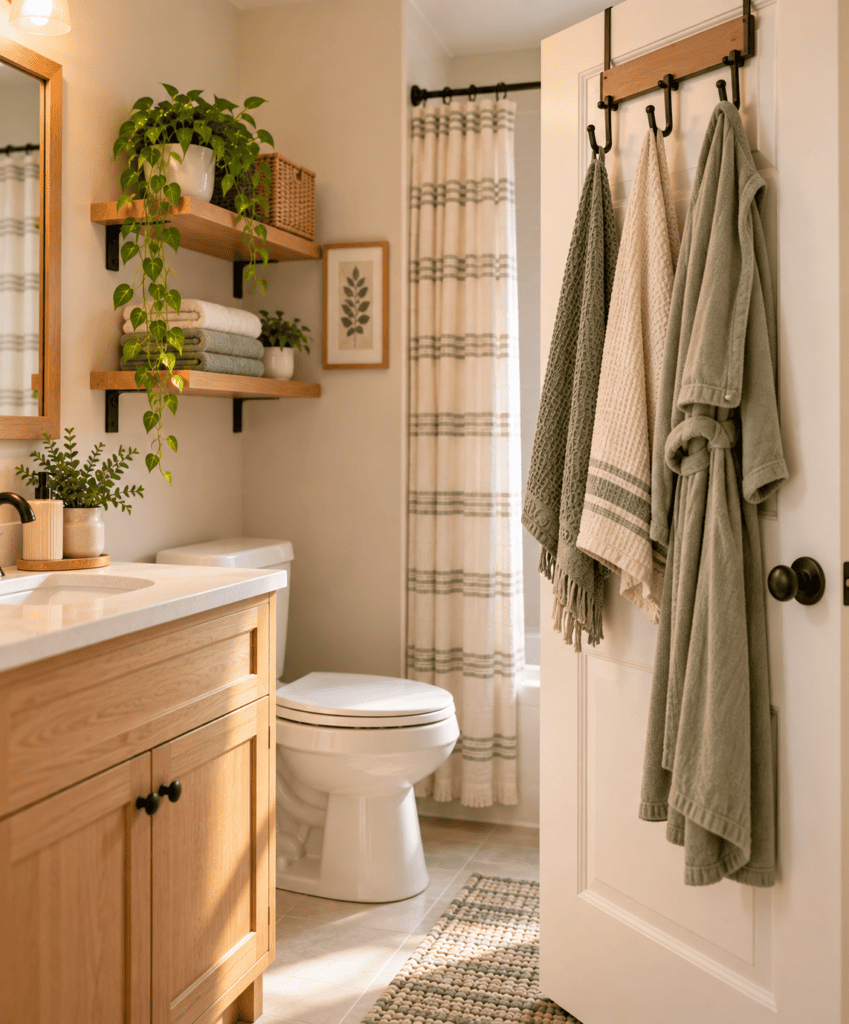
A bathroom door is already doing one job, but in a small space it may be willing to pick up a second.
The back of the door can provide useful storage without taking up drawer, cabinet, or floor space.
Depending on what you need to store, consider:
- A few simple hooks
- An over-the-door towel rack
- A slim hanging organizer
- A lightweight rail
Hooks may be all you need for towels and robes.
A slim organizer can work for lightweight toiletries, hair accessories, or other small items.
The important thing is to match the storage to the problem rather than automatically choosing the organizer with the most pockets.
Make Sure the Door Still Works
Before adding anything over the door, check the clearance between the top of the door and the frame.
Also consider the thickness of the organizer and where it will sit when the door is fully open.
A bathroom door that’s suddenly difficult to close is not technically an organization victory.
Nook & Noted Tip: In a very small bathroom, start with hooks. Sometimes the simplest storage solution is also the one you’ll use most consistently.
4. Make the Most of the Space Under the Sink
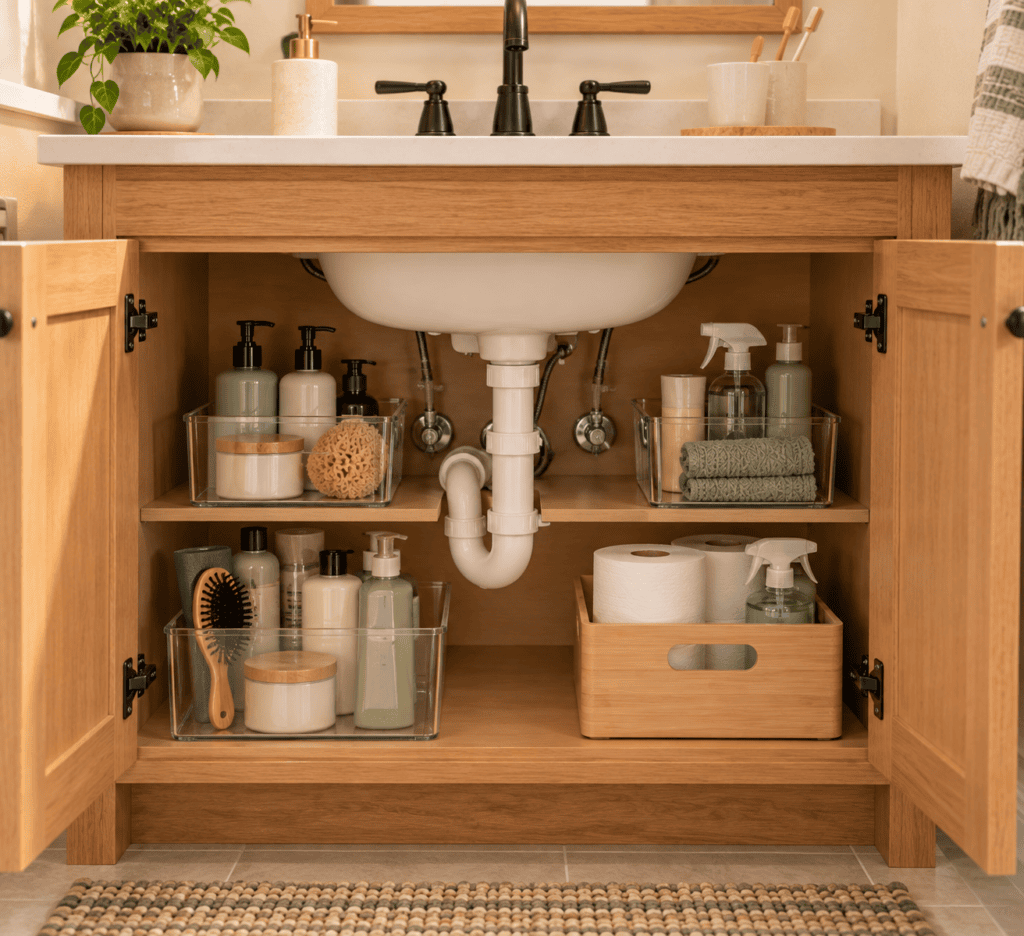
Under-sink cabinets are a little like storage obstacle courses.
There’s plenty of space—except for the pipes running through the middle of it.
Instead of trying to fill the cabinet with one large organizer, work around the plumbing.
Start by grouping similar items together.
You might create separate storage for:
- Hair products
- Skincare
- Dental-care supplies
- Backup toiletries
- Cleaning supplies
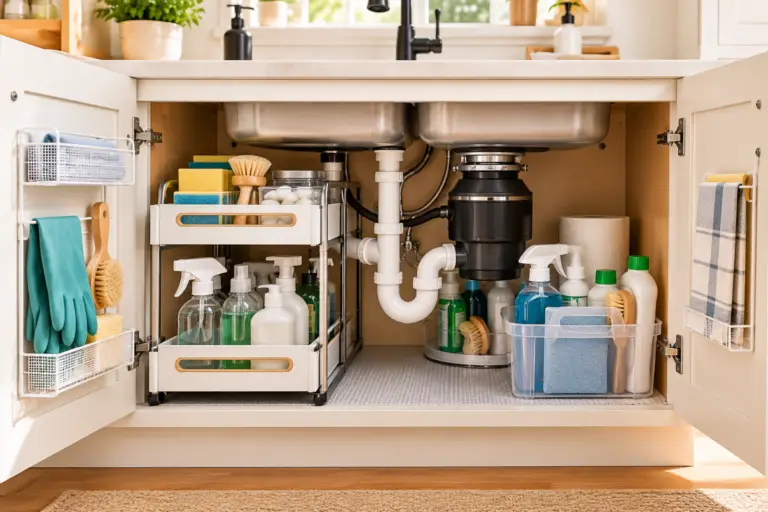
Clear or open-top bins can work particularly well because they’re easy to pull out and make it easier to see what you already have.
That visibility can also help prevent the mysterious accumulation of six bottles of the same bathroom cleaner.
Measure Around the Plumbing
Don’t simply measure the overall width and depth of the cabinet.
Measure the usable areas beside and underneath the pipes.
Also consider the drain trap, water lines, cabinet hinges, and anything else that affects the available space.
Narrow bins, small drawers, or modular organizers may help you use awkward areas without blocking plumbing access.
And don’t feel obligated to fill every inch.
A little open space makes it easier to remove a bin, reach the plumbing if necessary, and actually see what’s inside the cabinet.
Nook & Noted Tip: Organize around the plumbing—not in spite of it.
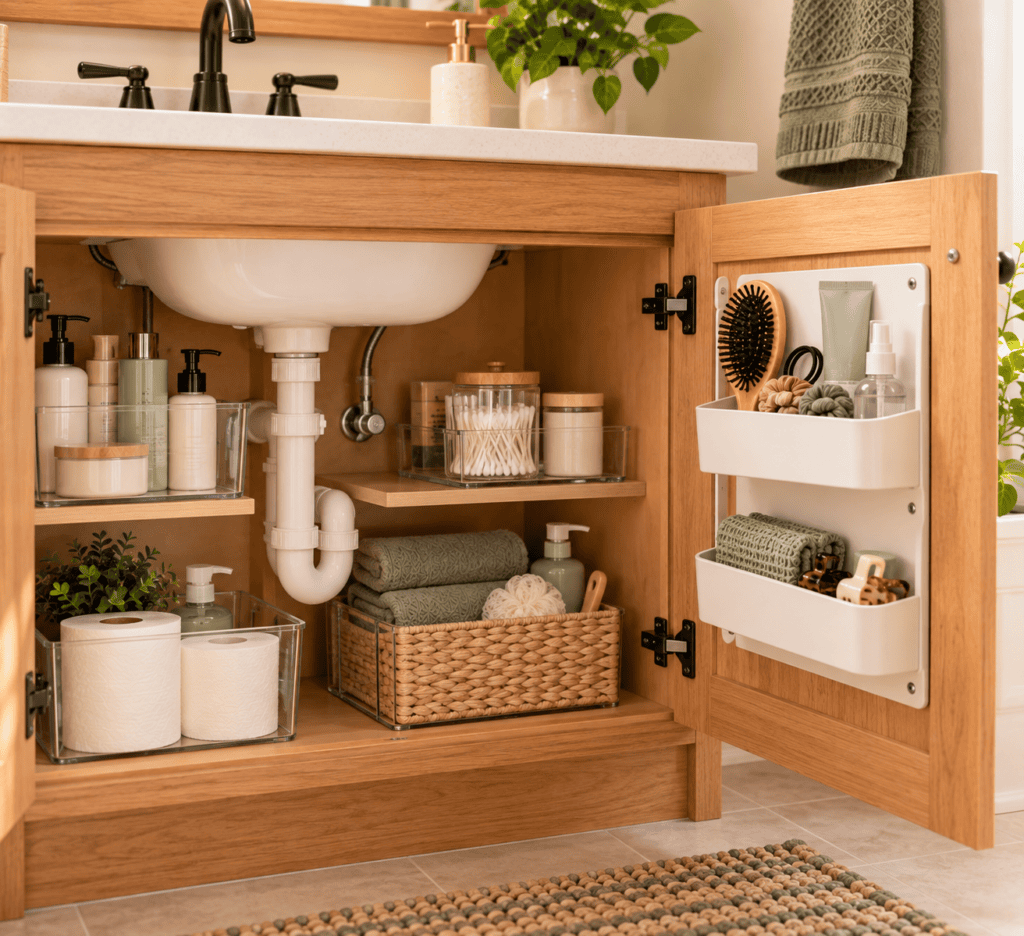
5. Sneak Storage Inside a Cabinet Door
Sometimes a useful storage spot is hiding right in front of you—or technically, behind the cabinet door.
The inside of a vanity or medicine cabinet door can be a convenient place for smaller items that would otherwise clutter countertops and drawers.
Depending on your setup, you might use:
- A shallow adhesive organizer
- A small lightweight bin
- Hooks for hair accessories
- A toothbrush holder
- A small holder for frequently used grooming items
This works particularly well for the things you reach for every day because they’re easy to see and grab when the cabinet is open.
Test Before You Attach
Cabinet-door storage only works if there’s enough clearance inside the cabinet.
Before attaching anything permanently, hold the organizer in position and gently close the door.
Check where it lands in relation to shelves, plumbing, bins, and other items.
An organizer isn’t particularly helpful if it introduces itself to the plumbing every time you close the cabinet.
Also keep the weight reasonable and use a mounting method suitable for the door and the organizer.
6. Turn a Narrow Gap Into Storage
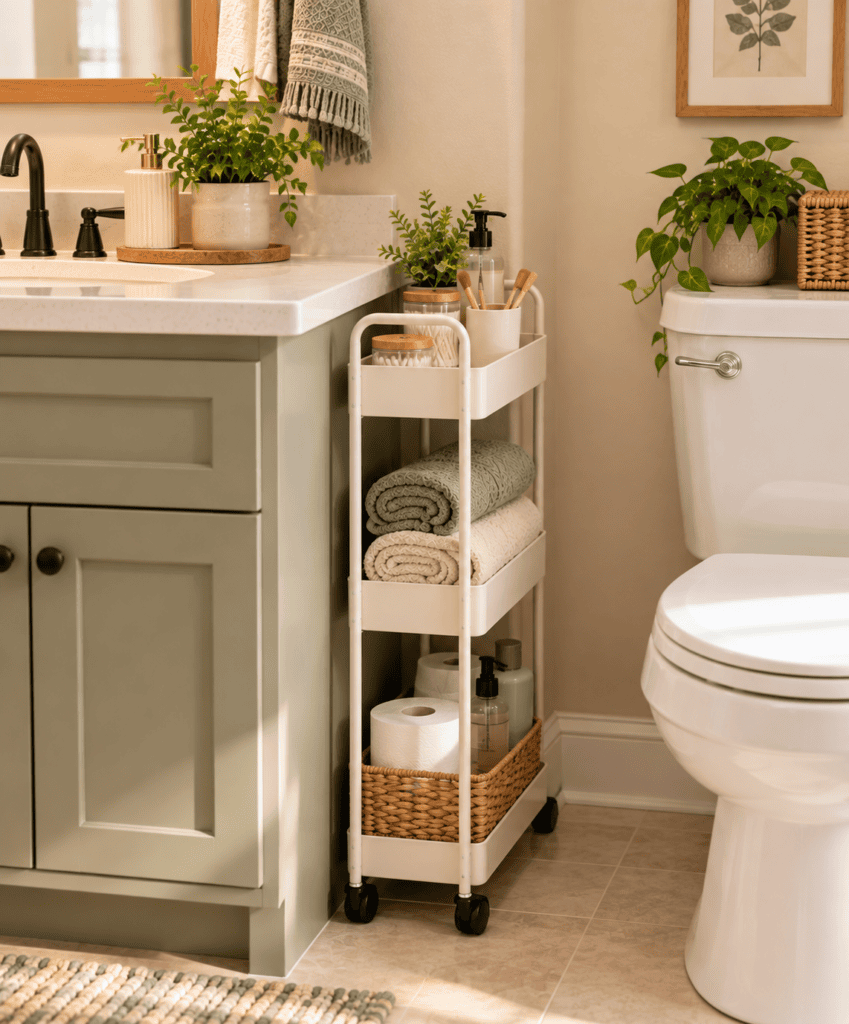
That awkward little gap beside the vanity may be too narrow for traditional furniture—but just right for a slim cart.
A narrow rolling cart can turn otherwise unused floor space into several levels of accessible storage.
Depending on the bathroom, it might hold:
- Rolled or folded towels
- Toilet paper
- Everyday toiletries
- Hair products
- Cleaning supplies
- Backup bathroom essentials
Because the cart isn’t permanently installed, it can also be a practical option for renters.
And when it’s time to clean the floor, you can simply roll it out of the way.
Measure the Gap Carefully
Slim carts come in a surprising range of widths.
Measure the narrowest part of the available space and make sure there’s enough clearance to roll the cart in and out comfortably.
Also consider the cart’s height and depth so it doesn’t interfere with drawers, cabinet doors, towel bars, or movement through the bathroom.
Materials designed to handle bathroom humidity are a plus, as are wheels that roll smoothly on your flooring.
Nook & Noted Tip: A narrow gap can be useful storage. A narrow walkway should probably stay a walkway.
7. Use an Empty Wall—But Don’t Overdo It
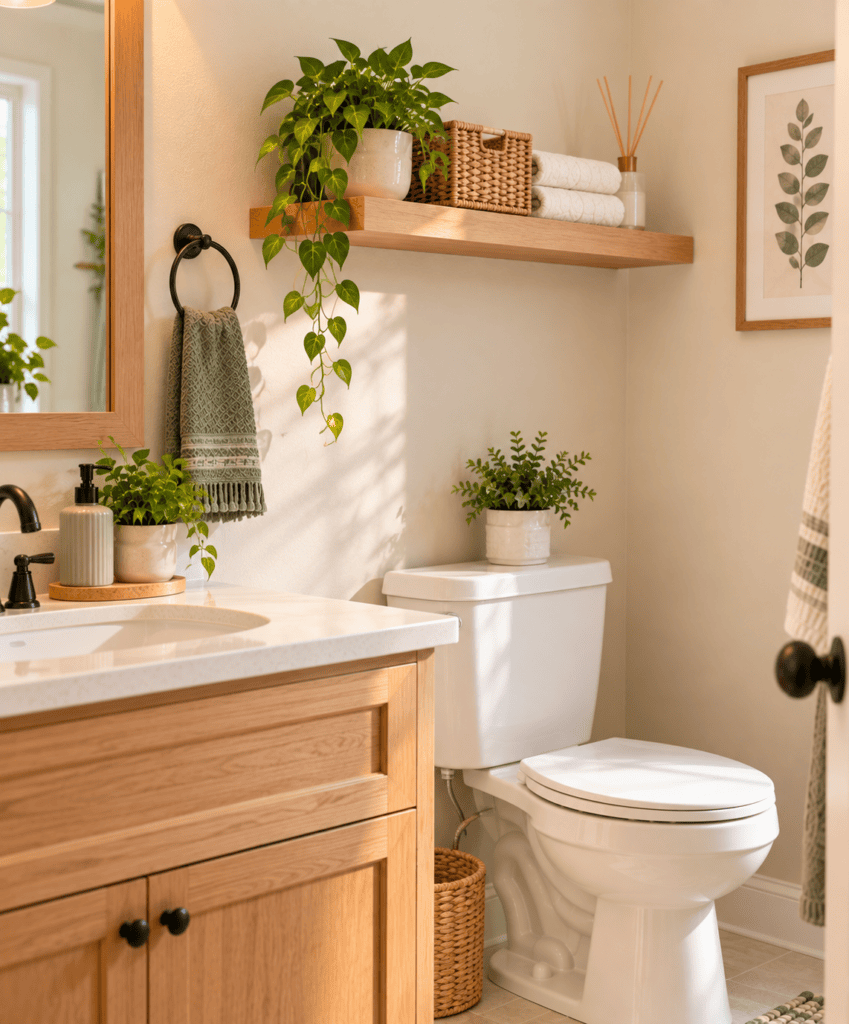
Small bathrooms may be short on cabinets, but they often have a little unused wall space.
A single floating shelf can provide a convenient spot for a few folded towels, a small basket, or frequently used toiletries without requiring another piece of floor-standing furniture.
The key word there is single.
An empty wall doesn’t automatically need three shelves and twelve decorative baskets.
Sometimes one shelf is enough.
Watch the Depth
In a tight bathroom, shelf depth matters just as much as width.
A shelf that’s too deep can interfere with a mirror, medicine cabinet, door, or normal movement through the room.
Choose a depth appropriate for the location and use mounting hardware suited to the wall type and the weight you plan to store.
Then resist the urge to fill every available inch.
Leaving some open space can help the shelf—and the bathroom—feel calmer.
Nook & Noted Tip: Small bathrooms usually benefit from storage that looks a little underfilled rather than completely packed.
8. Give Vanity Drawers Some Structure
Bathroom drawers have a tendency to become tiny archaeological sites.
Hair ties at the bottom.
Three lip balms you forgot you owned.
A travel-size lotion.
And possibly an attachment belonging to an appliance you haven’t seen since 2022.
The drawer may not need to be bigger.
It may simply need some structure.
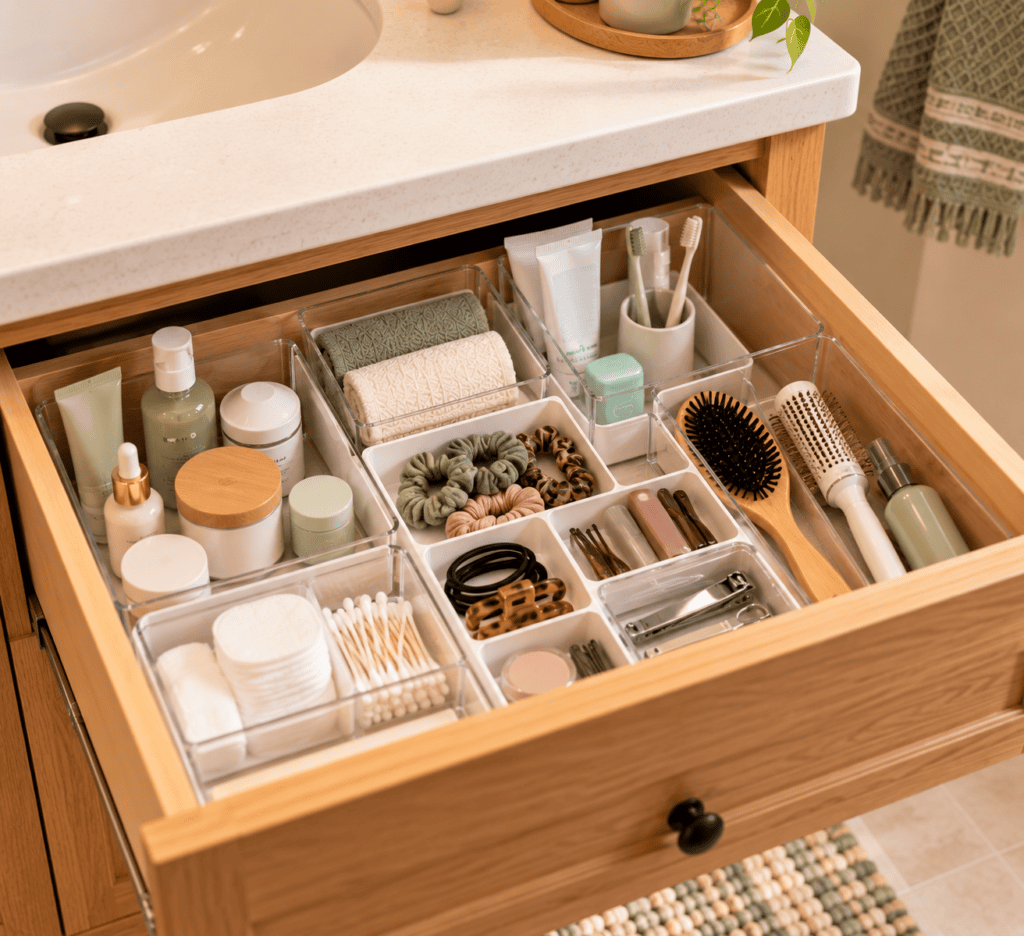
Drawer dividers or modular trays can separate smaller items into useful categories so they’re easier to see, grab, and put away.
They can work particularly well for:
- Skincare
- Makeup
- Dental-care items
- Hair accessories
- Grooming supplies
But don’t start by buying the organizer.
Start by emptying the drawer.
Remove anything you no longer use, then group what’s left by category.
Once you know what actually needs to go back into the drawer, you’ll have a much better idea of the compartment sizes and layout you need.
Adjustable dividers or modular trays can offer more flexibility than organizers with fixed compartments.
And remember to measure the inside width, depth, and height of the drawer before choosing anything.
Nook & Noted Tip: Organize the belongings first. Buy the organizer second.
A Small Bathroom Doesn’t Need Storage Everywhere
When space is limited, it’s tempting to treat every empty surface as a storage opportunity.
But maximizing storage and maximizing every square inch aren’t necessarily the same thing.
A shelf that’s 80 percent full may be easier to use than one that’s packed edge to edge.
An under-sink cabinet with a little open space makes bins easier to remove.
A rolling cart with room left on a shelf gives you somewhere to put the next item that needs a home.
And a bathroom with a little visible breathing room simply feels calmer.
The goal isn’t to turn every wall, door, cabinet, and corner into storage.
It’s to add storage where it genuinely makes the room easier to use.
The Bottom Line
A small bathroom doesn’t need a renovation—or eight new organizers—to work better.
Start by looking for storage space you already have but aren’t using.
Check behind the door.
Look underneath the sink.
Notice the empty wall above the toilet.
Open your vanity drawers and see whether better organization could create more usable room.
Then choose one or two solutions that address the clutter that’s actually causing problems.
You don’t have to maximize every square inch of the bathroom. In fact, leaving a little breathing room can make a small space feel calmer and easier to use.
Sometimes one shelf, one bin, or one previously overlooked storage spot is all it takes.
The goal isn’t to fit more into your bathroom. It’s to make the space you already have work better.
Looking for More Small-Space Inspiration?
Ready to make the space you have work a little harder? Explore more practical organization ideas, small-space solutions, and clever home finds from Nook & Noted.