Paper clutter is sneaky. It doesn’t arrive in one big pile. It shows up as a school flyer here, a pharmacy receipt there, and a stack of mail you’ll “get to later.” Then one day, the kitchen counter, the dining table, and that one drawer are all quietly holding paper hostage.
The good news? Paper clutter is surprisingly manageable once you give it a simple system. When every paper has somewhere to go—from the moment it enters your home to the moment it’s filed or tossed—the piles become much easier to control.
Here are seven practical ways to help you organize paper clutter and tame the chaos.
Before You Organize, Find Where the Paper Piles Up
Paper clutter usually comes from just a handful of places: the mailbox, backpacks, work bags, and the occasional printout you might need someday.
But the real problem often starts with where those papers land.
Maybe mail gets dropped on the kitchen counter. School forms end up on the dining table. Receipts collect in a drawer until you can barely close it.
Before creating a filing system, take a quick look around your home and identify the spot where paper tends to accumulate.
That’s where you should start.
Nook & Noted Tip: You don’t have to tackle every piece of paper in the house. Start with the spot where the piles grow fastest and build a simple routine around it.
1. Sort Mail Before It Becomes a Pile
The problem: Mail comes through the door, gets set down “for now,” and slowly turns into a stack of envelopes nobody wants to deal with.
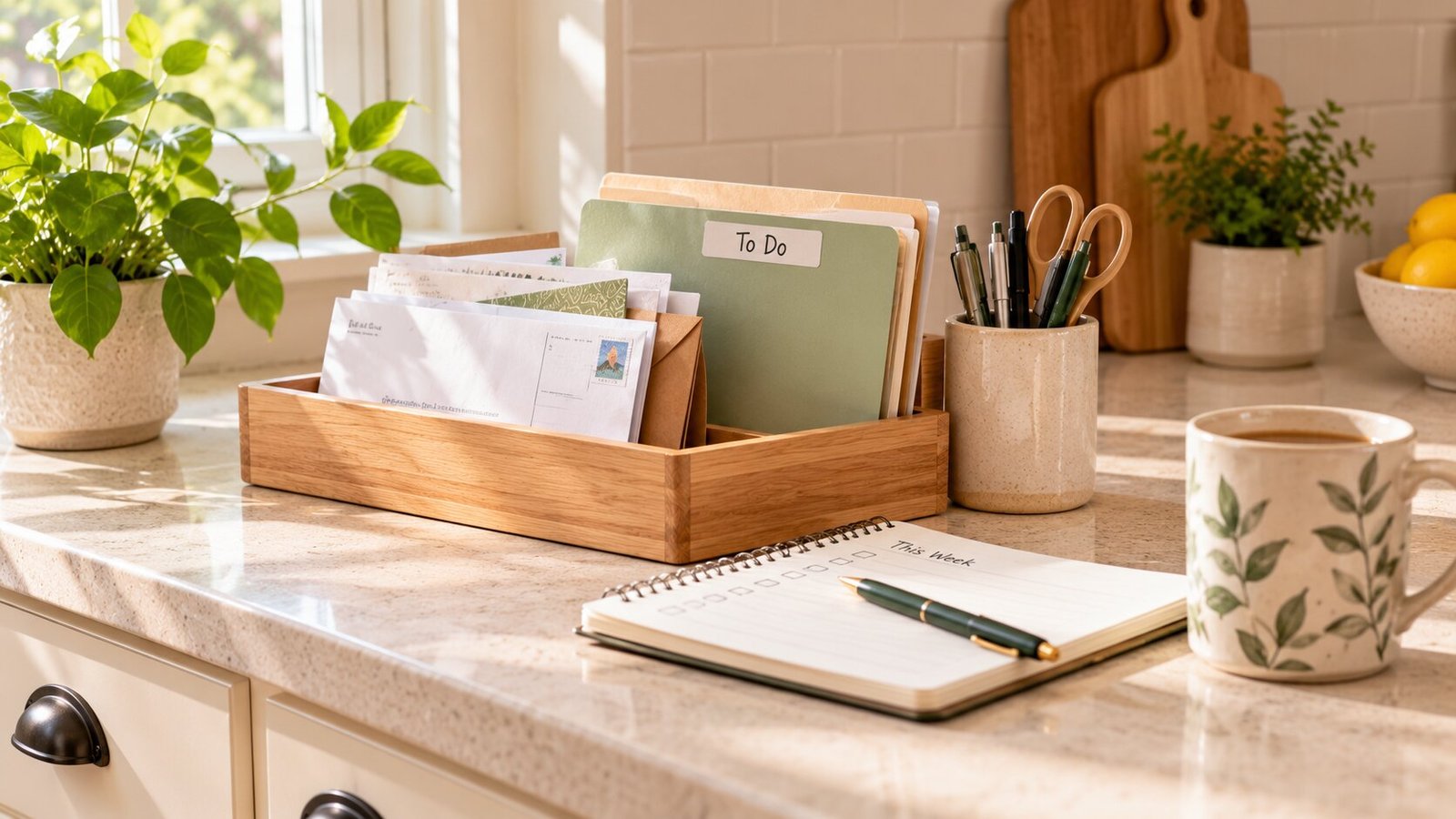
The fix: Choose one convenient spot near the door or wherever you normally open mail, and make a habit of sorting it before it spreads.
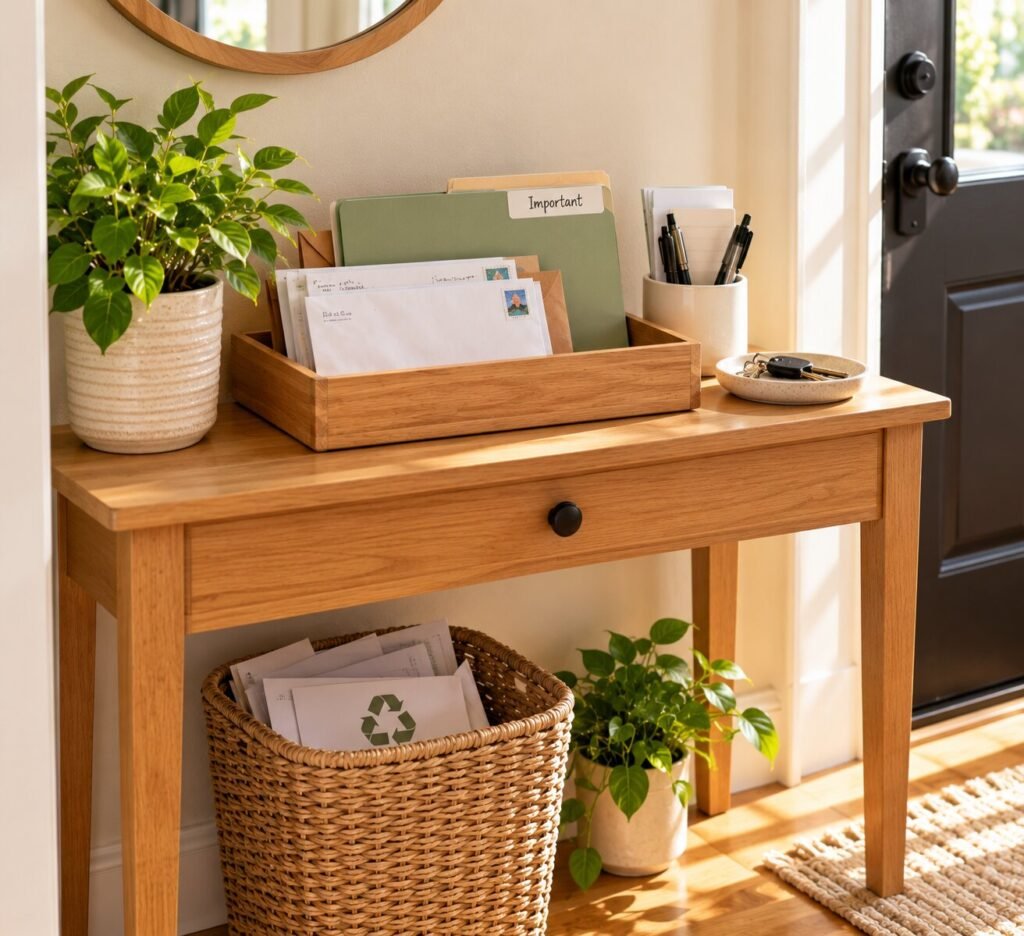
Recycle obvious junk mail right away, set aside anything that needs attention, and put important documents where they belong.
You don’t need a fancy mail organizer. A shallow tray, a simple folder, and a nearby recycling bin can be enough.
Make Sorting Easy
The closer your sorting supplies are to where you open mail, the more likely you are to use them.
If you always open mail at the kitchen counter, that’s probably where your system should live—not on a shelf across the house.
And if something requires more than a minute or two of attention, don’t let it disappear back into the pile. Move it to your designated action folder.
Nook & Noted Tip: Two minutes of sorting when mail comes in can save you from a much bigger sorting project later.
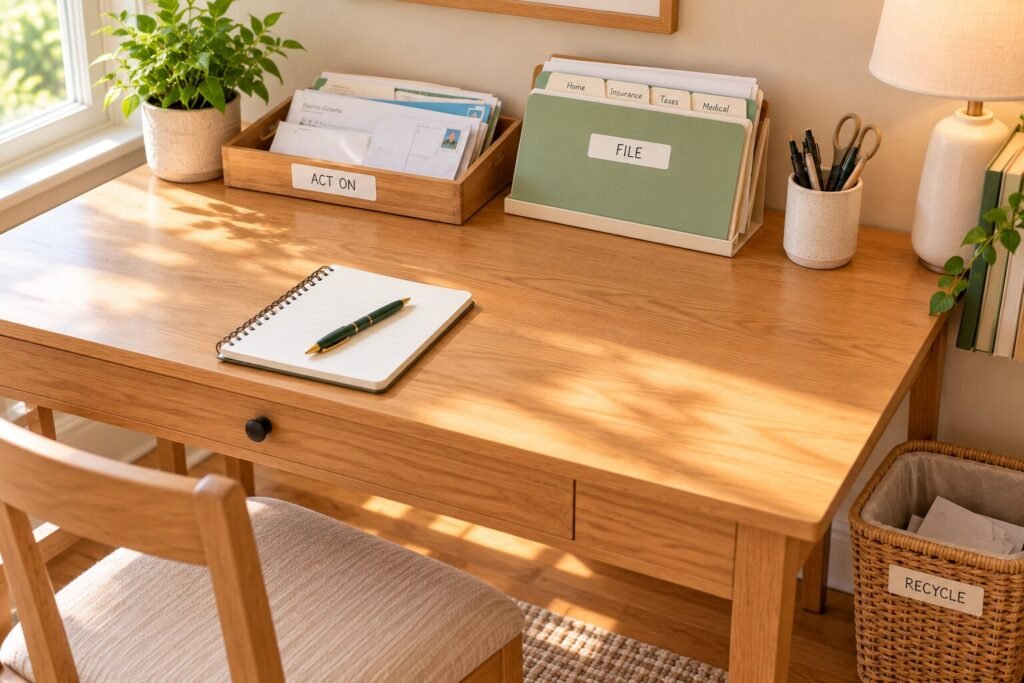
2. Create a Simple Three-Category Paper System
The problem: Papers end up scattered around the house because there’s no clear system for deciding what to do with them.
The fix: Keep things simple with three basic categories:
- Act On: Bills, permission slips, forms, invitations, and anything that needs a response.
- File: Important records, reference documents, and paperwork you need to keep.
- Recycle or Shred: Papers you no longer need, with sensitive information shredded rather than placed directly in the recycling bin.
You don’t need an elaborate filing station with dozens of labeled folders.
A tray for action papers, a folder for documents to keep, and a recycling bin nearby can be enough to get started.
Give Action Papers One Home
The most important part of this system is making sure papers that need attention don’t get mixed in with everything else.
Keep them together in one clearly labeled folder or tray, and check it regularly.
That way, the permission slip that needs signing isn’t hiding underneath a grocery receipt and last month’s electric bill.
Nook & Noted Tip: Make the next step obvious. If you have to stop and think about where a paper belongs, it’s much more likely to end up back on the counter.
3. Go Digital Where It Makes Sense
The problem: Papers you only need for occasional reference are taking up valuable drawer and shelf space.
The fix: Consider scanning or photographing documents that don’t need to be kept in physical form.
Instruction manuals, certain receipts, reference materials, and children’s artwork are all examples of things that may be easier to store digitally.
Many phones have built-in document-scanning features, so you may not need any additional equipment or paid apps.
Keep Digital Files Organized, Too
Moving paperwork to your computer doesn’t help much if everything ends up in one enormous folder called “Scans.”
Create a few simple categories, such as Home, Medical, Receipts, and Manuals.
Give files clear names so you can find them later. For example, “Dishwasher Manual” is much more helpful than “Scan_0047.”
For important records, use secure storage and maintain appropriate backups.
And remember that not every original document should be discarded. Certain legal, identity, financial, and other records may need to be retained in physical form. Check the requirements before getting rid of anything important.
Nook & Noted Tip: Digital clutter is still clutter. A few clearly named folders can save you from searching through dozens of mystery files later.
4. Give School Papers and Everyday Handouts a Landing Spot
The problem: Homework, school artwork, permission slips, appointment handouts, and event flyers seem to multiply across every available surface.
The fix: Create a designated place for the papers that regularly come home with family members.
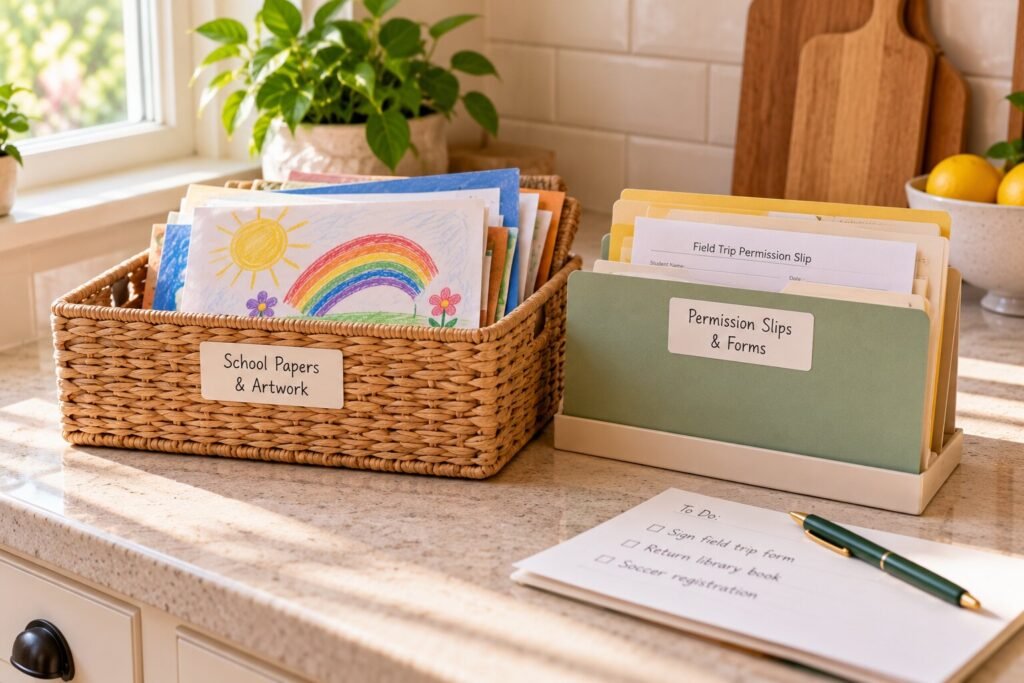
A simple basket or folder can hold completed schoolwork, artwork, and other papers you want to review before deciding what to keep.
For households with multiple children, separate folders can make it easier to keep everything straight.
Separate Action Items From Keepsakes
Not every piece of paper needs the same treatment.
Permission slips, forms requiring signatures, and anything with a deadline should go directly into your action tray.
Artwork, completed assignments, and other keepsakes can go into a separate basket or folder to review later.
Once a week, sort through the collection. Keep a few meaningful favorites, photograph others if you’d like a digital memory, and recycle the rest when appropriate.
Letting kids help choose what to save can make the process easier and teach them that not everything needs to be kept forever.
Nook & Noted Tip: Give important forms a different home from artwork and keepsakes. That way, you’re not digging through a stack of drawings to find tomorrow’s permission slip.
5. Keep Important Documents Easy to Find
The problem: You know you saved that insurance document, warranty, or important receipt somewhere. Unfortunately, “somewhere” isn’t especially helpful when you actually need it.
The fix: Create a small, easy-to-use filing system for documents worth keeping.
You don’t necessarily need a large filing cabinet or an entire desk drawer devoted to paperwork.
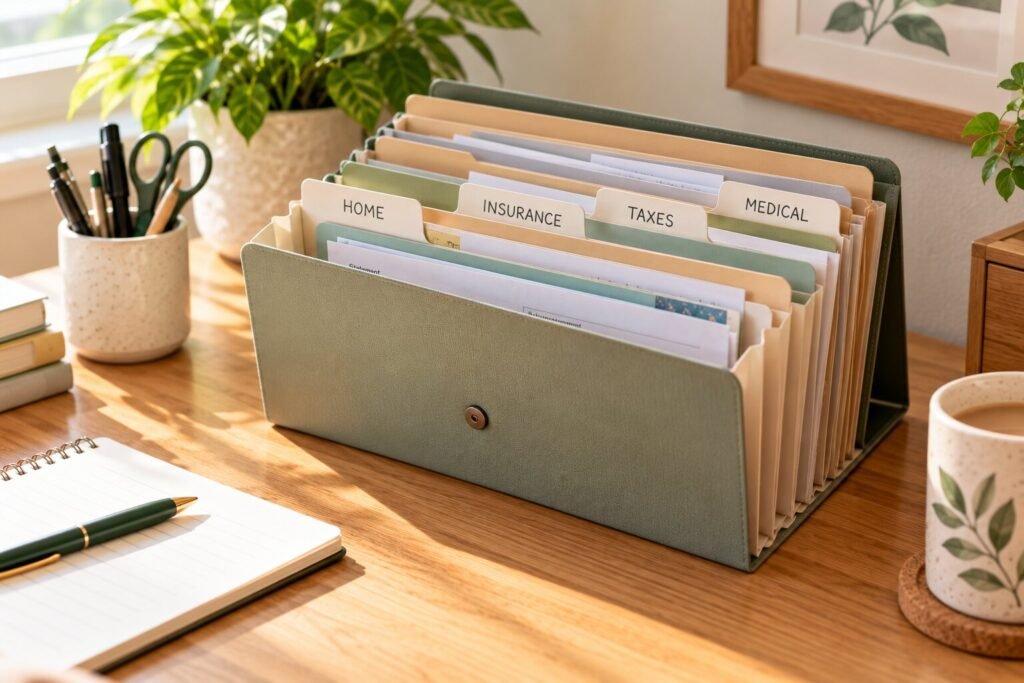
A simple accordion file, document box, or a few labeled folders may be all you need for everyday household records.
Use Categories That Make Sense for Your Home
Start with broad categories such as:
- Home
- Insurance
- Taxes
- Medical
- Vehicles
- Pets
You can always add categories later if needed, but avoid making the system more complicated than necessary.
Keep frequently referenced documents in an accessible location, and store sensitive originals—such as birth certificates, passports, and important legal documents—in an appropriately secure place.
The goal is to make important paperwork easy to find without turning filing into an afternoon project.
Nook & Noted Tip: If putting a paper away takes more than a few seconds, you’re more likely to put it off. Keep your filing system simple enough that you’ll actually use it.
6. Make a 10-Minute Weekly Paper Reset
The problem: Even with a good system, paperwork has a way of slowly collecting between bigger cleanouts.
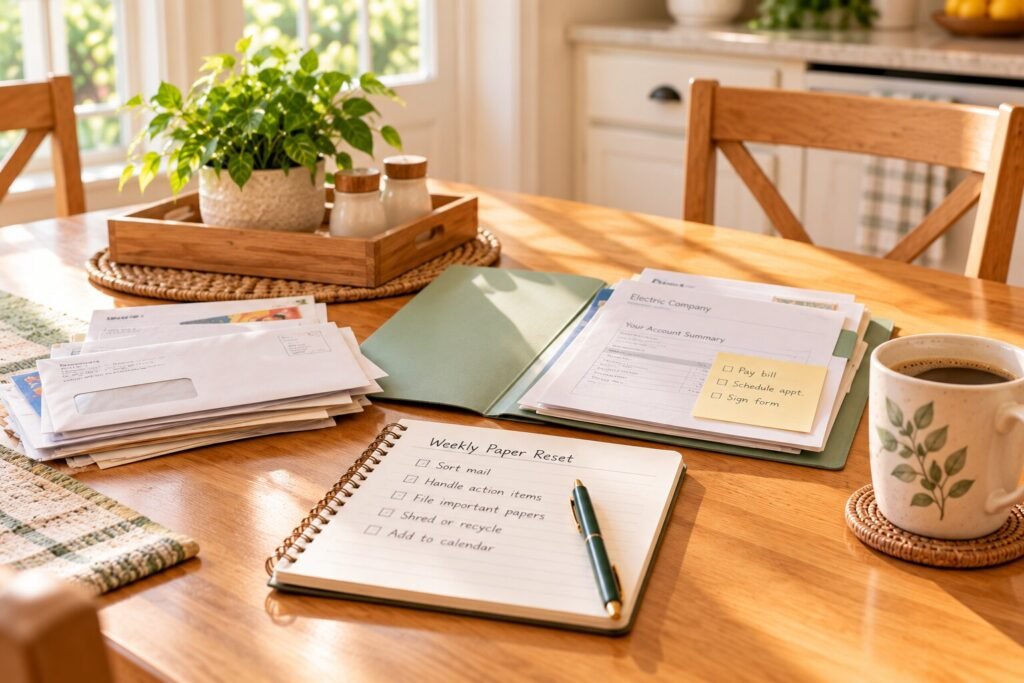
The fix: Set aside ten minutes once a week to catch up before the piles start growing again.
Choose a time that fits your routine, whether that’s Sunday evening, Friday afternoon, or whenever you usually plan the week ahead.
What to Do During Your Weekly Reset
Set a timer and work through a few simple steps:
- Empty your action tray and review anything that needs attention.
- Handle quick tasks, such as signing forms or responding to invitations.
- Move important documents into their designated folders.
- Recycle or shred papers you no longer need.
- Add longer tasks and deadlines to your calendar so they don’t get forgotten.
You don’t have to finish every task in those ten minutes. The goal is to make sure every paper has a next step instead of sitting indefinitely in a pile.
Connect It to an Existing Habit
Try pairing your paper reset with something you already do regularly.
Maybe it’s Sunday meal planning, your weekly calendar check, or a quiet cup of coffee before the day gets busy.
The easier the routine fits into your life, the more likely you’ll stick with it.
Nook & Noted Tip: A ten-minute reset every week is much easier than spending an entire Saturday sorting through a month’s worth of paperwork.
7. Reduce the Paper Coming Into Your Home
The problem: You finally get the paperwork under control, and then the mailbox fills up again.
The fix: Once you have a simple sorting system in place, look for ways to reduce how much paper arrives in the first place.
Consider switching to paperless billing for accounts you regularly manage online, unsubscribing from unwanted catalogs, and opting out of promotional mail when possible.
You can also avoid printing documents that are easy to reference digitally.
Make Changes Gradually
You don’t need to switch everything to paperless overnight.
Start with one or two accounts, especially ones where you’re already comfortable checking statements online.
Just make sure you’ll actually review digital notifications and statements. A paperless system only helps if important information doesn’t disappear into an overflowing email inbox instead.
For unwanted catalogs or promotional mail, take a moment to unsubscribe or update your preferences when possible.
A few small changes can gradually reduce the amount of paper entering your home.
Nook & Noted Tip: The easiest paper clutter to manage is the paper that never arrives. Reducing the incoming flow makes every other organizing habit easier.
Paper Clutter Doesn’t Have to Take Over Your Home
Paper clutter has a way of building up quietly, but keeping it under control doesn’t require a complicated system.
A designated spot for incoming mail, a simple way to sort important papers, and a quick weekly reset can make a noticeable difference.
Start with the area where paper piles up most often. Once you’ve created a routine that works there, the rest becomes easier.
And don’t worry about creating a perfectly organized filing system with matching folders and color-coded labels. The best system is the one that makes sense for your household and is easy enough to maintain.
The goal is simple: important papers are easy to find, everyday surfaces stay clear, and you’re no longer wondering where that one form disappeared.
And if you can reclaim the kitchen counter in the process? Even better.
Looking for More Home Organization Inspiration?
Looking for more ways to make your home feel organized and functional? Explore practical organization ideas, small-space solutions, and clever home finds from Nook & Noted.