Not everyone has a spare room waiting to become a home office.
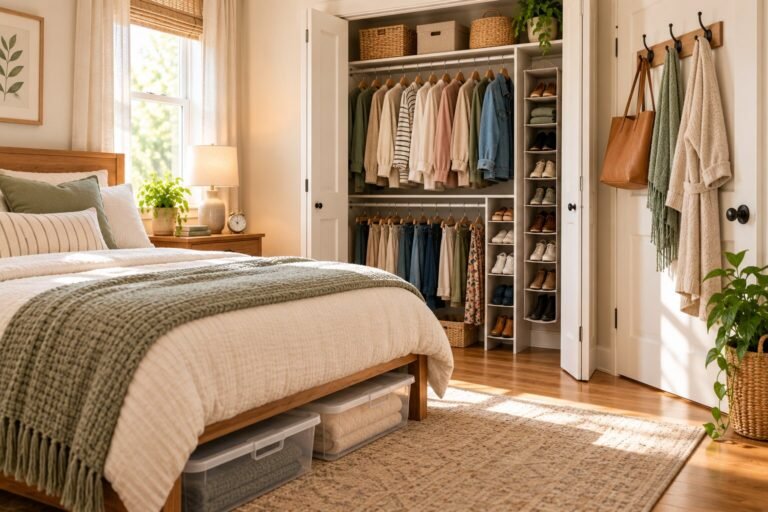
For many of us, working from home means carving out a corner of the bedroom, borrowing part of the living room, or setting up at the dining table—and wondering when the laptop charger officially became part of the decor.
The good news? You don’t need an entire room to create a workspace that feels comfortable, organized, and ready for work.
A defined work surface, a little vertical storage, and a way to contain the office when the workday is over can make a surprisingly big difference.
Here are eight practical ways to create a home office when you don’t actually have an office.
Before You Create a Workspace, Think About How You’ll Use It
When you’re trying to fit an office into another room, it’s tempting to start by shopping for a small desk.
But first, think about what you actually need the space to do.
Do you work from home every day or only occasionally?
Do you use a laptop, or do you need room for a monitor?
Do you work mostly online, or do you need storage for papers and files?
Do you regularly make video calls?
Do you need your workspace to disappear at the end of the day?
And perhaps most importantly: will the office interfere with how the room is already being used?
A dining table that becomes a workspace from 9 to 5 has different needs than a permanent desk in the corner of a bedroom.
Once you know how you’ll use the space, you can create a setup that supports those needs without squeezing an entire traditional office into a room that was never meant to hold one.
Nook & Noted Tip: Don’t create a miniature version of a traditional office if you don’t need one. Build the workspace around how you actually work.
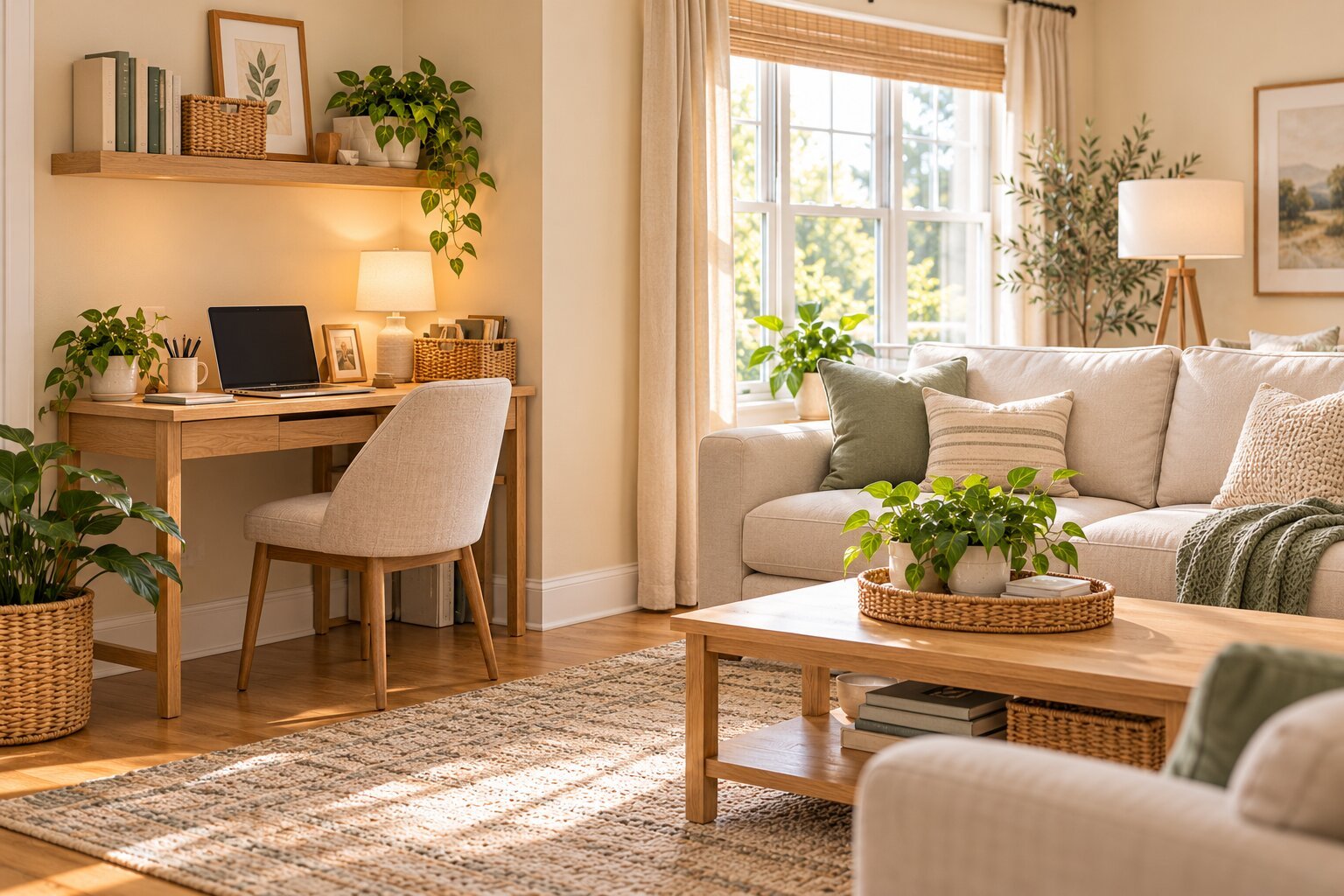
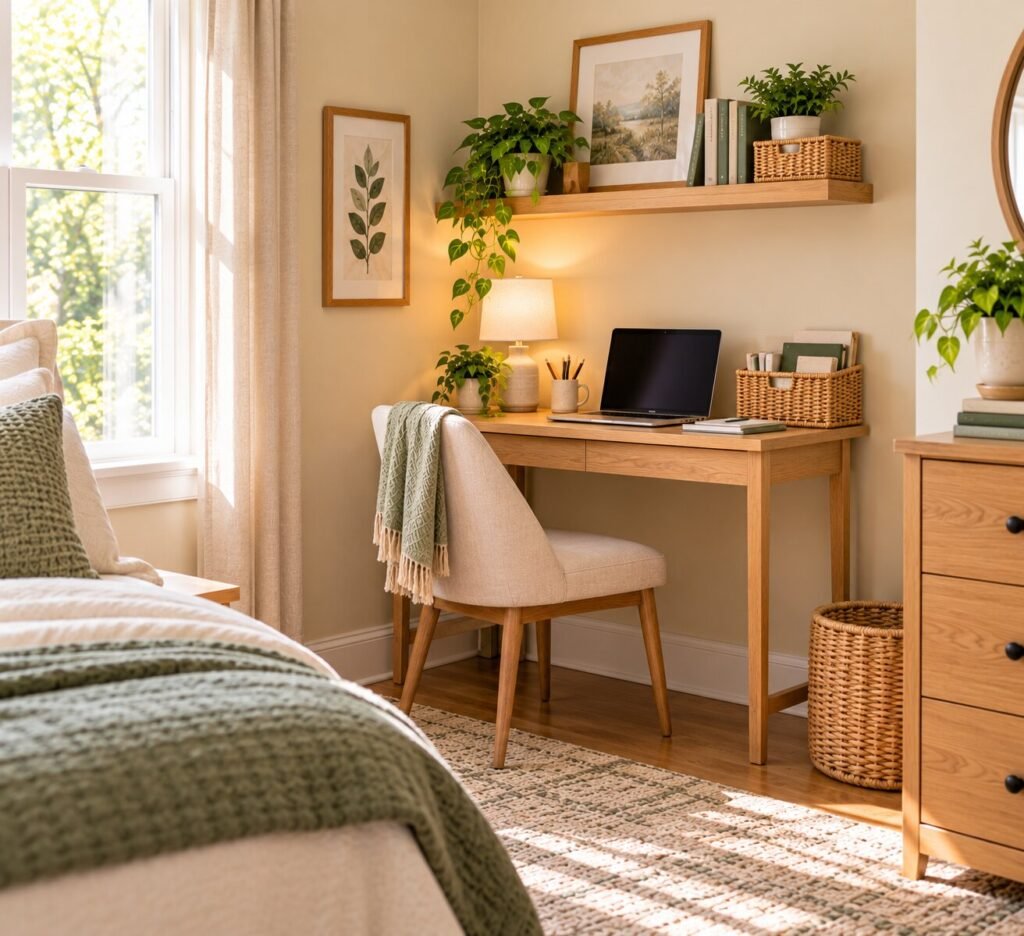
1. Turn an Unused Corner Into a Workspace
You don’t need a sprawling desk to create a defined place to work.
Sometimes an overlooked corner is enough.
Look around your home for spaces that aren’t doing much now. That might be:
- A bedroom corner
- One end of the living room
- A wide hallway or landing
- An alcove
- An unused closet
- A spot beside a window
A slim desk can turn one of these areas into a dedicated workspace without taking over the entire room.
And having a defined place for work—even a small one—can help keep laptops, notebooks, chargers, and other supplies from spreading to every available surface.
Remember the Chair
Don’t measure only for the desk.
You also need enough room to sit comfortably, pull the chair out, and move around without blocking the normal path through the room.
A desk that fits perfectly but leaves you wedged between the wall and the bed isn’t much of a victory.
If possible, use painter’s tape to mark the approximate desk dimensions on the floor before choosing anything. It’s an easy way to see how much room the setup will actually occupy.
Nook & Noted Tip: Look for unused space first. Then choose a desk that fits the space—not the other way around.
2. Create a Desk That Disappears When You’re Done
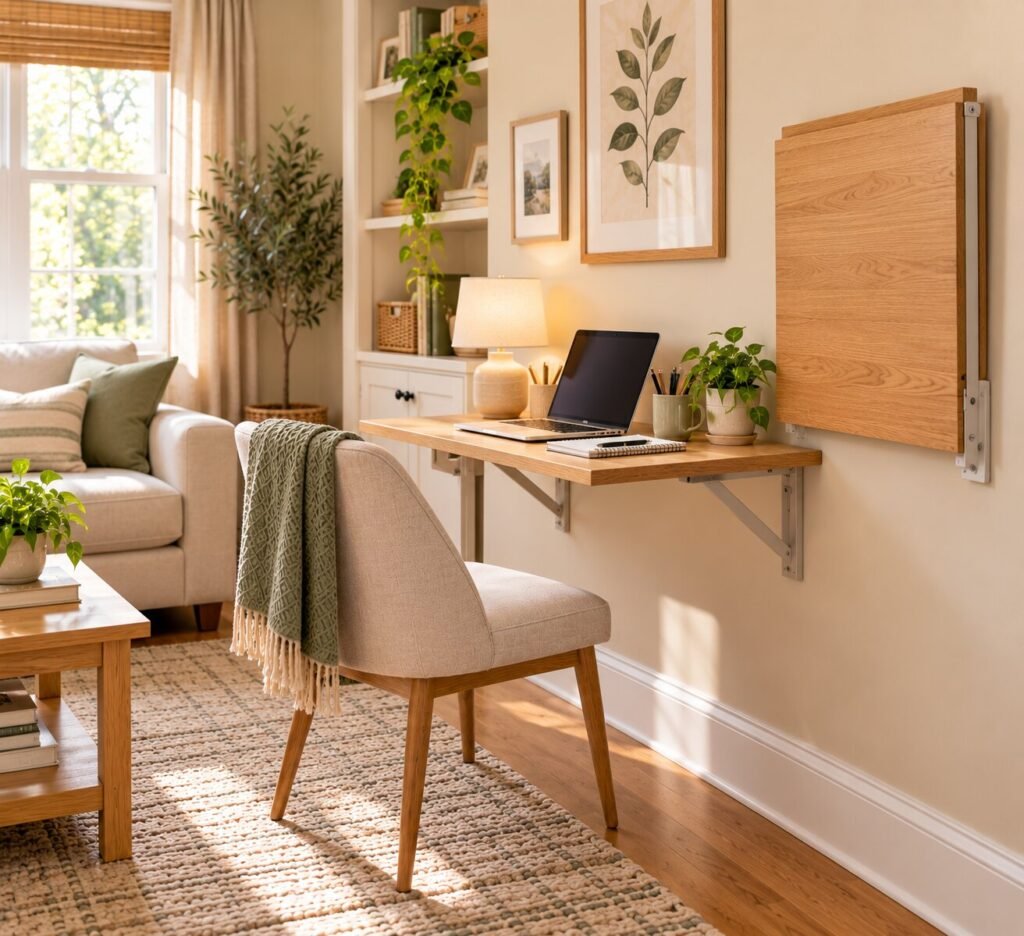
If you need a workspace but don’t have floor space to devote to a permanent desk, look to the wall.
A wall-mounted fold-down desk can provide a work surface when you need one and fold away when the workday is finished.
That can make it especially useful in:
- Bedrooms
- Living rooms
- Dining areas
- Guest rooms
- Wide hallways
- Multipurpose rooms
Open it for work, pull up a chair, and fold it away when you need the room for something else.
Make Sure It’s Comfortable to Use
A fold-down desk shouldn’t just fit the wall.
It also needs to be installed at a comfortable working height and provide enough surface depth for the way you work.
A laptop requires less space than a laptop, monitor, keyboard, notebook, and coffee cup all competing for territory.
Also think about where the chair will go when the desk is folded away.
And if the desk closes against the wall, remember that everything on the work surface will need somewhere else to go first.
The desk may disappear. Your laptop probably won’t.
3. Let a Rolling Cart Hold the Office
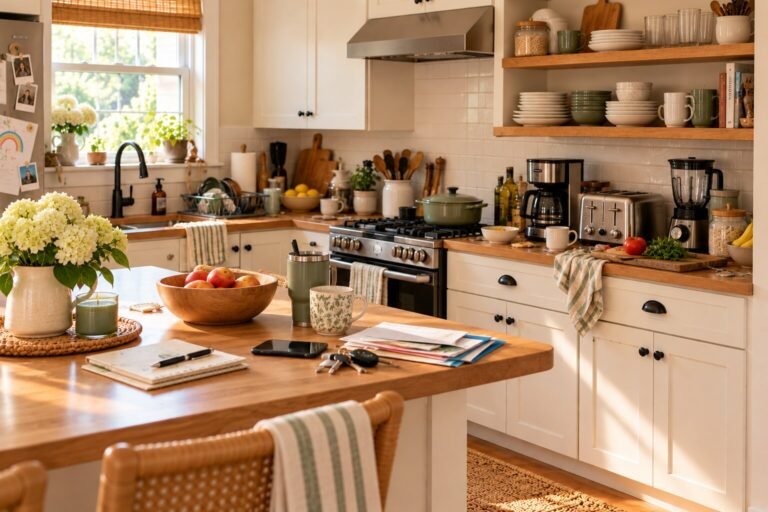
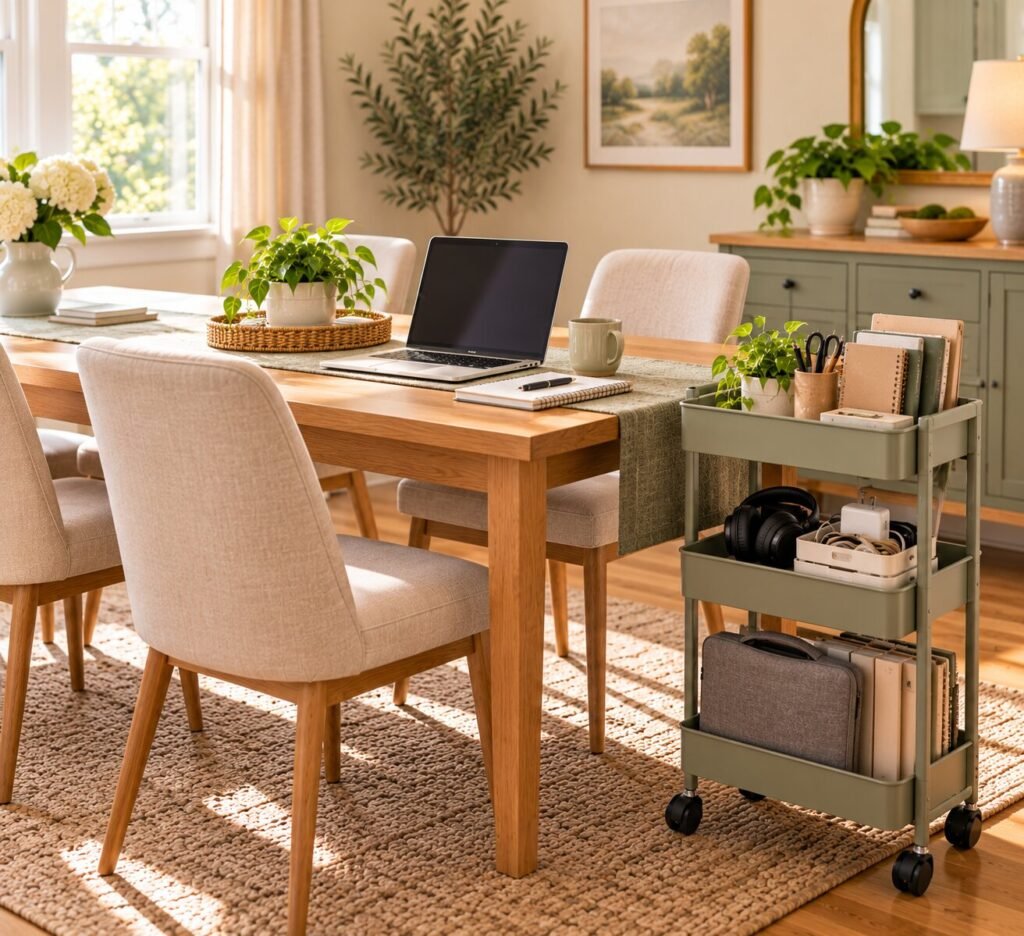
If your office is actually the dining table, kitchen table, or another shared surface, the biggest challenge may not be finding somewhere to work.
It may be finding somewhere for all the work stuff to go afterward.
A slim rolling cart can become a mobile home for everyday office supplies.
Depending on what you use, it might hold:
- Notebooks and planners
- Chargers
- Headphones or a headset
- Pens and other small supplies
- Files
- Laptop sleeve
- Work materials
During the day, roll the cart beside your work surface.
When you’re finished, return everything to the cart and move it to a corner, closet, or other designated spot.
Your dining room gets to become a dining room again—and the stapler doesn’t have to join you for dinner.
Keep the Cart Focused
Try not to turn it into general household storage.
The more clearly defined its purpose is, the easier it will be to set up and put away your workspace.
Nook & Noted Tip: If you don’t have room for a permanent office, give your office supplies a permanent home.
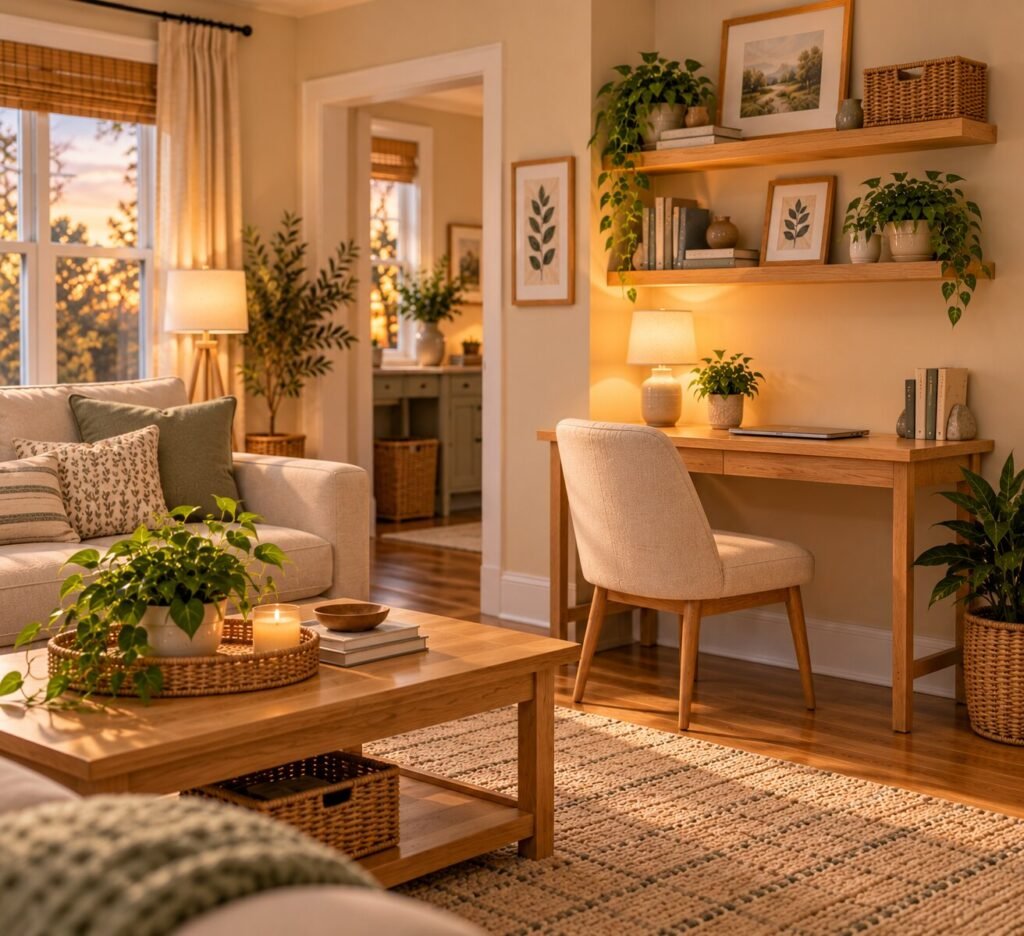
4. Make the Workspace Belong to the Room
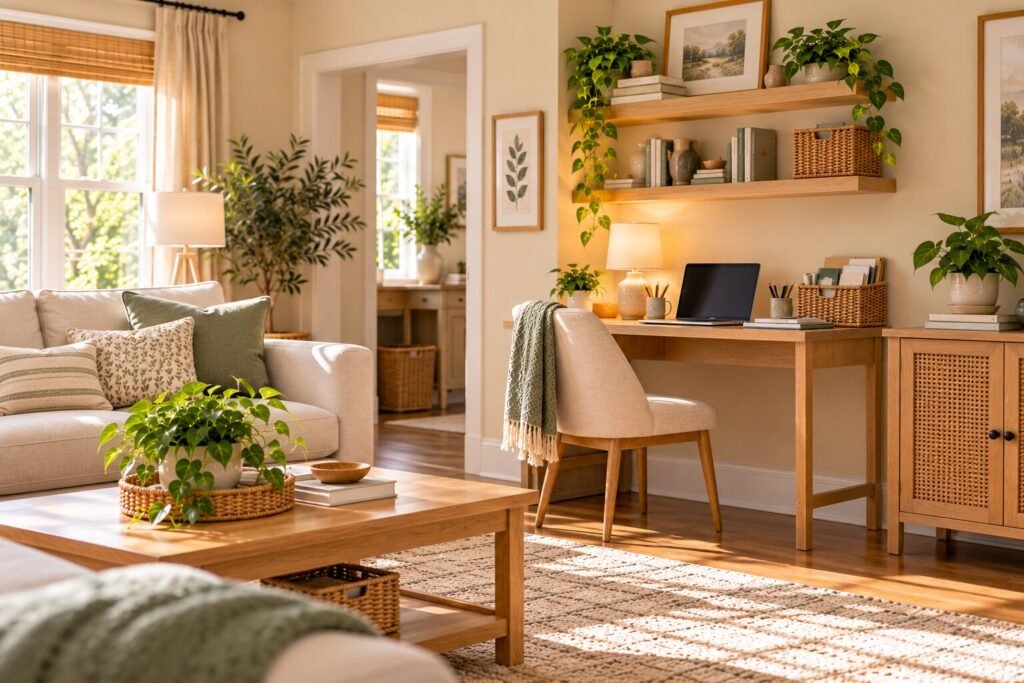
When a home office shares space with your bedroom or living room, it doesn’t have to look like a corporate workstation that wandered into the wrong building.
A few simple choices can help the workspace feel like a natural part of the room.
Look at the materials, colors, and shapes already around it.
If the room has warm natural wood, consider repeating that in the desk or shelving.
If you already use woven baskets, one can become office storage.
A lamp that coordinates with the room may look more at home than something designed specifically for an office.
Even the chair can make a difference.
Your workspace doesn’t need to match everything perfectly. It just shouldn’t look as though it arrived from a completely different building.
Keep the Visual Clutter Down
This matters even more when the workspace is in a bedroom or living room.
Try to keep only the things you use regularly on the desktop.
A laptop, lamp, notebook, and perhaps one small organizer may be enough.
Everything else can live in a drawer, basket, cart, or on a shelf.
The result feels less like you’ve squeezed an office into the room and more like you’ve intentionally created a small workspace within it.
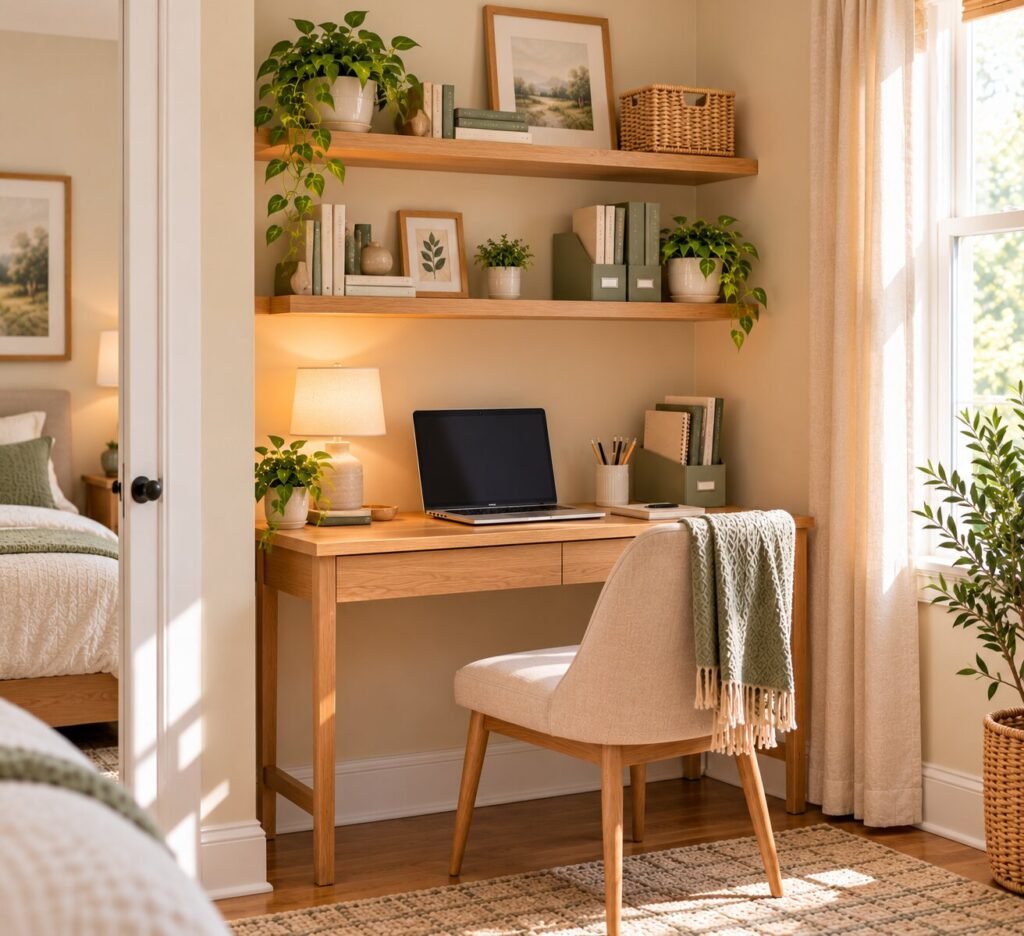
5. Use the Wall Above Your Desk
When there’s no room for a bookcase or filing cabinet, the wall above your workspace can provide useful storage without occupying more floor space.
One or two simple shelves can hold things like:
- Reference books
- A small file holder
- Office supplies
- A handled basket
- Notebooks
- A few personal items
The trick is to keep the shelves useful without turning them into another place to accumulate stuff.
You don’t need to fill every inch.
A little open space can help the entire workspace feel calmer.
Think About Depth and Placement
Before installing shelves, consider more than width.
Make sure they’re shallow enough that they don’t feel intrusive when you’re sitting at the desk.
Think about head clearance and what you’ll actually store above you.
Books and files can also become surprisingly heavy, so use appropriate mounting hardware and follow the shelf manufacturer’s installation and weight recommendations.
Keep frequently used items within easy reach and reserve higher storage for things you don’t need every hour.
Nook & Noted Tip: Vertical storage can save floor space, but you don’t have to fill the entire wall to make it useful.
6. Create a “Work Mode” Kit
What if you don’t have room for a desk at all?
That’s okay.
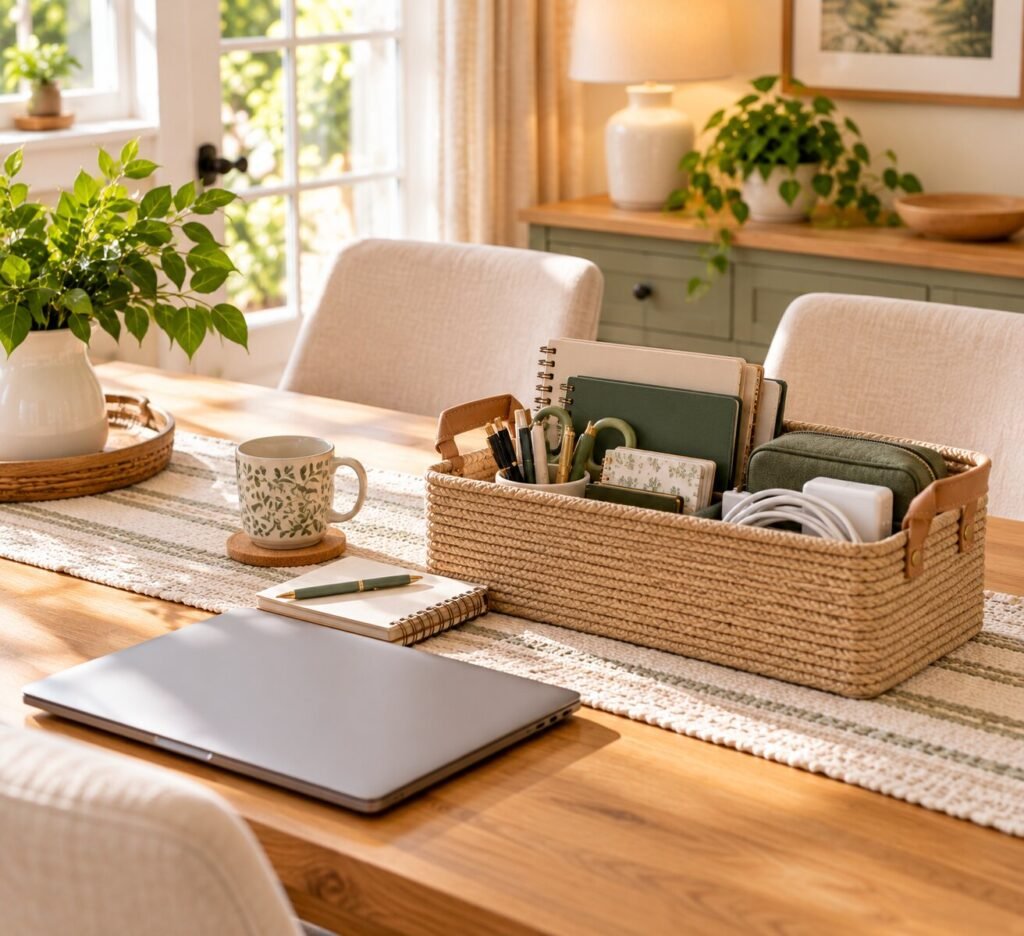
If your workspace appears at the dining table each morning and disappears each afternoon, create a simple “work mode” kit.
Keep the supplies you use every day together in one portable container.
That might be:
- A handled basket
- A portable file box
- A lidded bin
- A dedicated drawer
- The rolling cart from earlier
Include only the things you regularly need to set up for work.
Your laptop, notebook, planner, charger, pens, headset, and a few files may be enough.
When it’s time to work, bring out the kit.
When you’re finished, put everything back.
This gives temporary workspaces a defined beginning and end—and helps prevent office supplies from slowly colonizing the rest of the house.
Keep It Easy to Put Away
If packing up your workspace requires twelve steps and three different closets, you’re probably not going to do it every afternoon.
The simpler the system, the more likely it is to stick.
Nook & Noted Tip: A temporary workspace can still have permanent organization.
7. Keep Cords From Taking Over
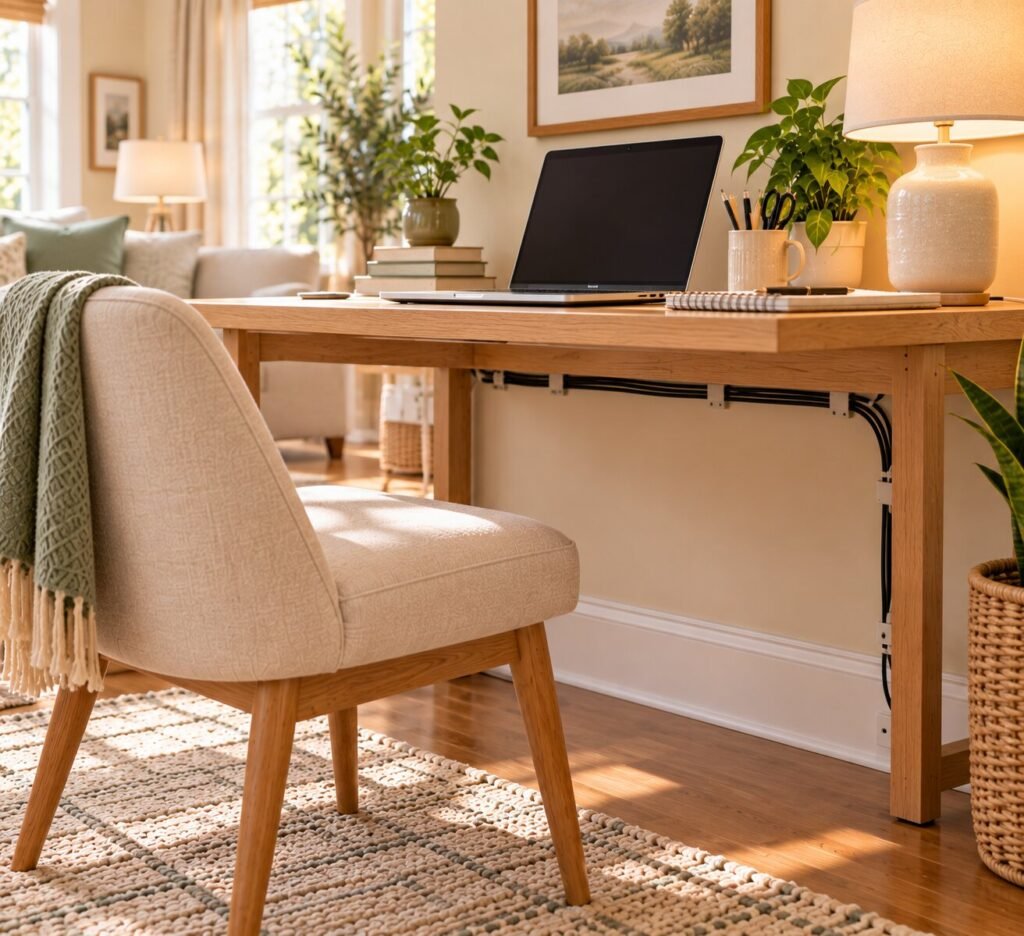
Nothing makes a small workspace look more temporary than a collection of cords wandering in every direction.
Laptop chargers, monitor cables, lamp cords, phone chargers, and power strips can quickly turn a neat little workspace into cable spaghetti.
Fortunately, you don’t necessarily need an elaborate cable-management system.
Depending on your setup, simple solutions might include:
- Reusable cable ties
- Adhesive cable clips
- A cable sleeve
- Routing cords along the back of furniture
- A cord-management box for an appropriate power strip
The goal is simply to keep necessary cords together and away from places where they’ll become visual clutter—or a tripping hazard.
Pay Attention to the Walkway
This is especially important when your workspace sits in a bedroom, living room, or dining area.
Avoid running loose cords across paths where people regularly walk.
And before using adhesive clips or other attachments, make sure they’re appropriate for the surface and the size of the cable.
Nook & Noted Tip: You don’t have to hide every cord. You just want them to look intentional rather than adventurous.
8. Give the Workday an Ending
When your office is also your bedroom, dining room, or living room, one of the biggest challenges isn’t storage.
It’s that the office never really goes away.
There’s no door to close at 5:00.
Your laptop is still there.
The notebook is still open.
The charger is still draped across the table.
And that unfinished task is suddenly staring at you while you’re trying to eat dinner.
A simple end-of-day routine can help return the room to its other purpose.
Depending on your setup, that might mean:
- Closing and putting away the laptop
- Returning supplies to your work-mode kit
- Plugging devices into one designated charging spot
- Clearing the dining table
- Pushing in the desk chair
- Folding away a wall-mounted desk
- Putting work papers out of sight
It doesn’t have to take long.
The goal is simply to create a small transition between work time and home time.
You may not have an office door to close, but you can still create a routine that tells both your home—and you—that the workday is finished.
Don’t Try to Recreate a Full-Size Office
When you’re working with limited space, it’s easy to think you need a smaller version of everything found in a traditional office.
Smaller desk.
Smaller filing cabinet.
Smaller bookshelf.
Smaller printer stand.
But you may not need all of those things at all.
If you rarely print, you probably don’t need to build your workspace around a printer.
If nearly everything you use is digital, you may not need much file storage.
If you work primarily from a laptop, a giant desk may simply become a giant place to put things.
Start with the way you actually work—not with a checklist of what an office is “supposed” to contain.
Ask yourself what you use every day, what you use occasionally, and what doesn’t really need to live in the workspace at all.
The smaller the space, the more valuable that distinction becomes.
Nook & Noted Tip: Don’t shrink a traditional office. Create a smaller workspace designed specifically for you.
The Bottom Line
You don’t need an entire room to create a home office that works.
Start by finding the smallest amount of space that comfortably supports the way you actually work.
Maybe that’s a slim desk in a bedroom corner.
Maybe it’s a fold-down desk that disappears at the end of the day.
Or maybe your “office” is simply a dining table and one well-organized basket that comes out each morning and gets put away each afternoon.
Use the walls when floor space is limited, keep cords and supplies contained, and resist the urge to recreate every piece of furniture you’d find in a traditional office.
Most importantly, give your workspace a beginning and an end.
A home office doesn’t need its own room.
It just needs a defined place to help you get things done—and a way to give the room back when the workday is over.
Looking for More Small-Space Inspiration?
Ready to make the space you have work a little harder? Browse more practical organization ideas, clever home finds, and small-space solutions from Nook & Noted.