A small bedroom has a frustrating way of filling up fast. Clothes spill out of the closet, shoes migrate across the floor, and the nightstand somehow becomes home to everything from books and chargers to the glass of water you forgot about three nights ago.
The obvious solution might seem like another dresser, cabinet, or storage cart. Unfortunately, more furniture usually means less floor space—which isn’t especially helpful when floor space is exactly what you’re short on.
The good news is that more storage doesn’t always mean more furniture. Small bedrooms often have overlooked storage space hiding in plain sight: under the bed, behind the door, above the closet rod, and even inside the drawers you already have.
Here are eight practical ways to find a little more storage without making your bedroom feel even smaller.
Before You Add More Storage, Look at What’s Actually Crowding the Room
It’s easy to assume a small bedroom simply needs more storage.
Sometimes it does.
But often, a few categories are creating most of the problem: off-season clothes, extra bedding, shoes, bags, or the clothes that aren’t quite dirty enough for the hamper but somehow never make it back into the closet.
Before buying another organizer, take a quick look around the room.
What’s actually piling up?
What’s taking up valuable floor space?
And what are you storing within easy reach even though you only use it occasionally?
Answering those questions can help you choose storage solutions that solve an actual problem instead of simply giving you another container to organize.
Nook & Noted Tip: A small bedroom doesn’t need to hold everything you own within arm’s reach. Save the easiest-to-access spaces for the things you use most.
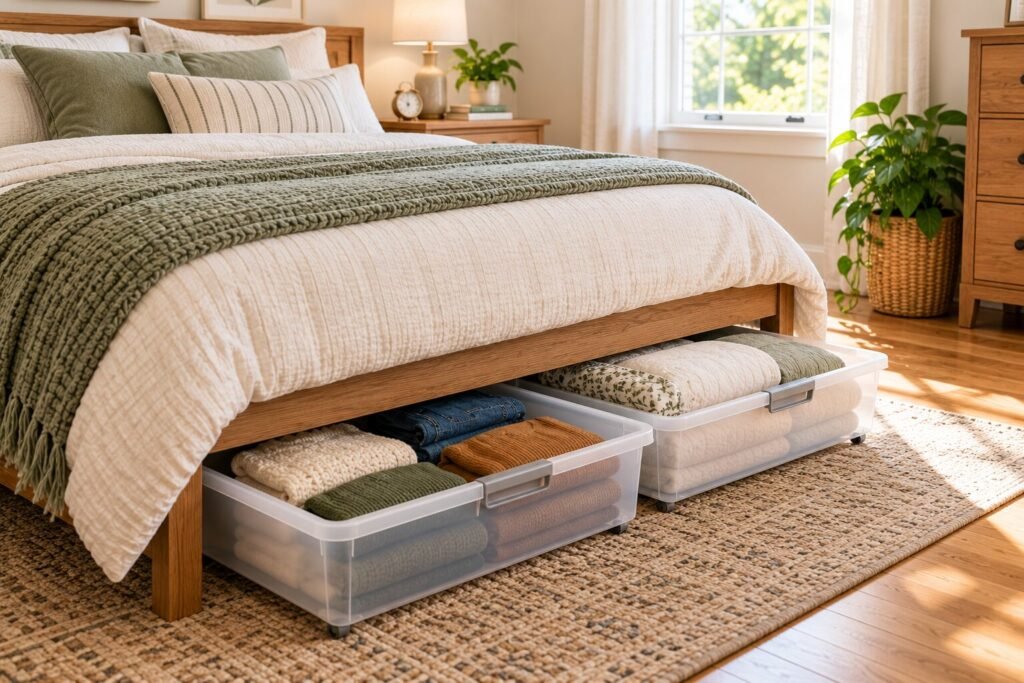
1. Put the Space Under the Bed to Work
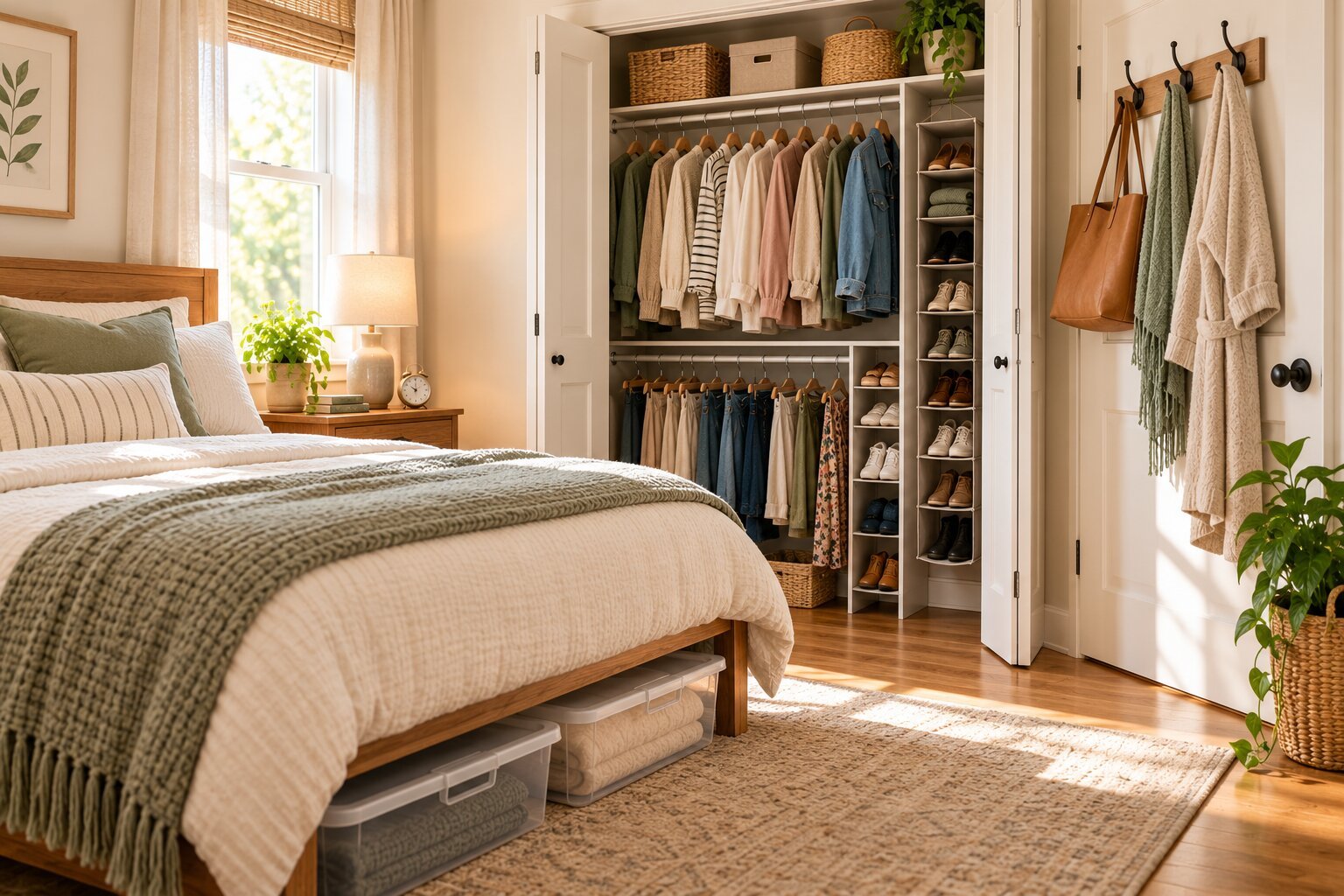
The area beneath the bed can be some of the most useful storage space in a small bedroom—and it doesn’t require giving up a single additional inch of floor.
Low-profile bins or zippered under-bed bags can work well for things you don’t need every day, including:
- Off-season clothing
- Extra sheets and blankets
- Less frequently worn shoes
- Seasonal accessories
- Items you want to keep but don’t need within easy reach
Measure Before You Buy
Measure the actual clearance beneath your bed before choosing containers.
An inch or two can be the difference between a bin that slides out easily and one that gets wedged halfway underneath while you question all of your organizational decisions.
Rolling bins can be especially convenient if you access the space regularly. Handles are helpful too.
And resist the temptation to pack every inch beneath the bed simply because you can. Leave enough room to easily pull things in and out.
Nook & Noted Tip: Storage you have to wrestle with is storage you’ll eventually stop using.
2. Double Up Your Closet Rod
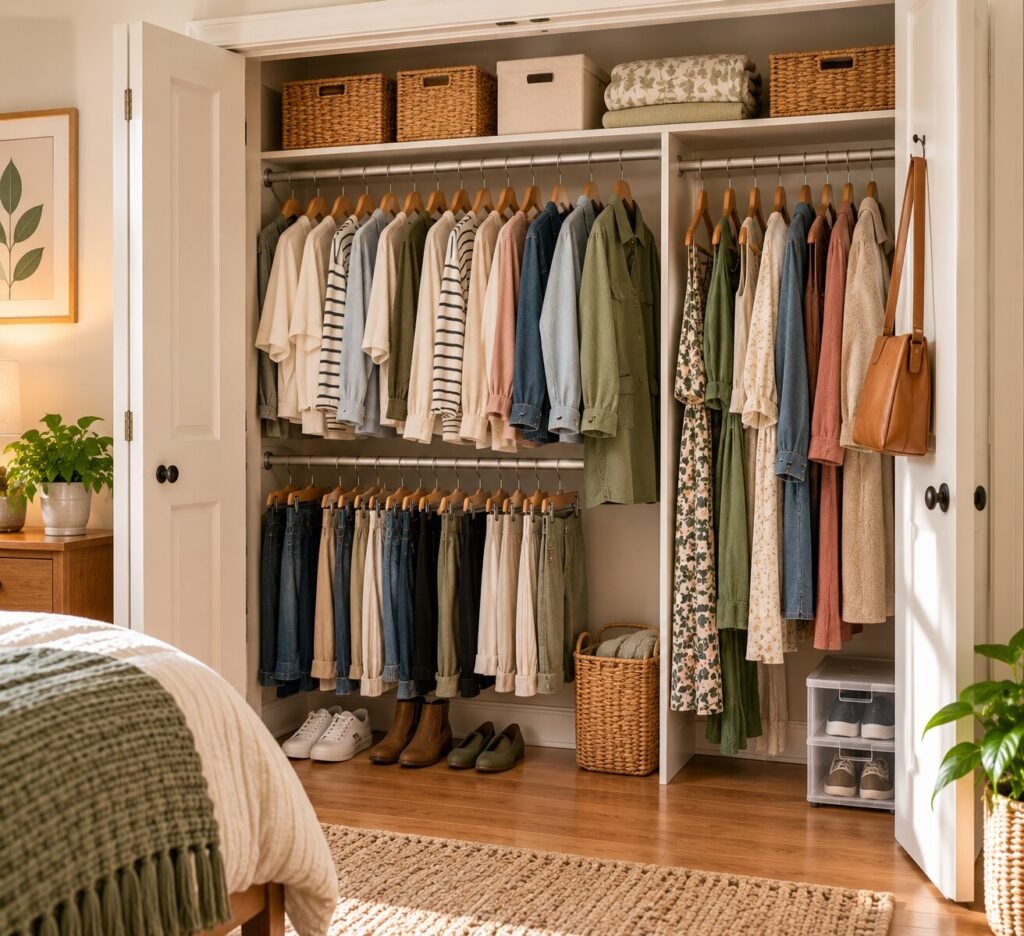
Open your closet and look underneath your hanging clothes.
If you see a large stretch of empty space below shirts, blouses, jackets, or other shorter garments, you may have room for another level of hanging storage.
A second closet rod can make use of that otherwise-empty vertical space without expanding the closet itself.
It’s particularly useful if much of your wardrobe consists of shorter hanging pieces.
Divide the Closet by Clothing Length
You don’t necessarily want a second rod running across the entire closet.
Keep one section with full-height hanging space for dresses, coats, or longer garments, and use a second rod only where shorter clothes leave enough room underneath.
This creates different storage zones within the same closet.
Nook & Noted Tip: Before adding more closet organizers, look at how much empty air is sitting underneath your hanging clothes. That space may be more useful than you think.
3. Use the Inside of the Closet Door
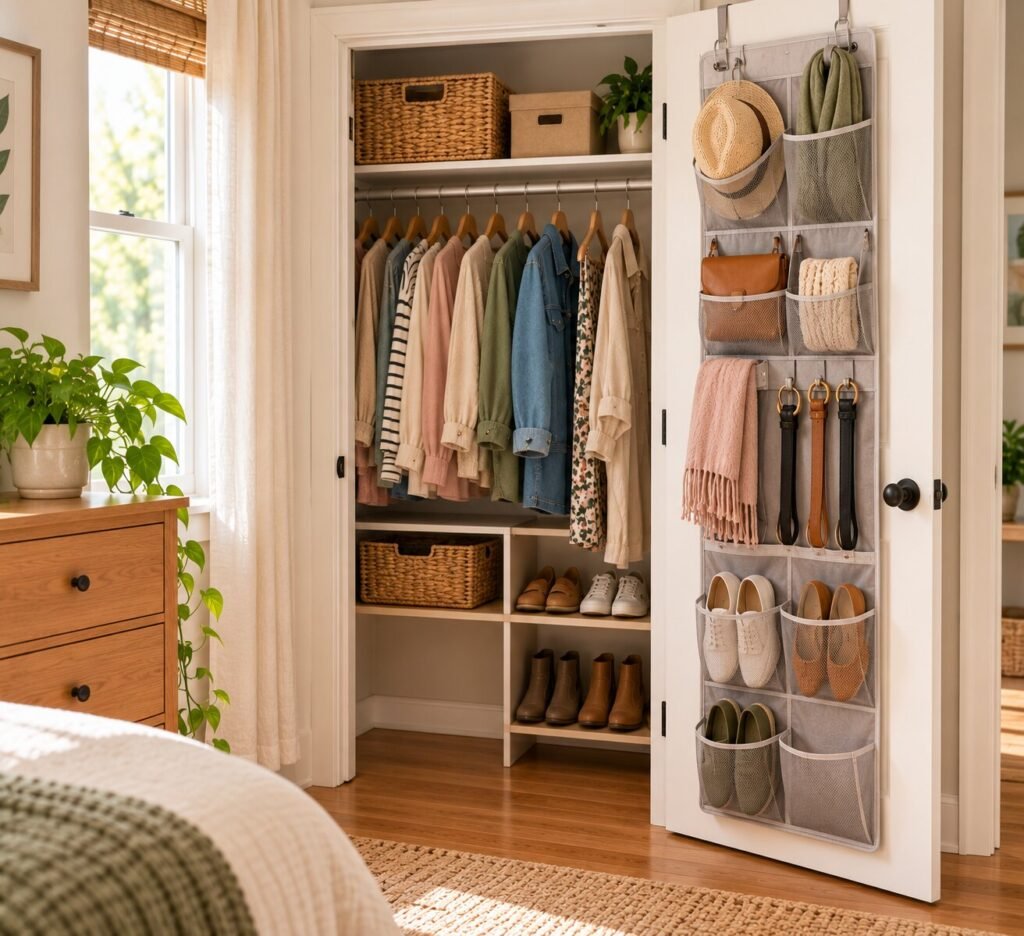
The inside of a closet door is easy to overlook because you don’t really notice it until the door is closed.
But in a small bedroom, even a shallow vertical surface can be useful.
Depending on your closet and door style, an over-the-door organizer or a few lightweight hooks can provide a home for:
- Scarves
- Belts
- Hats
- Small handbags
- Shoes
- Lightweight accessories
- Small workout accessories
These are exactly the kinds of things that otherwise tend to collect on closet floors, shelves, and doorknobs.
Check the Clearance First
Before adding anything, make sure the organizer won’t interfere with the clothing or shelving inside the closet.
A storage solution that prevents the closet door from closing isn’t much of a solution.
Keep the contents relatively lightweight and avoid stuffing every pocket simply because it’s there.
Nook & Noted Tip: Over-the-door storage works best when it solves one specific problem—not when it becomes the new home for everything you couldn’t find a place for.
4. Use the Wall Above Your Nightstand
A small nightstand can run out of room remarkably quickly.
Add a lamp, phone, glasses, book, water glass, and charging cable, and suddenly you’ve created a very tiny obstacle course beside the bed.
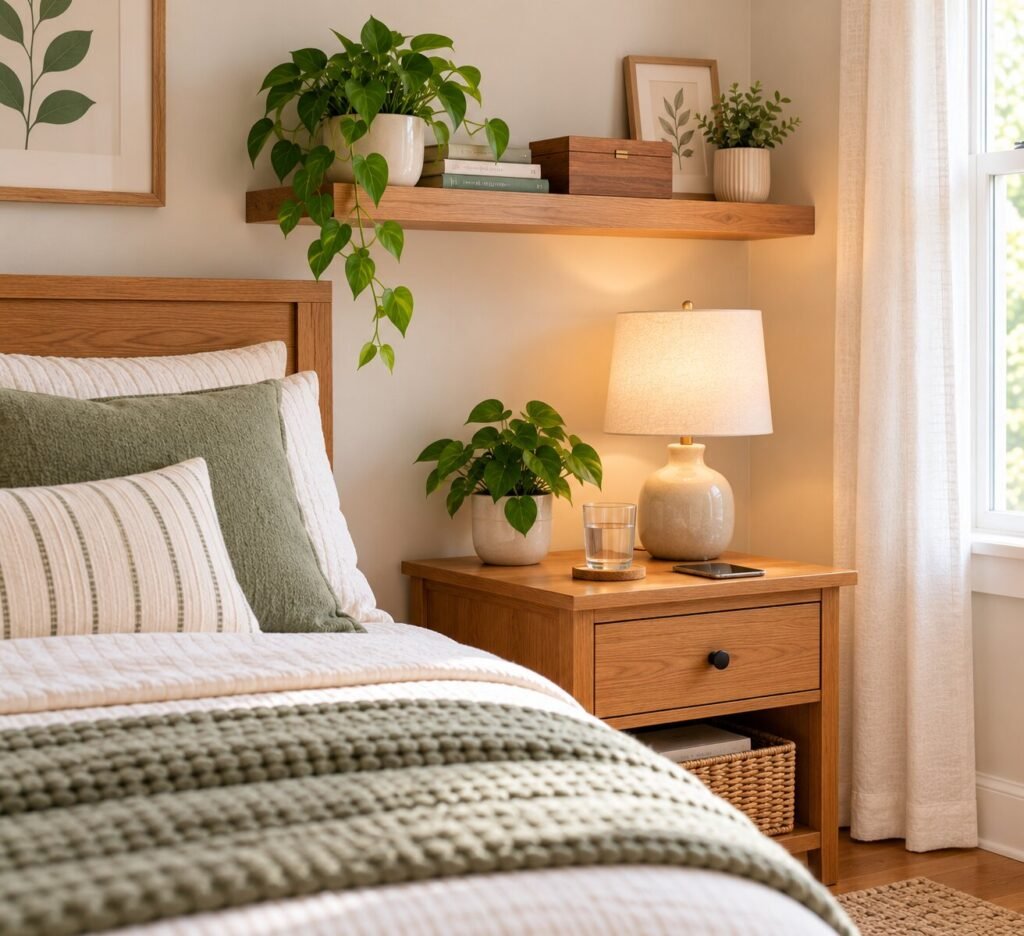
Instead of replacing it with a larger nightstand, look up.
A shallow floating shelf can move a few items off the nightstand while using wall space that was otherwise doing nothing.
Keep the Shelf Simple
A floating shelf works best when it doesn’t become another surface to fill.
Use it for a few lightweight items you genuinely want nearby—perhaps books, a small decorative box, or another everyday item.
Choose a relatively shallow shelf that holds what you need without projecting too far into the room, and make sure it’s securely installed and sensibly positioned away from where it could become a bump-your-head hazard.
Nook & Noted Tip: One well-placed shelf can sometimes do more for a crowded nightstand than a bigger nightstand ever would.
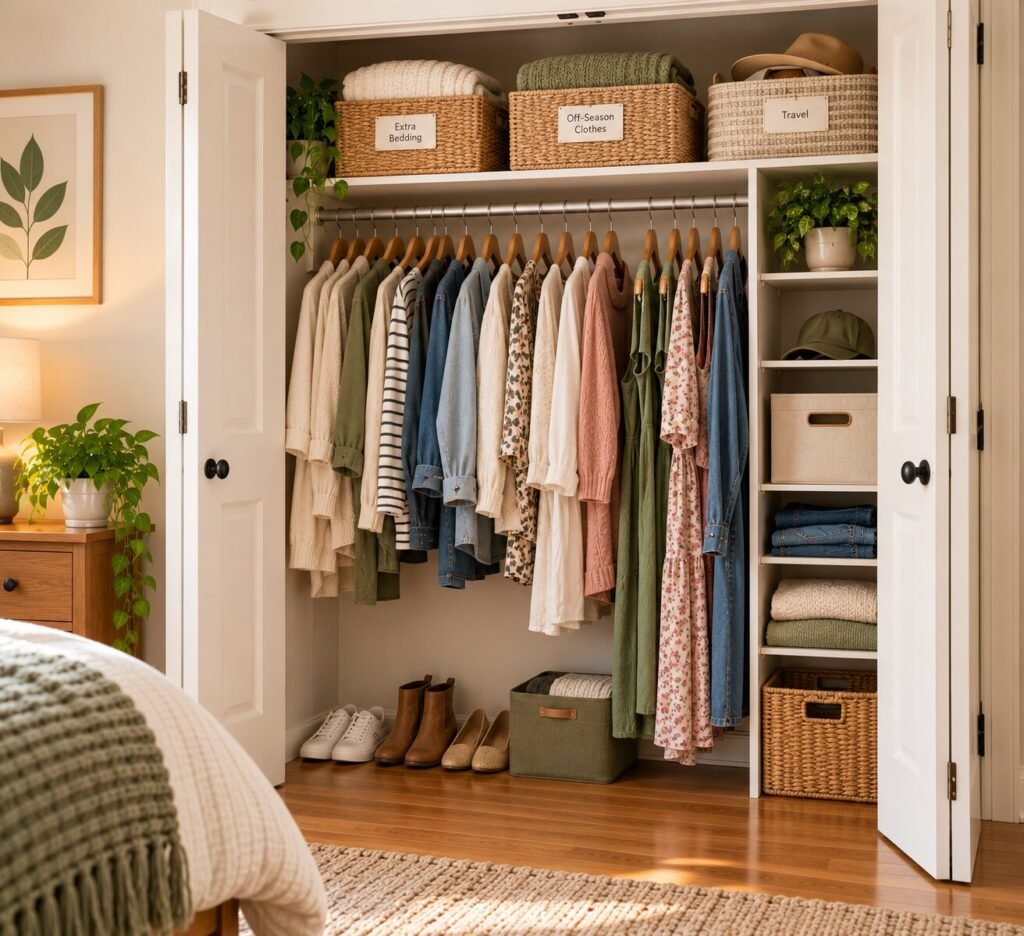
5. Make Better Use of the Top of the Closet
That upper closet shelf can be incredibly useful.
It can also become the place where random bags, blankets, boxes, and things you haven’t seen since 2022 go to disappear.
Because upper shelves aren’t particularly convenient to reach, use them strategically.
They’re ideal for lower-frequency items such as:
- Off-season clothing
- Extra bedding
- Special-occasion accessories
- Travel items
- Seasonal pieces
Make High Storage Easy to Grab
Instead of stacking lots of small loose items on a high shelf, group similar things into a few manageable containers.
Handled baskets or fabric bins are especially useful because they’re easier to pull down.
Labels can help too, particularly when you can’t easily see what’s inside.
Just be careful about storing anything overly heavy where you’ll need to lift it down from above your head.
Nook & Noted Tip: High storage is for low-frequency items. If you’re climbing up there every week, something about the system probably needs adjusting.
6. Make Your Existing Drawers Work Harder
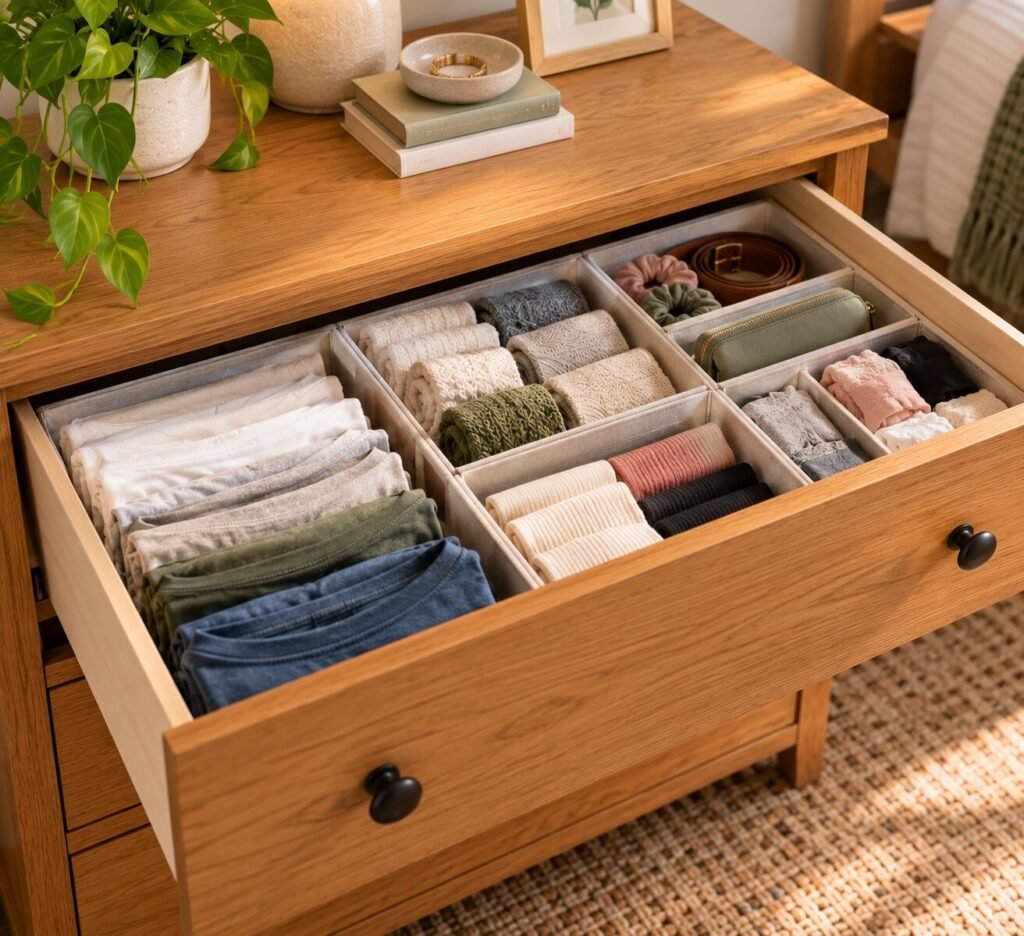
Before deciding you need another dresser, take a closer look at the drawers you already have.
Socks spread out.
T-shirts unfold.
Accessories migrate from one side to another.
Eventually the drawer looks completely full even though much of the available space isn’t being used very efficiently.
Create Simple Categories
Adjustable dividers or small organizers can keep categories from blending together.
Depending on the drawer, that might mean separate sections for:
- Socks
- Undergarments
- T-shirts
- Sleepwear
- Accessories
For some clothing, vertical folding can also make items easier to see instead of stacking everything on top of everything else.
You don’t need every drawer to look perfectly arranged. You just want to be able to find what you need without digging through the entire thing.
Nook & Noted Tip: A disorganized drawer can feel full long before you’ve made good use of the space that’s actually there.
7. Give the “I’ll Put It Away Later” Clothes a Home
You know the clothes.
They’re not quite clean enough to go back in the closet.
They’re definitely not dirty enough for the hamper.
So they end up on the chair.
Or the end of the bed.
Or the floor.
And before long, that poor chair has quietly accepted a second job as a wardrobe.
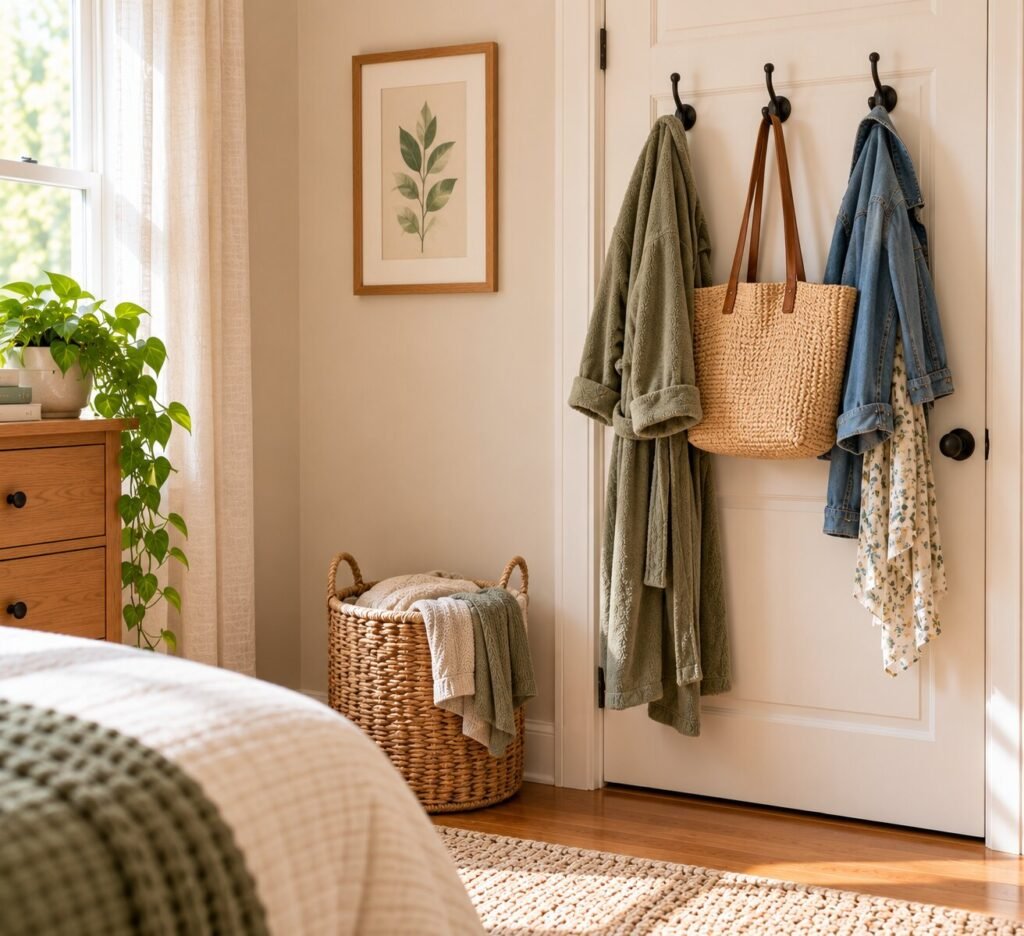
A few hooks behind the bedroom door or on an unused section of wall can give those in-between items somewhere to go.
Hooks also work well for robes, lightweight bags, tomorrow’s outfit, or frequently used accessories.
Don’t Overload Them
Hooks are most useful when they’re easy to access.
If every hook is holding six things, you’ve essentially moved the clothing pile from the chair to the wall.
Keep the number of items reasonable, and check the weight rating and installation method before hanging anything substantial.
Nook & Noted Tip: If you already know where your “I’ll put it away later” pile ends up, put the storage there instead of fighting the habit.
8. Store Shoes Up Instead of Out
Shoes have an impressive ability to consume an entire closet floor.
Even a relatively small collection can spread outward until you’re stepping over sneakers to reach the clothes hanging above them.
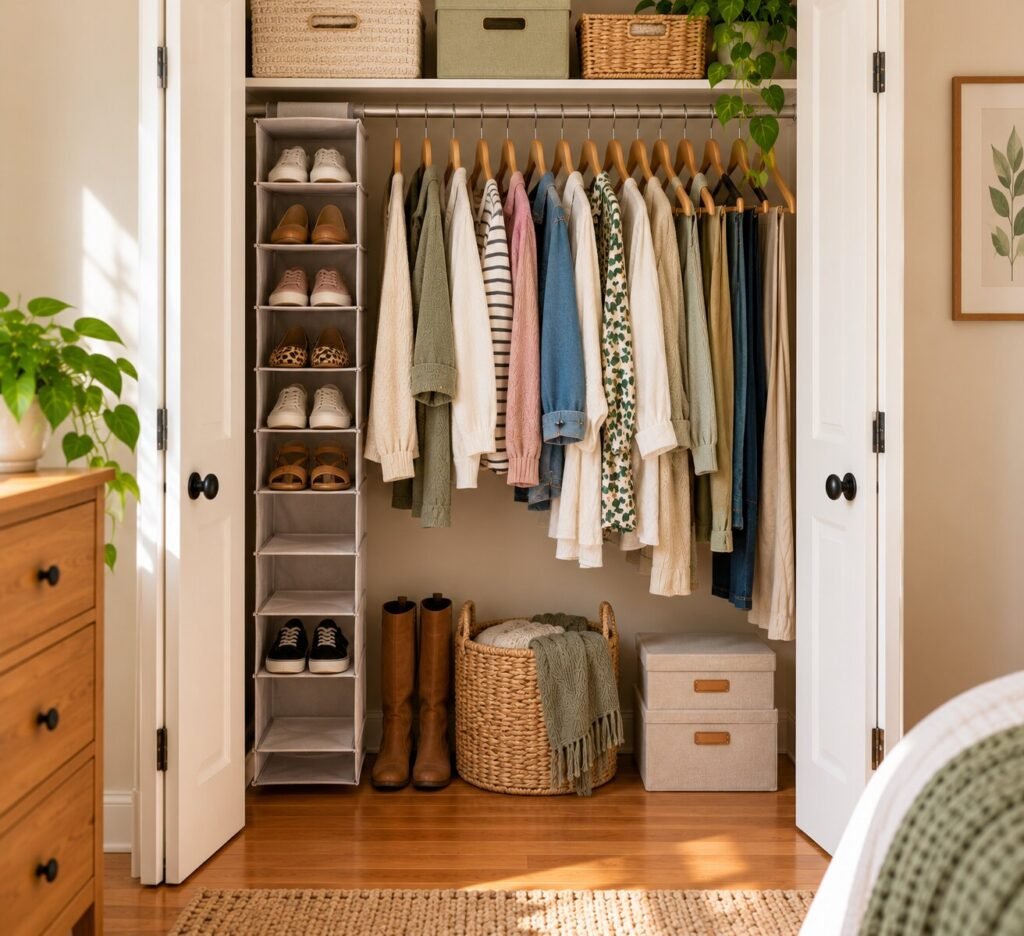
Before adding a bigger shoe rack, look for ways to use vertical space instead.
Depending on your closet, that could mean:
- A hanging shoe organizer
- A slim over-the-door shoe organizer
- Existing closet shelving
- A narrow vertical organizer positioned within the closet
The goal is simple: move the collection upward instead of allowing it to spread across the floor.
Keep Everyday Shoes Easiest to Reach
You don’t necessarily need every pair in the most convenient spot.
Keep frequently worn shoes accessible and move special-occasion or seasonal pairs higher or farther back.
And while you’re organizing, it’s worth asking whether you’re storing shoes you no longer actually wear. No organizer can make an unused collection more useful.
Nook & Noted Tip: If your closet floor disappears under shoes, don’t automatically look for a bigger shoe rack. Look up first.
A Small Bedroom Doesn’t Necessarily Need More Furniture
When a bedroom feels cramped, the instinct is often to add something.
Another dresser.
Another cart.
Another cabinet.
Another storage bench.
But every new piece of furniture also occupies some of the floor space you’re trying to preserve.
Before adding anything large, look at the storage opportunities that are already part of the room.
Look under the bed.
Look behind the door.
Look above the closet rod.
Look inside the drawers you already own.
You may not discover acres of secret storage space—but you might find just enough to get the shoes off the floor, the extra bedding out of the way, and that poor chair out of its second job as a clothing rack.
The Bottom Line
A small bedroom may genuinely have limited storage. But before adding another dresser, cabinet, or cart, make sure you’re getting everything you can from the space that’s already there.
You don’t have to tackle all eight ideas.
Start with whatever is causing the biggest problem.
If clothes are piling up on the chair, add hooks.
If shoes have taken over the closet floor, look for vertical storage.
If seasonal bedding is occupying prime closet space, look under the bed.
One small change in the right place can make a small bedroom feel noticeably calmer—and you won’t have to squeeze another piece of furniture through the doorway to do it.
Looking for More Small-Space Inspiration?
Ready to make the space you have work a little harder? Explore more practical organization ideas, small-space solutions, and clever home finds from Nook & Noted.