Not every home improvement needs to involve demolition, power tools, or an entire weekend.
Some of the most satisfying upgrades are surprisingly small.
A cabinet that’s easier to reach. Better light exactly where you need it. A shower caddy that actually drains. A door that stays open when you’re carrying a basket of laundry through it.
These little changes probably won’t completely transform your home—and that’s not really the point.
The best small upgrades simply make everyday routines work a little better. And once one recurring frustration disappears, you may wonder why you lived with it for so long.
Here are 12 little home upgrades worth noting.
Start With the Things That Could Work Better
Before making a list of upgrades your home supposedly “needs,” pay attention to the little things you interact with every day.
Which cabinet is difficult to reach?
Which door never stays open when you need it to?
Where could you use better lighting?
What creates more cleaning than it should?
Which little task could be easier than it is now?
Those everyday friction points are often the best places to start.
You don’t need to upgrade an entire room. Fix one recurring issue and see how much difference it makes.
Nook & Noted Tip: Fix the annoyance first. Shop for the solution second.
1. Put Better Light Right Where You Need It
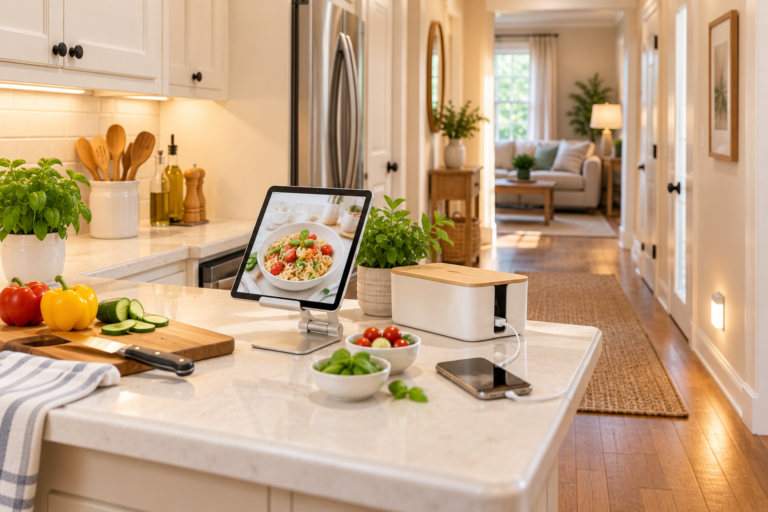
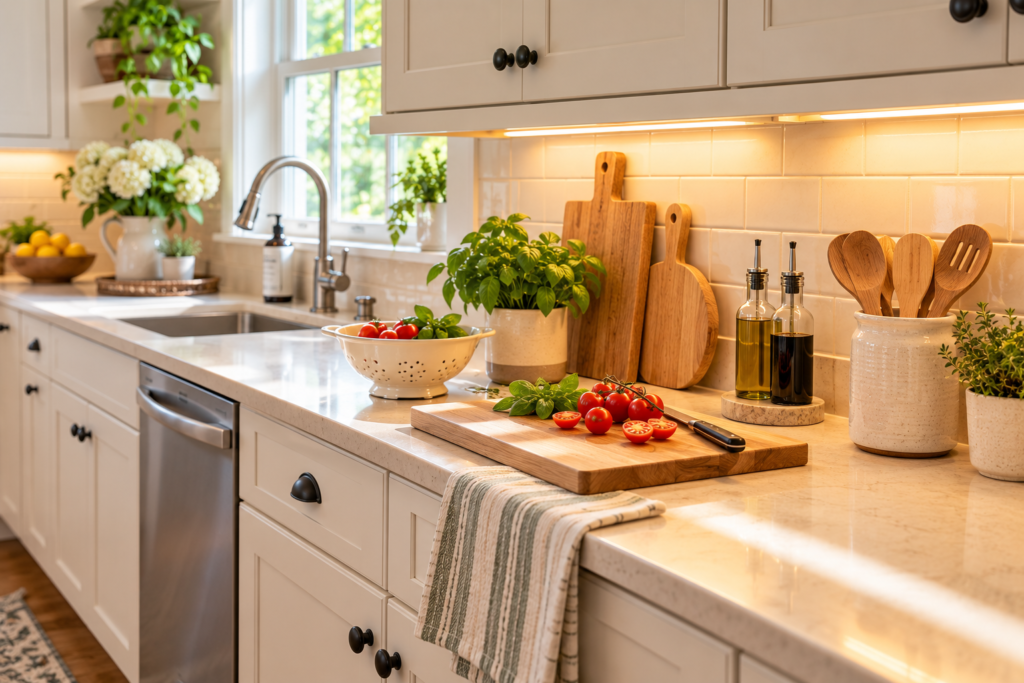
Your kitchen can have plenty of overhead lighting and still leave your main work surface sitting in a shadow.
That’s because overhead fixtures don’t always illuminate countertops particularly well—especially when you’re standing between the light and the area where you’re chopping, measuring, or reading a recipe.
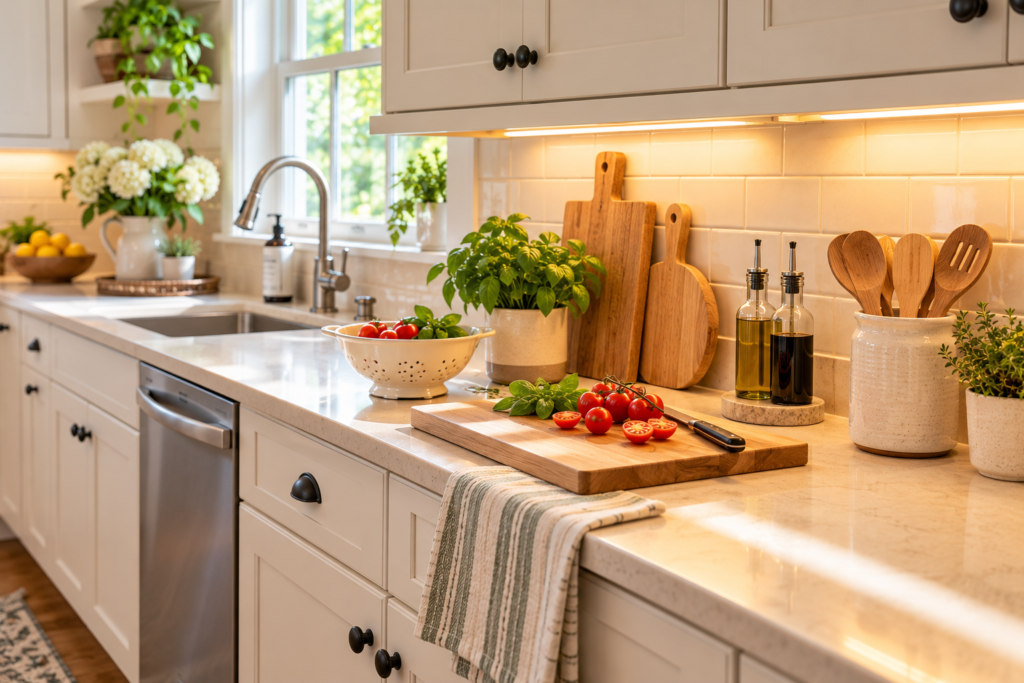
Under-cabinet lighting puts the light closer to where you’re actually working.
And depending on your kitchen and the type of lighting you choose, adding task lighting doesn’t necessarily require rewiring the room.
Options can include rechargeable light bars, battery-powered lights, plug-in systems, and hardwired fixtures.
Start With the Darkest Spot
Before buying enough lights for every cabinet, identify the work area where better lighting would make the biggest difference.
Try one light there first.
You may discover that’s all you need.
Also consider how often you’ll use the light, how convenient it will be to recharge or power, and whether its light temperature works well with your kitchen’s existing lighting.
Motion sensors, dimming, and adjustable brightness may also be useful depending on where the light is installed.
Nook & Noted Tip: More lighting isn’t necessarily better lighting. Put it where it actually helps.
2. Make Everyday Lighting Easier to Control
Sometimes the most inconvenient light in the room is the one that’s hardest to reach.
Maybe the lamp switch is behind the sofa. Maybe you’re constantly plugging and unplugging decorative lights. Or perhaps you simply want a lamp to turn on automatically in the evening.
For compatible devices, a smart plug can make everyday lighting easier to control.
Depending on the plug and your setup, you may be able to control a connected lamp through an app, timer, schedule, or supported voice assistant.
Smart plugs can be particularly handy for compatible:
- Table and floor lamps
- Decorative lighting
- Holiday lights
- Other appropriate plug-in devices
Keep It Simple
You don’t need to turn your entire house into a smart home to benefit from one smart plug.
Start with the lamp or light you regularly wish were easier to control.
Before using a smart plug, check its electrical rating, compatibility with the device you plan to connect, and the manufacturer’s instructions. Not every plug-in appliance is appropriate for smart-plug control.
3. Choose Shower Storage That Doesn’t Hold Onto Water
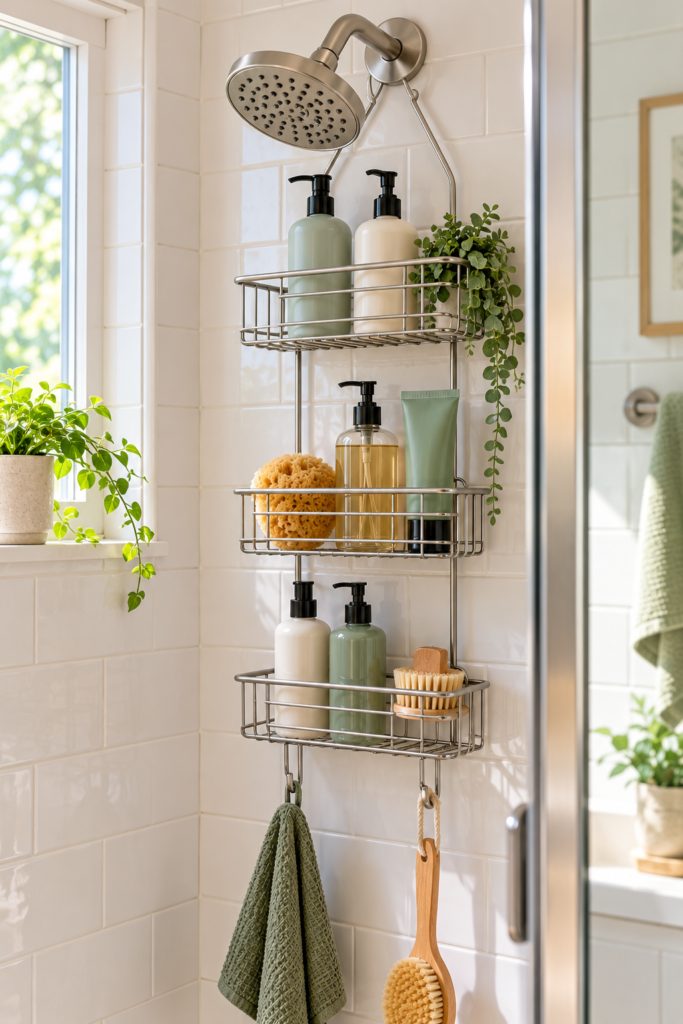
A shower caddy should make your shower easier to organize—not create another surface that constantly needs scrubbing.
Yet some shower organizers somehow manage to collect nearly as much water as they organize shampoo.
Open-wire, slatted, or mesh-style shelves allow water to drain rather than pooling underneath bottles.
It’s a small design difference, but it can make shower storage much easier to maintain.
Look for enough clearance for the bottles you actually use, shelves deep enough to keep them stable, materials appropriate for wet environments, and a secure mounting or hanging system.
And don’t assume you need the largest caddy available.
A little open space can make bottles easier to grab and the organizer easier to clean.
Nook & Noted Tip: Before choosing shower storage, count what you actually use every day. You may need much less storage than you think.
4. Stop More Dirt at the Door
A doormat may not feel like much of a home upgrade.
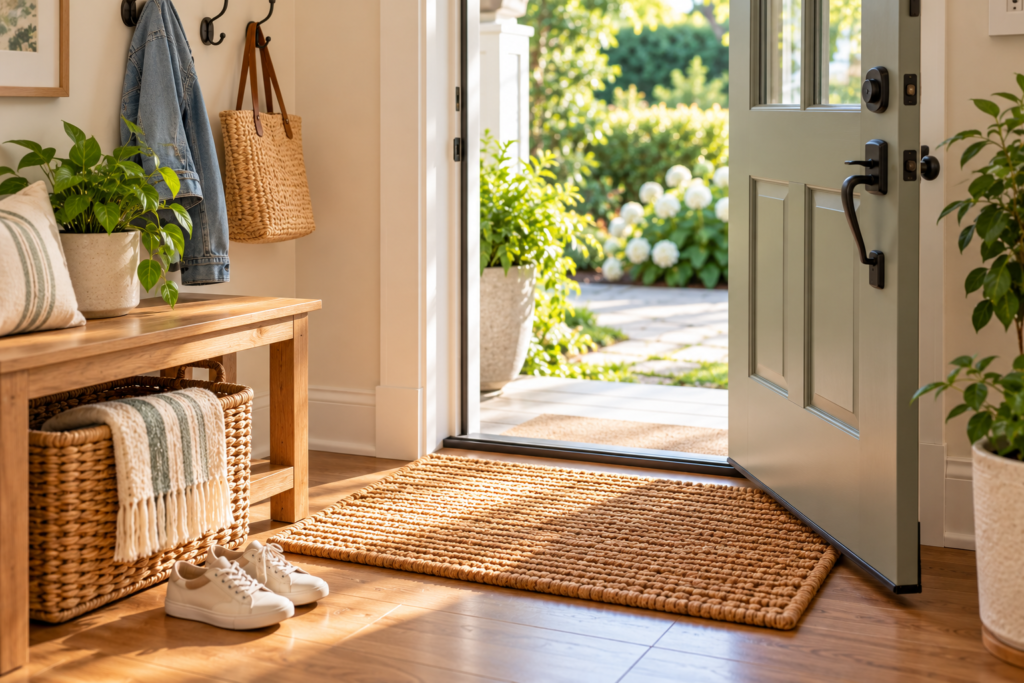
But every bit of dirt that stays at the entrance is dirt you don’t have to sweep or vacuum farther inside.
A good entry mat isn’t just decorative. It has a job to do.
If your current mat is too smooth, difficult to clean, constantly slides around, or doesn’t seem to catch much debris, replacing it with one better suited to the space can make your entry work a little harder.
For an exterior mat, consider weather exposure and how easily it can be cleaned.
For an interior mat, think about grip, moisture, and the flooring underneath it.
And always check door clearance. The perfect mat isn’t particularly useful if your door can’t open over it.
Nook & Noted Tip: Choose a doormat for function first and appearance second. Fortunately, you usually don’t have to sacrifice one for the other.
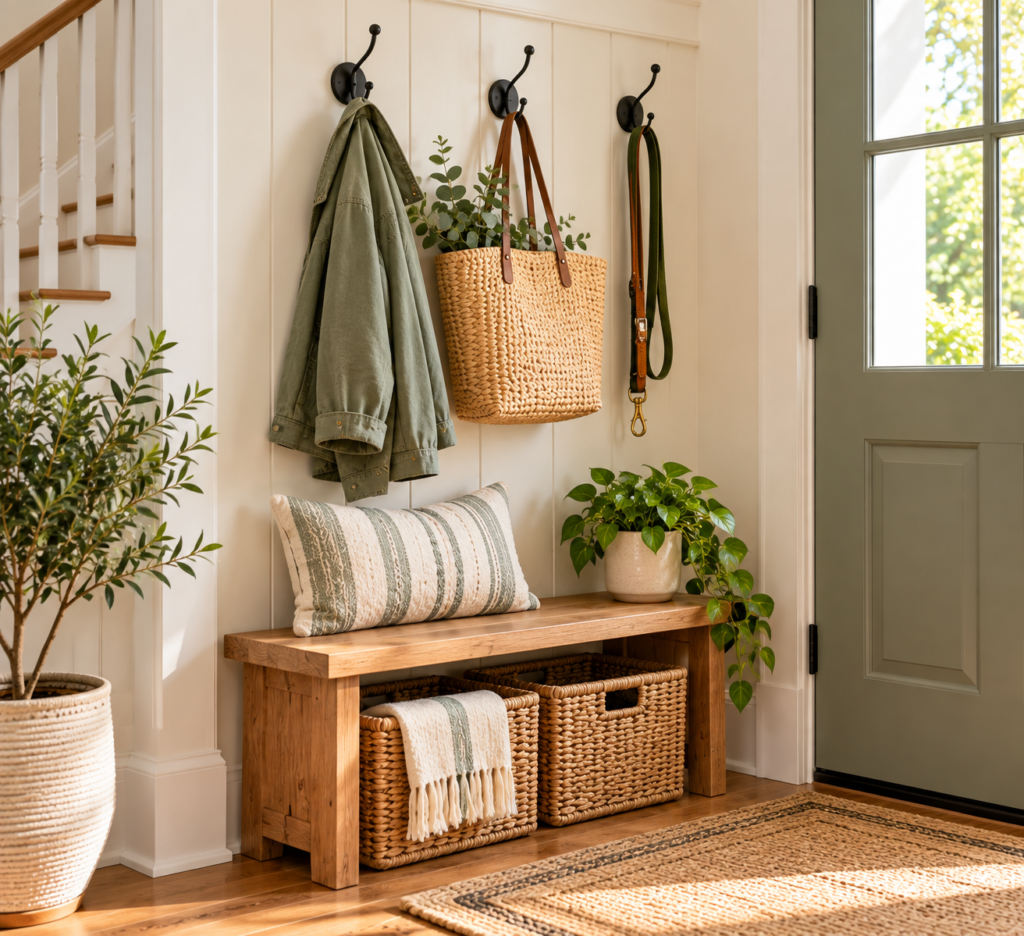
5. Add a Hook Where You Always Need One
Sometimes clutter isn’t really a storage problem.
It’s a location problem.
A robe ends up on a chair because there’s no hook near the shower.
Reusable bags land on the floor because there’s nowhere convenient to hang them near the door.
The dog’s leash gets dropped on the entry table because that’s where everyone reaches for it before a walk.
Adding a simple hook in the place where an item is actually used can solve the problem without adding another bin, basket, or piece of furniture.
Hooks can work particularly well for:
- Robes and towels
- Reusable shopping bags
- Aprons
- Dog leashes
- Lightweight jackets
- Small cleaning tools
Put the Hook Where the Habit Already Exists
Don’t install a hook across the room simply because that’s where you think the item should go.
Pay attention to where it naturally gets dropped now.
That’s often the best clue about where its new home should be.
Choose a hook and installation method appropriate for the wall or door surface and for the weight of the item you plan to hang.
Nook & Noted Tip: Good organization follows real behavior. Make the easy place to put something away the same place you naturally want to leave it.
6. Quiet Scraping Chairs and Help Protect Hard Floors
Sometimes a tiny home upgrade really is tiny.
Felt pads placed underneath compatible furniture legs can help reduce scraping sounds and protect appropriate hard flooring when chairs or other pieces are moved.
They’re particularly useful underneath dining chairs and other furniture that gets shifted frequently.
Match the size and shape of the pad as closely as possible to the furniture leg. A pad that’s too small won’t provide enough coverage, while one that extends beyond the edges may catch and peel away.
Check the pads occasionally, too. Adhesive versions can shift or wear down and may eventually need replacing.
Nook & Noted Tip: Clean the bottom of the furniture leg before attaching an adhesive pad. Dust and grime aren’t exactly ideal bonding surfaces.
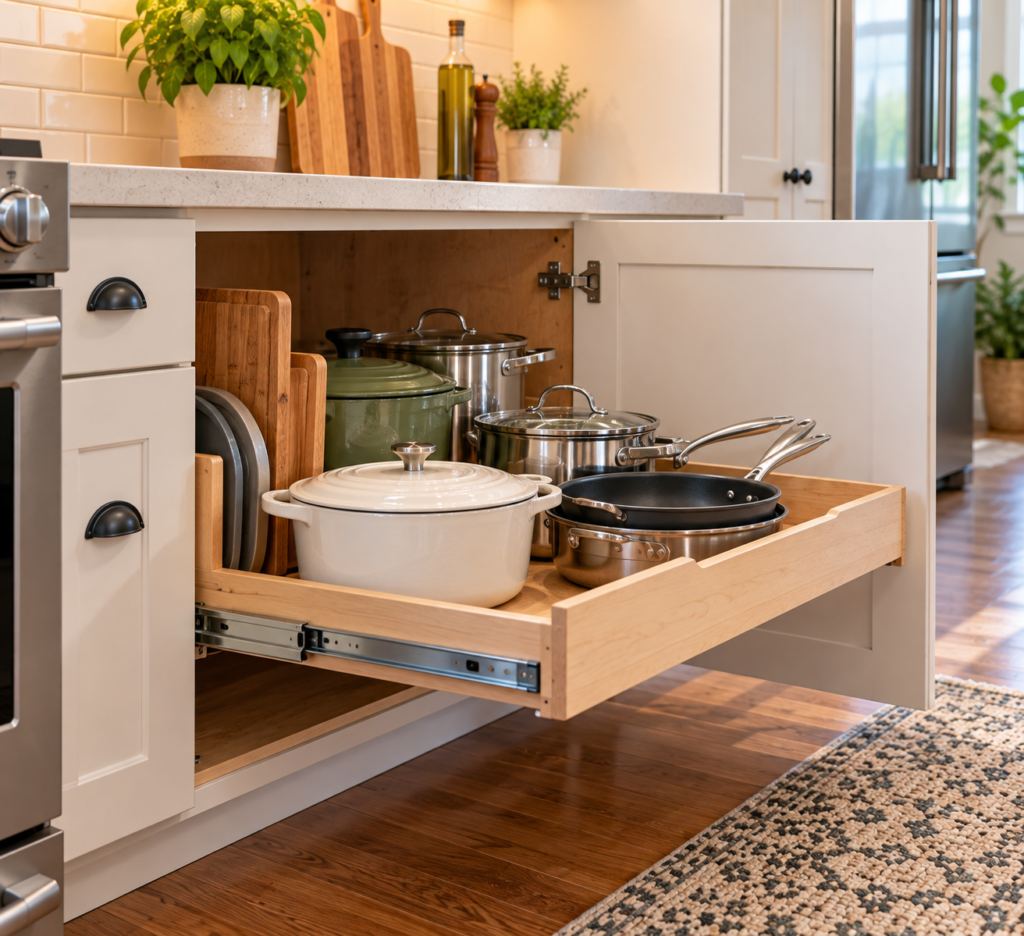
7. Bring the Back of a Deep Cabinet to You
Deep lower cabinets can provide plenty of storage while still being surprisingly inconvenient.
The item you need inevitably seems to be behind six other things.
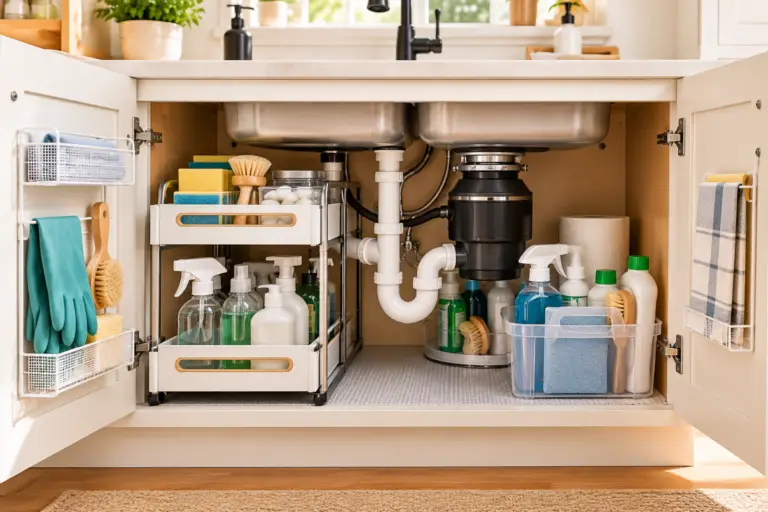
A properly sized pull-out shelf or sliding organizer can bring more of the cabinet contents toward you instead of requiring you to crouch down and unload everything in front.
Pull-outs can work especially well for:
- Pots and pans
- Small appliances
- Food-storage containers
- Pantry goods
- Cleaning supplies
Measure More Than the Cabinet
This is one upgrade where careful measuring really matters.
Check the interior cabinet width and depth, but don’t stop there.
Also consider the width of the actual door opening, hinges or other obstructions, the dimensions of the pull-out system, its weight capacity, and installation requirements.
A cabinet may be wide enough inside while still having a narrower usable opening at the front.
Nook & Noted Tip: Measure the narrowest usable opening—not just the widest part of the cabinet.
8. Make the Bathroom a Little Quieter With a Slow-Close Seat
It’s probably not the home upgrade you’ll excitedly show visitors.
But it’s one you may appreciate several times a day.
A slow-close toilet seat uses a mechanism that allows the seat and lid to lower gradually instead of dropping suddenly.
It’s an especially nice little improvement in bathrooms near bedrooms or in households where the seat seems to get dropped more often than gently lowered.
Measure Before You Buy
Compatibility comes first.
Toilet bowls are commonly round or elongated, so identify the shape of your existing toilet and check the mounting dimensions before choosing a replacement.
Also consider how easily the seat can be removed or accessed for cleaning.
Nook & Noted Tip: This is one purchase where “that looks about right” isn’t a particularly good measuring strategy.
9. Keep Drafts Where They Belong
If you can feel outside air around a closed exterior door, the solution may be relatively simple.
Weatherstripping can compress, loosen, wear down, or become damaged over time.
Inspect what’s already installed around the door. If you see gaps or deteriorated material, replacing the appropriate weatherstripping may help create a better seal.
Different doors and frames use different types, so look at the existing channel or mounting method, the size of the gap, door clearance, and where the material will be used before choosing a replacement.
If the door itself isn’t closing correctly, however, weatherstripping may not be the real problem.
Identify the source of the draft first.
Then fix what’s actually causing it.
10. Give That One Stubborn Door a Simple Solution
Most homes seem to have one.
The door that slowly swings closed the moment you need it to stay open.
It’s particularly frustrating when you’re carrying laundry, groceries, cleaning supplies, or anything else that leaves you without a spare hand.
A simple weighted or appropriately sized door stop can give that door a dedicated solution instead of relying on a shoe, cardboard box, or whatever heavy object happens to be nearby.
Choose a door stop appropriate for the door, flooring, and size of the gap underneath it.
A non-marking or non-slip base can be useful on finished flooring, while a wedge-style stop needs to be tall enough to work with the clearance underneath the door.
It’s a small solution to a small problem.
Sometimes that’s exactly what a useful home upgrade should be.
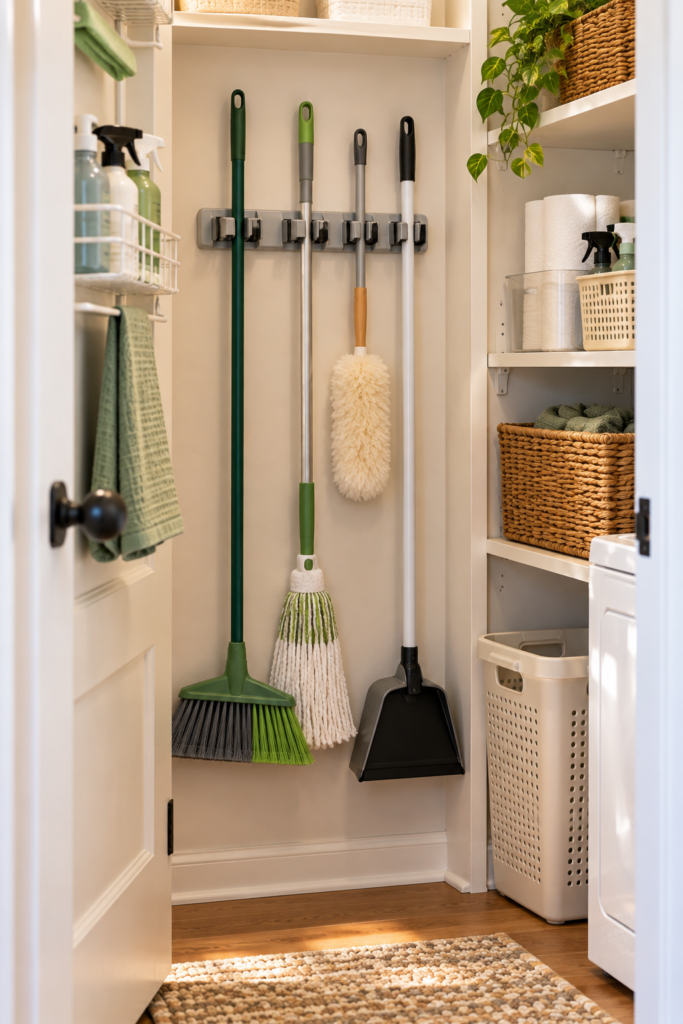
11. Get Cleaning Tools Off the Floor
Brooms, mops, dusters, and similar cleaning tools have an impressive ability to turn one corner of a closet into a jumble.
Lean them against the wall and eventually one falls over.
Then another follows.
A simple wall-mounted or door-mounted holder can give frequently used cleaning tools their own designated spots while taking advantage of vertical space.
It can work particularly well in:
- Laundry rooms
- Utility closets
- Garages
- Mudrooms
- Cleaning-supply closets
Store What You Actually Use
You don’t need a holder with twelve spaces if you regularly use three cleaning tools.
Count what needs to be stored and check the handle diameters, available wall or door space, mounting requirements, and weight limits before choosing a system.
Position frequently used tools where they’re easy to grab without having to move several other things first.
Nook & Noted Tip: If you’re organizing a cleaning closet, declutter worn-out or duplicate tools before creating storage for them.
12. Give One Room More Than Two Lighting Settings
Some rooms seem to come with two lighting options:
Bright enough for surgery.
Or completely dark.
But the same room may need very different amounts of light depending on what you’re doing.
A living room might need brighter illumination while you’re cleaning or working on something, then softer light when you’re watching television or relaxing.
A bedroom may benefit from lower lighting in the evening while still needing brighter light at other times.
Appropriate dimmable lighting gives you more flexibility without requiring another lamp in every corner.
Check Compatibility First
If you’re using an existing wall dimmer, make sure the bulbs and dimmer are designed to work together.
If you’re considering smart bulbs or other adjustable lighting, check fixture compatibility and follow the manufacturer’s installation and usage requirements.
Also consider light temperature as well as brightness. Both can affect how comfortable and inviting a room feels.
Nook & Noted Tip: Think about what you actually do in the room at different times of day. The goal isn’t simply brighter or dimmer lighting—it’s having the right light when you need it.
Small Upgrades Should Solve Real Problems
It’s easy to create a long list of things you’d like to “upgrade” around the house.
But newer doesn’t automatically mean better.
Instead, pay attention to the small things that create friction in your actual routine.
If the kitchen counter is too dark, improve the lighting.
If a deep cabinet frustrates you every day, make it easier to reach.
If cleaning tools are constantly falling over in the closet, give them a proper home.
If the front mat isn’t stopping much dirt, choose one better suited to the job.
The goal isn’t to make everything in your home newer.
It’s to make the things you already use work a little better.
The Bottom Line
Big renovations aren’t the only way to make a home easier to live in.
Sometimes the most satisfying improvements are the ones you barely notice after a few weeks—because the little annoyance they solved is simply gone.
Start with one recurring frustration rather than an entire room.
Fix it.
Live with the change.
Notice whether everyday life feels a little easier.
Then move on to the next thing.
A better-functioning home doesn’t necessarily come from one dramatic makeover.
Sometimes it happens one small improvement at a time.
Looking for More Home Organization Inspiration?
Ready to make your home work a little better? Explore more practical organization ideas, small-space solutions, and clever home finds from Nook & Noted.