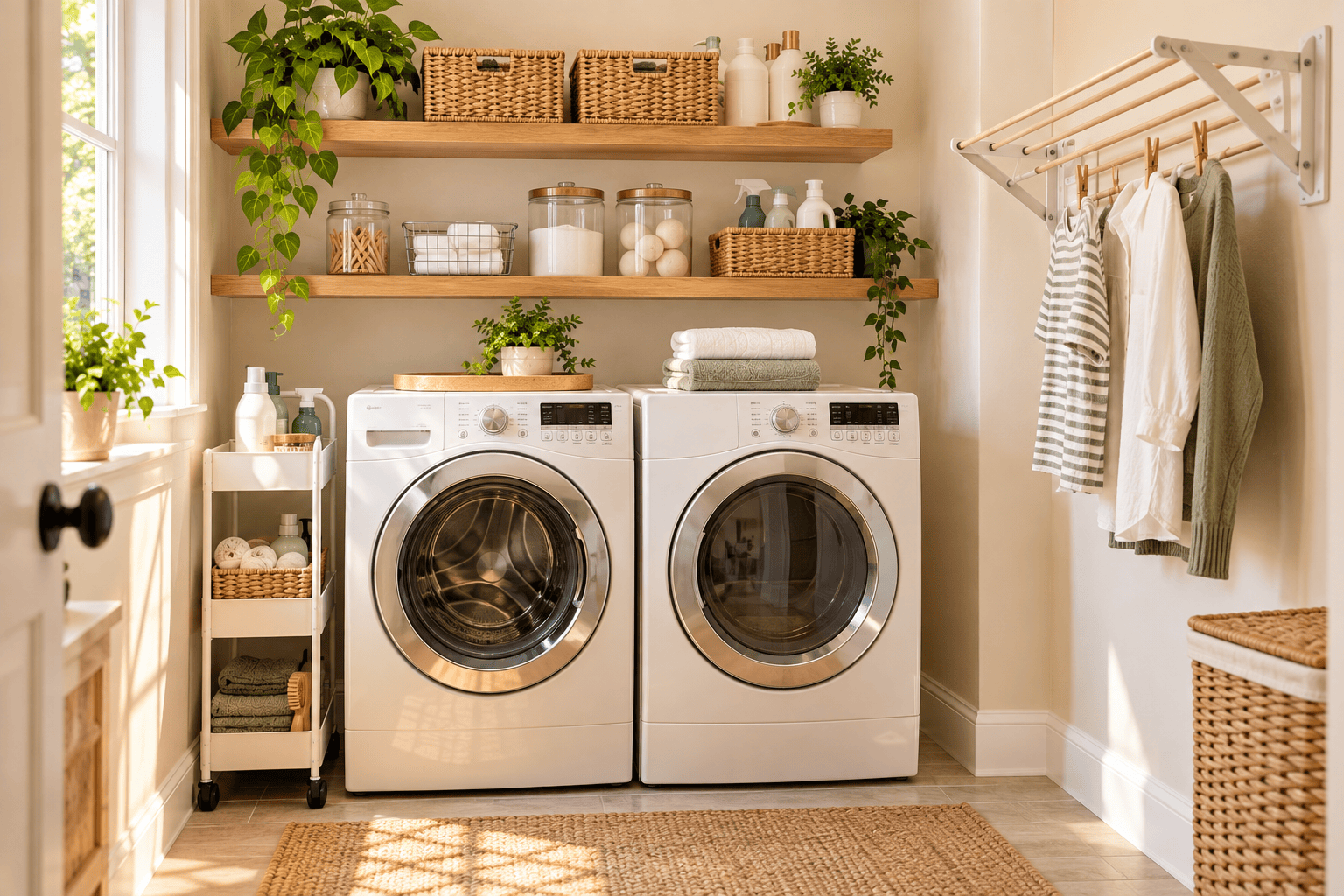
Laundry rooms have a habit of getting whatever space is left over.
Maybe yours is a narrow room, a hallway closet, a corner of the garage, or just enough space for a washer and dryer with a few inches to spare.
The good news? A small laundry area doesn’t need rows of cabinets or a major makeover to work better.
A few well-chosen storage solutions can make better use of the walls, narrow gaps, and space above your machines—while giving detergent, hampers, drying clothes, and all those mysteriously single socks somewhere to go.
Here are nine practical ways to make a small laundry space work harder without making it feel more crowded.
Before You Add Laundry Storage
Before adding another shelf, basket, or cart, take a quick look at what’s already occupying the room.
Empty detergent bottles? Gone.
Cleaning products that belong somewhere else? Move them.
Six half-used stain removers? It may be time for a reunion.
Then think about what your laundry space actually needs to handle.
Do you need somewhere to air-dry clothes?
Somewhere to sort laundry?
A better home for detergent and stain removers?
Folding space?
Cleaning-tool storage?
Solve the biggest problem first.
You may discover that you don’t need storage everywhere. You simply need better storage in one or two places.
Nook & Noted Tip: A small laundry room doesn’t need more storage everywhere. It needs useful storage in the right places.
1. Look Up for Extra Storage
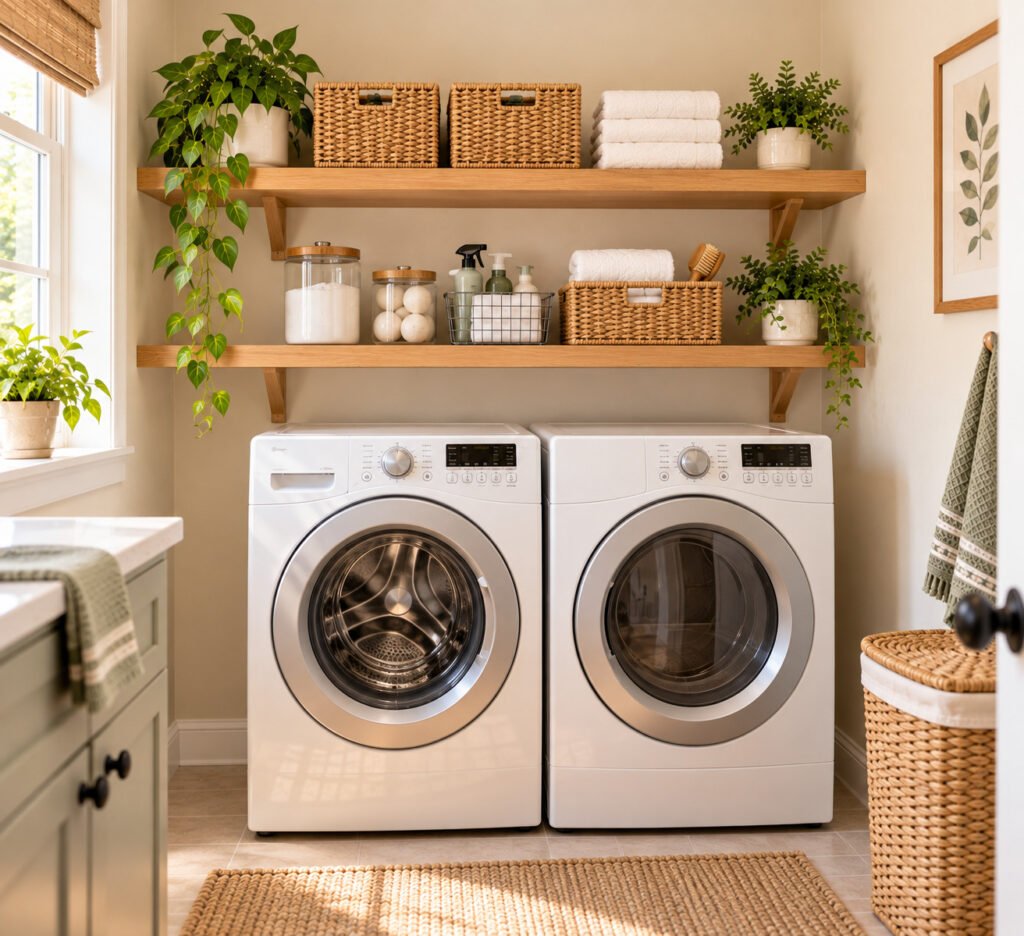
When floor space is limited, the walls can become some of the most useful storage space in the room.
A couple of shelves above or beside your washer and dryer can create a convenient home for laundry supplies, folded cloths, small baskets, and backup products without adding another piece of furniture to the floor.
The key is not to turn every available inch of wall into storage.
Start with the things you actually use in the laundry room and give those items an easy-to-reach home.
Everyday supplies might include:
- Detergent
- Stain remover
- Dryer sheets or dryer balls
- Mesh laundry bags
- Cleaning cloths
Backup supplies and less frequently used items can usually live a little higher.
Think About Weight
Laundry supplies can be surprisingly heavy, especially full detergent containers.
Choose shelves and mounting hardware appropriate for your wall type and the weight you plan to store, and follow the manufacturer’s installation and weight recommendations.
Also think about reach.
Frequently used items shouldn’t require a step stool every time you wash a load of towels.
Nook & Noted Tip: Empty wall space doesn’t automatically need a shelf. Add vertical storage where it solves a real problem.
2. Turn a Narrow Gap Into Storage
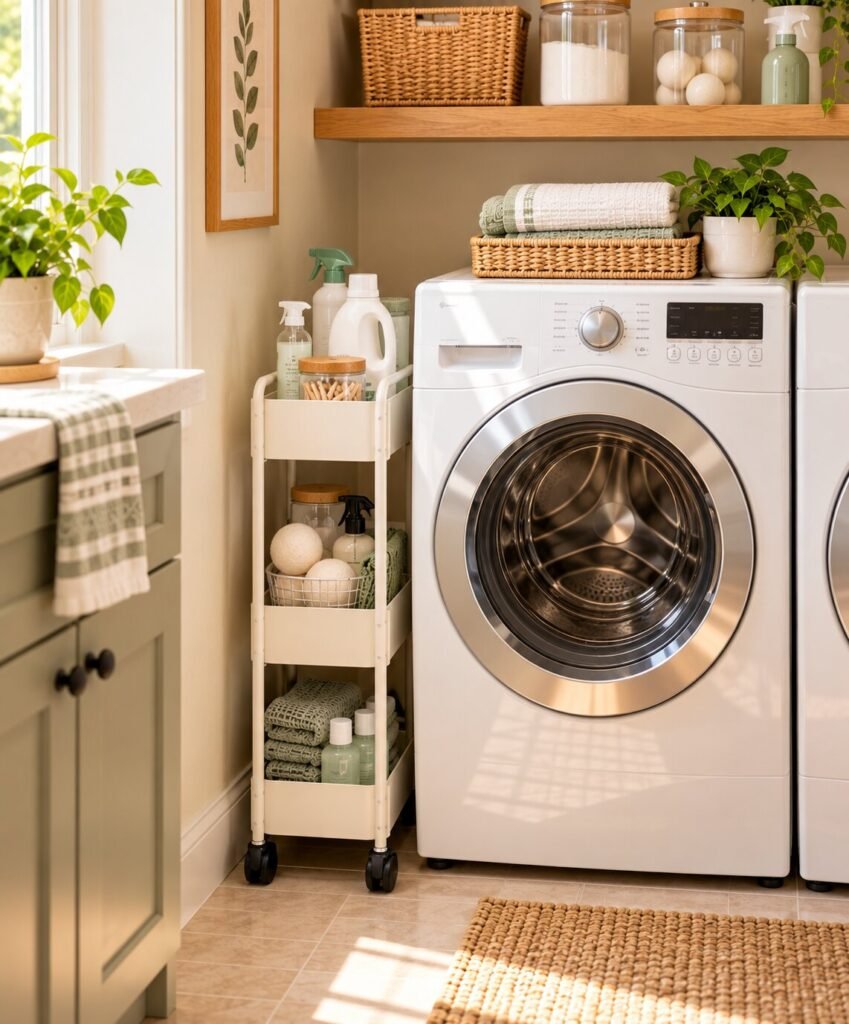
That awkward gap beside your washer or dryer may be too narrow for a cabinet, but it might be just right for a slim rolling cart.
A narrow cart can create several levels of storage for things like:
- Detergent
- Stain removers
- Dryer supplies
- Cleaning cloths
- Mesh laundry bags
- Small cleaning products
Because the cart rolls, you can pull it out when you need something and move it aside when it’s time to clean or access the side of the machine.
It’s also a useful option for renters because it doesn’t require permanent installation.
Measure the Gap First
Slim carts come in many different widths, and laundry-room gaps aren’t particularly forgiving.
Measure the narrowest part of the available space, including any baseboards, hoses, trim, or other obstacles.
Also make sure the cart won’t block a door, appliance controls, or the path through the room.
If your washer or dryer tends to vibrate, locking casters can help keep the cart where it belongs.
Nook & Noted Tip: Don’t buy the cart and then look for somewhere to put it. Measure the unused space first and choose something that fits it.
3. Add a Drying Rack That Knows When to Disappear
Air-drying clothes in a small laundry room can become an exercise in navigating around a floor-standing rack.
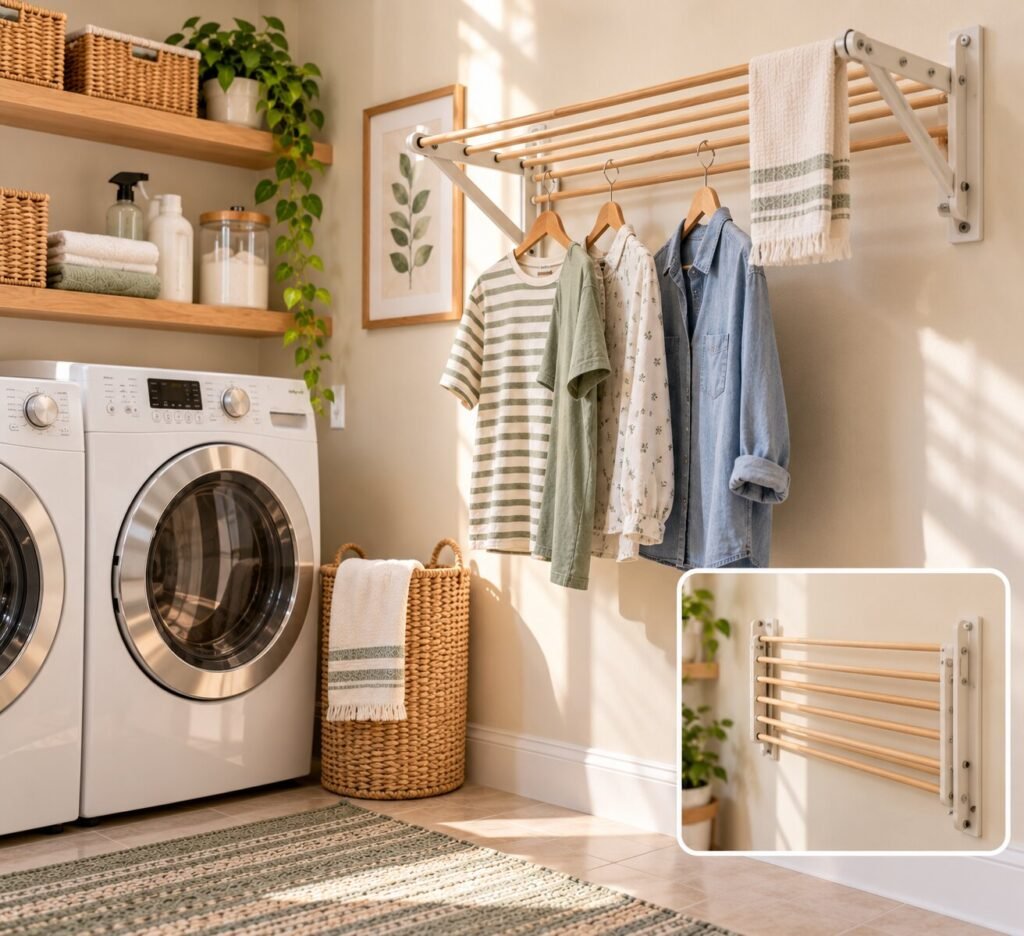
A wall-mounted fold-down drying rack offers another option.
Open it when you need space for delicate clothing, lightweight sweaters, or other air-dry items. When everything is dry, fold it back against the wall and reclaim the walkway.
In a small room, anything that knows when to disappear deserves bonus points.
Choose the Location Carefully
Before installing a drying rack, open it fully and consider how far it extends into the room.
Make sure it won’t block a door, appliance, cabinet, or main walking path.
Look for a rack with enough drying capacity for the amount of clothing you typically air-dry and materials appropriate for a potentially humid environment.
And because damp clothing adds weight, follow the manufacturer’s mounting and weight recommendations carefully.
4. Give Cleaning Tools a Home on the Wall
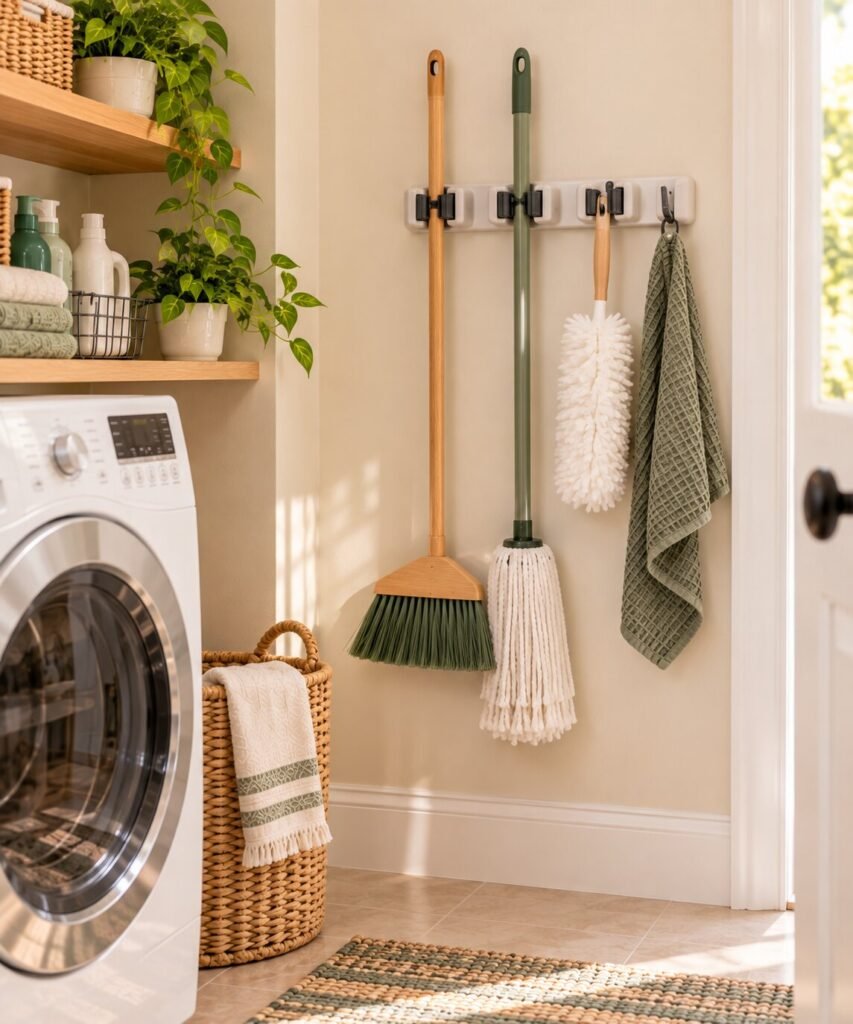
Laundry rooms often become unofficial storage areas for brooms, mops, dusters, and other cleaning tools.
The problem?
Those tools have a tendency to lean in corners, fall over, block doors, and generally behave as though they own the room.
A simple wall-mounted holder or a few appropriately installed hooks can move them off the floor while keeping them easy to grab.
This works particularly well for long-handled items such as:
- Brooms
- Mops
- Dusters
- Small cleaning brushes
Depending on your setup, a wall-mounted ironing-board holder may also help free up floor space.
Store What Actually Belongs There
Try not to turn the laundry-room wall into storage for every cleaning tool in the house.
Choose the items that logically belong in or near the laundry area and give those a convenient home.
Check weight limits and use an installation method appropriate for your wall and the items you’re hanging.
Nook & Noted Tip: Getting three awkward cleaning tools off the floor may improve a small laundry room more than adding three new storage bins.
5. Create Folding Space Only When You Need It
No counter for folding clothes?
You may not need one all the time.
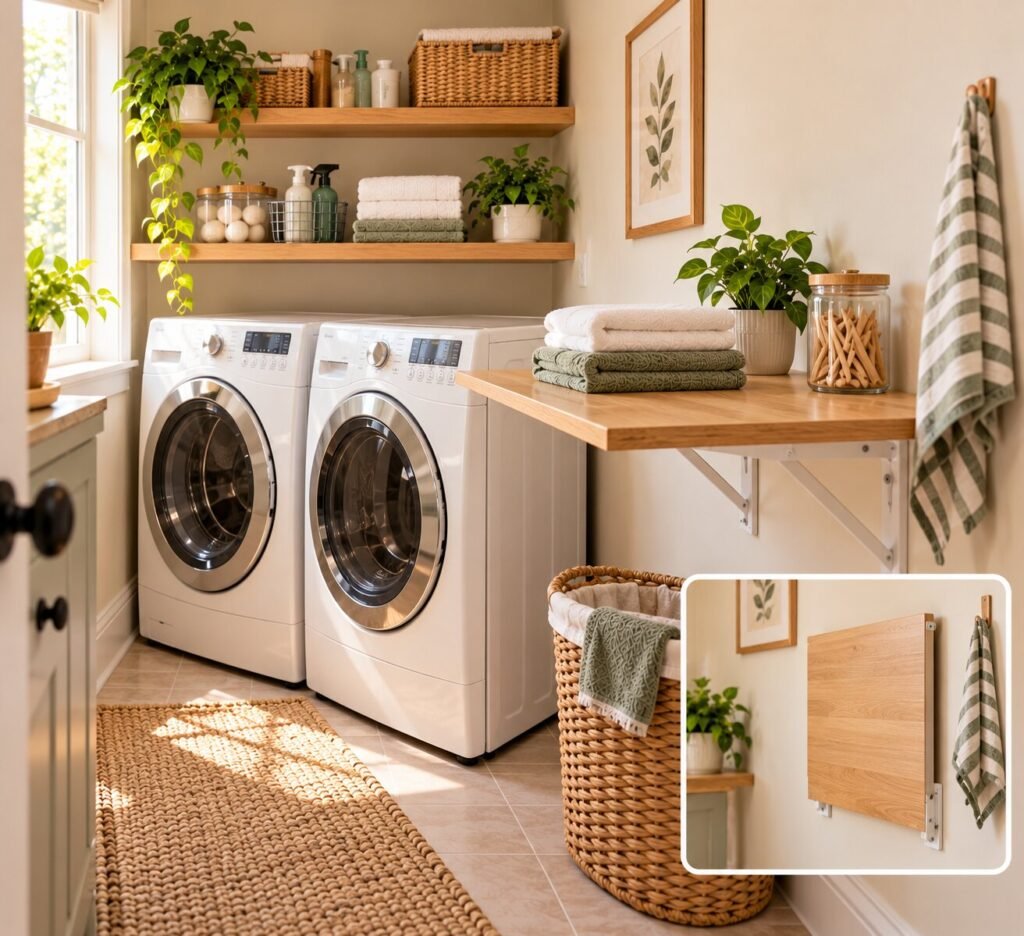
If you have an appropriate open section of wall, a properly installed fold-down table can provide temporary folding space without permanently occupying valuable floor space.
Lower it when you need somewhere to fold towels or sort a load of clean clothes.
When you’re finished, fold it back against the wall.
It’s particularly useful in a narrow laundry area where a permanent table or cabinet would make the room difficult to move through.
Check the Open Position
Before installing a fold-down surface, think about both positions.
Where will it sit when closed?
And just as importantly, how far will it extend into the room when open?
Make sure you can still access the washer, dryer, doors, and cabinets comfortably.
Choose mounting hardware and brackets designed for the intended load and follow the manufacturer’s installation recommendations.
A folding surface should comfortably handle a stack of towels—not make you nervous every time you put one down.
6. Create a Small Laundry Supply Station
Small laundry supplies have a way of scattering themselves around the room.
Lint rollers, mesh bags, stain brushes, clothespins, small spray bottles, and other odds and ends can quickly take over shelves and countertops.
Instead of giving every little item its own container, create one compact supply station.
Depending on your space, that might be:
- A small pegboard
- A shallow wall organizer
- A short rail with hooks
- A small basket on an existing shelf
Keep the things you use regularly visible and easy to reach.
Less frequently used supplies can stay in a basket or bin elsewhere.
The goal isn’t to create a display of every laundry accessory you own.
It’s to keep the useful little things from disappearing when you need them.
Nook & Noted Tip: If you have to create twelve categories to organize one shelf, the system may be getting more complicated than the laundry.
7. Use Baskets to Create Simple Laundry Zones
Shelves work better when everything on them isn’t competing for attention.
A few handled baskets can group related supplies together while making shelves look calmer and easier to use.
You might create broad categories such as:
Everyday laundry: detergent, stain treatment and dryer supplies
Backstock: unopened products and refills
Cleaning: cloths, gloves and small cleaning supplies
Keep the categories simple.
You probably don’t need separate labeled baskets for stain pens, dryer balls, clothespins, lint rollers, mesh bags, and every other item that’s ever entered the laundry room.
If three baskets solve the problem, seven baskets aren’t necessarily an improvement.
Keep Frequently Used Supplies Easy to Reach
Place everyday products at a comfortable height.
Higher shelves are better suited to lightweight backup supplies and things you don’t need every week.
Handled baskets can make higher storage easier to pull down, but avoid making them so heavy that they’re awkward to lift safely.
Nook & Noted Tip: Don’t create seven categories just because seven baskets fit on the shelf.
8. Let a Narrow Gap Hold the Laundry
Sometimes the best place for a hamper isn’t in the middle of the room.
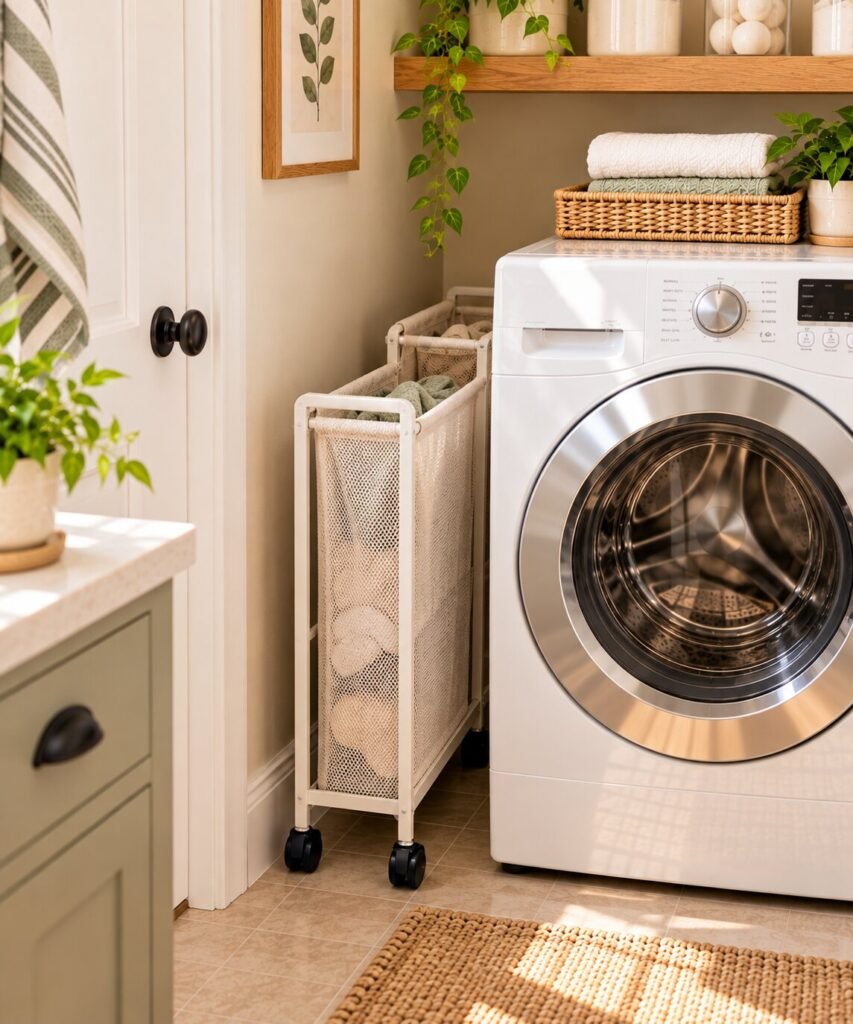
If you have a slim unused gap beside a washer, dryer, cabinet, or wall, a narrow rolling hamper may turn it into useful laundry storage.
This can be particularly handy for sorting as you go or simply keeping dirty laundry contained without sacrificing much floor space.
When you need it, pull the hamper out.
When you don’t, tuck it back into the gap.
Simple.
“Slim” Isn’t a Measurement
Measure the available width, depth, and height before choosing a hamper.
And remember:
“Slim” is a marketing term, not a unit of measurement.
A hamper that’s an inch too wide isn’t going to become more cooperative once it arrives.
Also check whether nearby doors, baseboards, hoses, or appliance handles reduce the usable opening.
If the hamper rolls, make sure the wheels work well on your flooring and that you have enough clearance to pull it out comfortably.
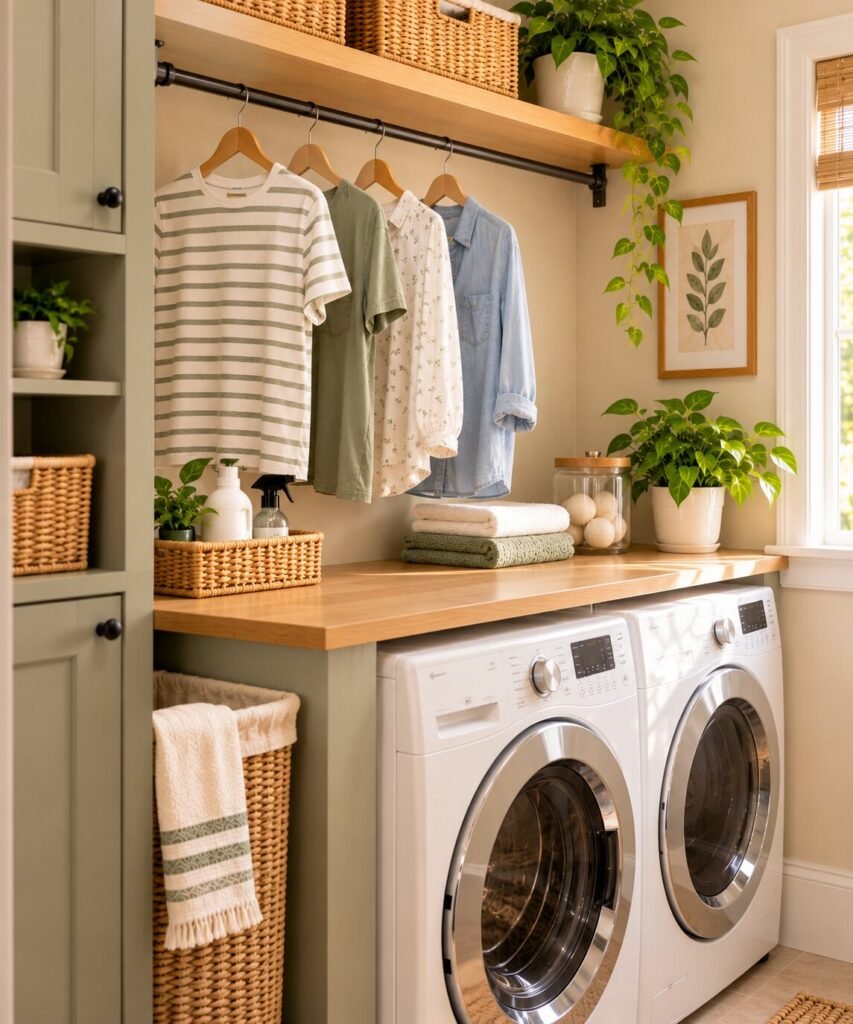
9. Add a Simple Hanging Rod
Not everything belongs in the dryer.
A short hanging rod can provide a convenient place for shirts, blouses, lightweight jackets, and other items that need to air-dry on hangers.
Depending on your laundry-room layout, a rod might work:
- Above an appropriate counter
- Between two cabinets
- Beneath a sturdy shelf designed for that setup
- Across another suitable open section of the room
If a permanent rod doesn’t make sense, a retractable clothesline designed for the intended space may offer a more temporary alternative.
Leave Enough Room for the Clothes
Consider the length of the garments you’ll be hanging.
A rod installed directly above a counter may work beautifully for shirts but poorly for longer clothing.
Also consider how far hangers extend into the room and whether they’ll interfere with doors, cabinets, or your normal walking path.
As always, follow the manufacturer’s installation and weight recommendations.
Nook & Noted Tip: The best drying solution is the one that fits both your clothes and your room.
Don’t Organize the Laundry Room Into Submission
It’s easy to turn a laundry-room organization project into a collection of containers for containers.
You probably don’t need a labeled bin for dryer sheets, another for stain pens, another for clothespins, and a tiny decorative basket devoted exclusively to dryer balls.
Start with broad categories.
Laundry supplies. Cleaning supplies. Air-drying. Dirty clothes.
If everything has a convenient home and you can find what you need, the system is working.
Leave a little open space on shelves when you can.
Don’t fill every basket to the top.
And don’t add an organizer simply because there’s technically room for one.
A small laundry space can feel much easier to use when there’s a little breathing room.
The goal isn’t to make the laundry room photograph perfectly.
It’s to make laundry a little easier.
The Bottom Line
A small laundry room doesn’t need to become a perfectly organized showpiece to work better.
Start with the part of the room that’s causing the most frustration.
If supplies are scattered everywhere, give them one convenient home.
If you don’t have anywhere to air-dry clothes, look at an unused wall.
If floor space is tight, look up—or check whether one of those narrow gaps beside your machines could be doing more.
Then stop.
Use the new setup for a while before adding something else.
You may find that one shelf, one cart, or one better use of an overlooked wall solves more of the problem than you expected.
Because a small laundry room doesn’t necessarily need more stuff.
It just needs the space it already has to work a little harder.
Looking for More Organization and Small-Space Inspiration?
Ready to make the space you have work a little harder? Browse more practical organization ideas, clever home finds, and small-space solutions from Nook & Noted.